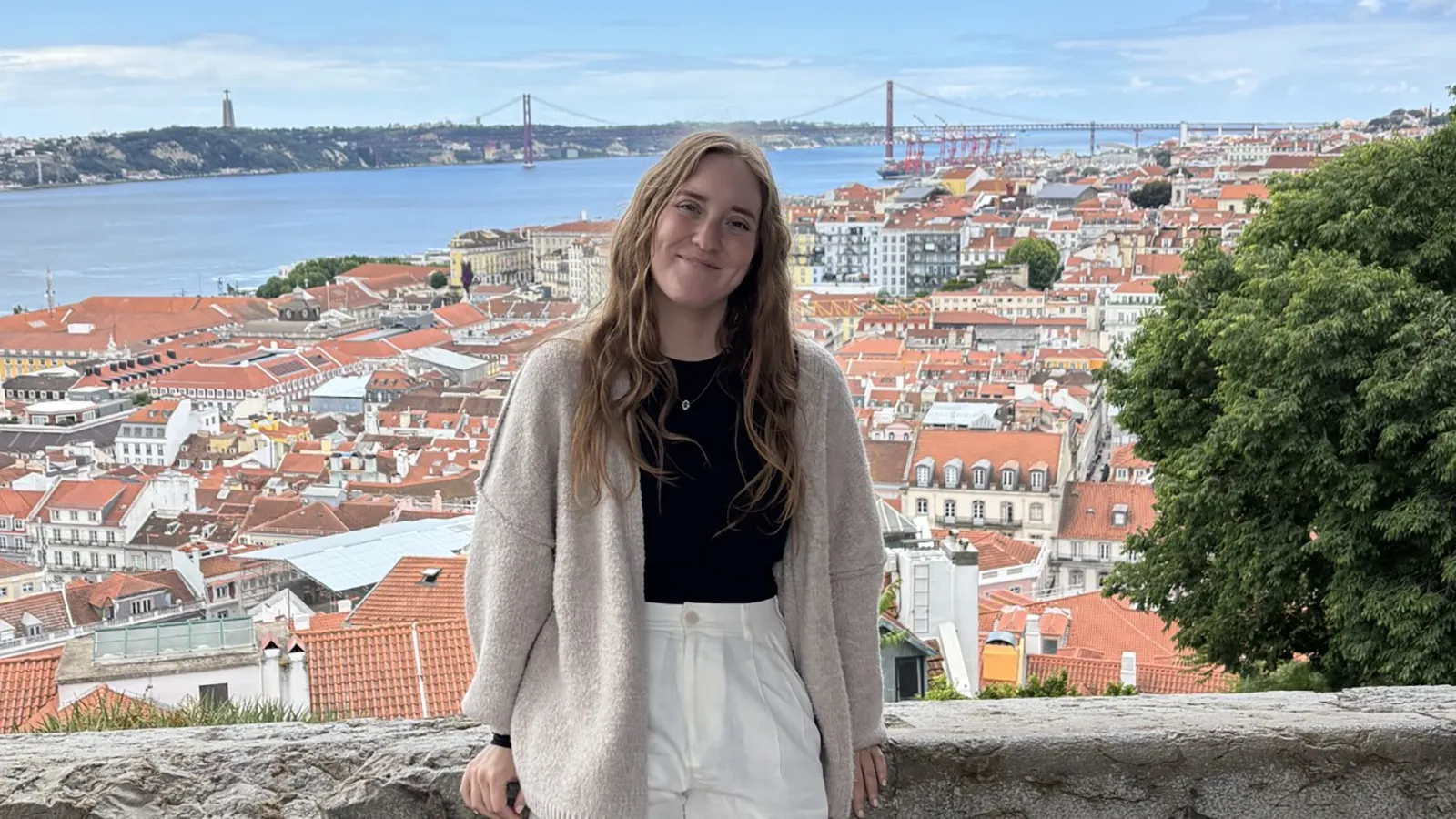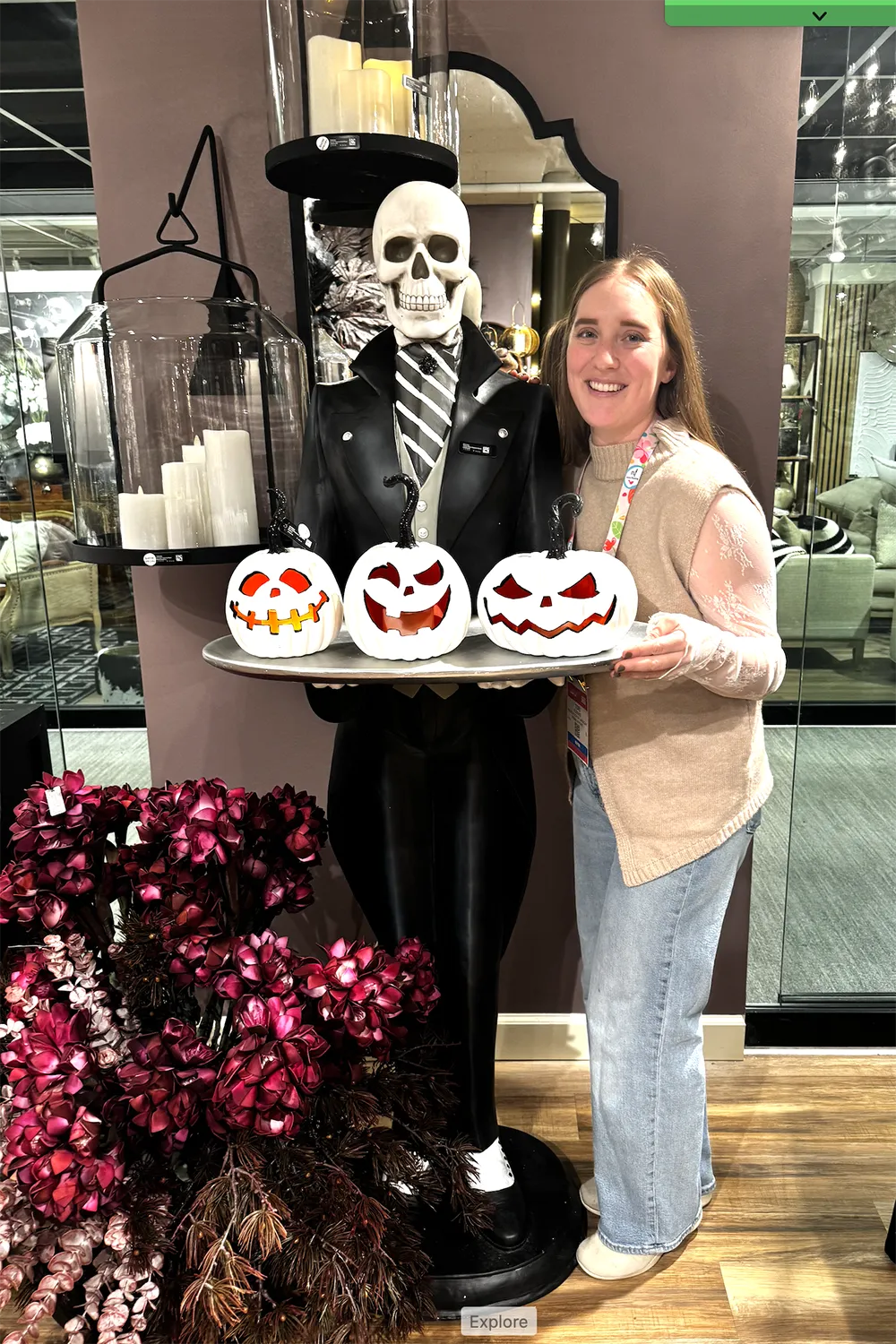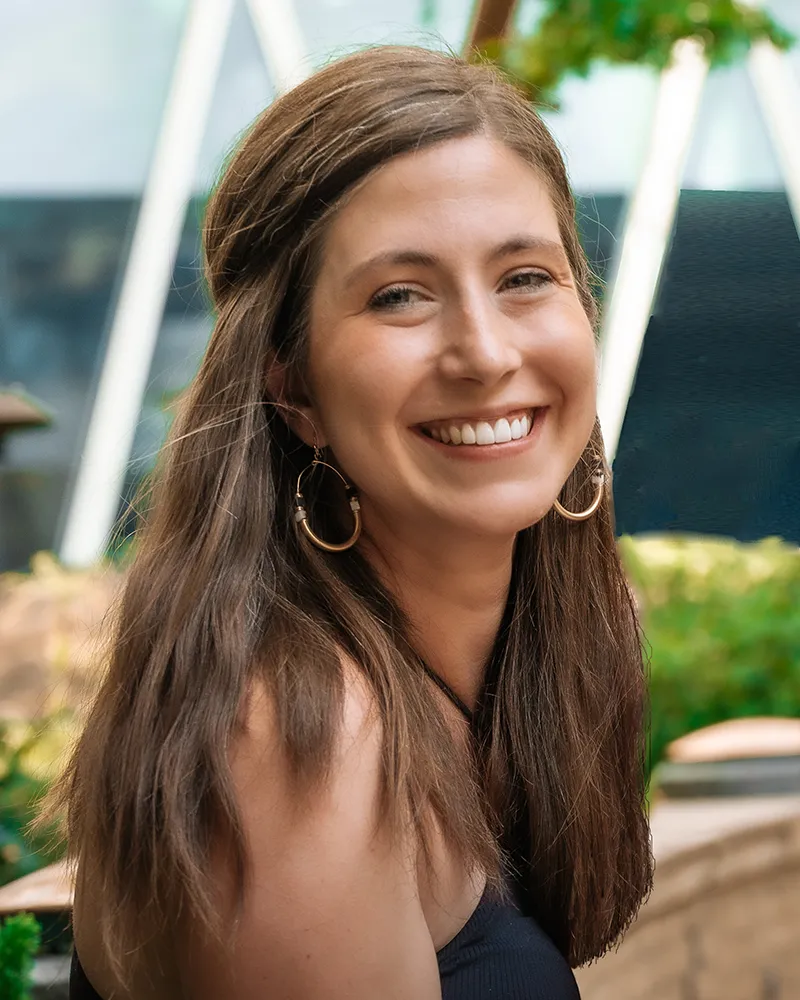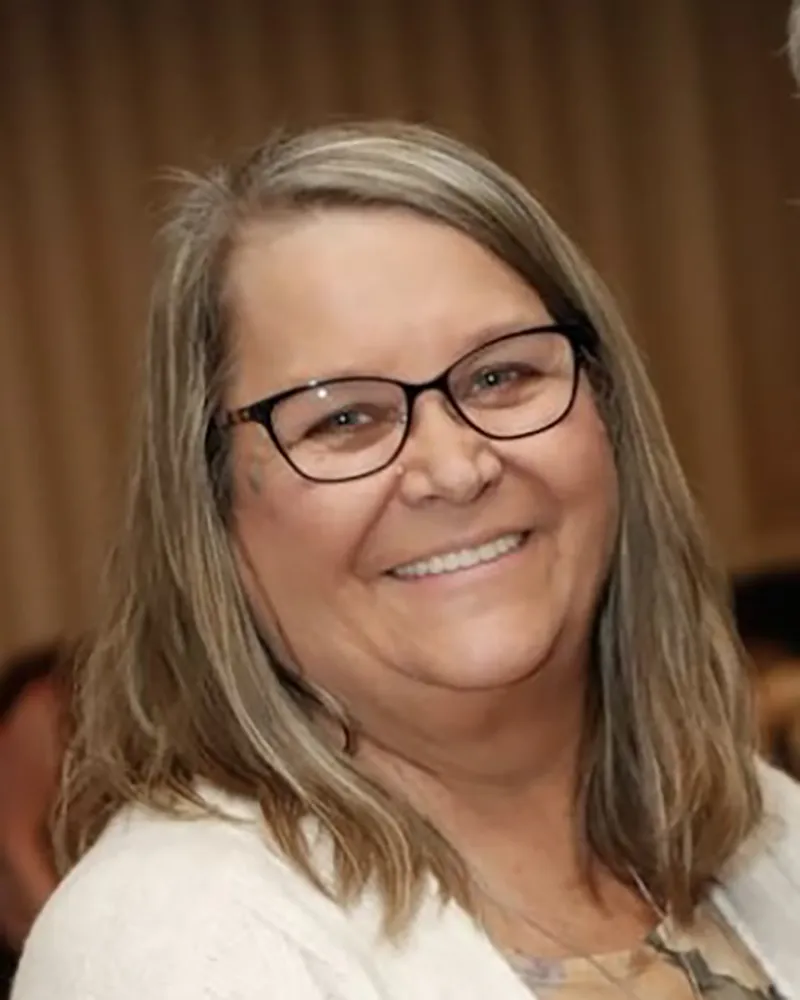
On October 2, Donna will celebrate 45 years with Amlings.
Forty-five.
She started at Amlings Flowerland because her sister worked there and she was looking for a job. Since then, she’s worked in the plant bar, management, flower buying, human resources and just about everywhere else.
Ask Donna what her official title is today, and she has a very Donna answer:
“You’ll have to ask Chris.”
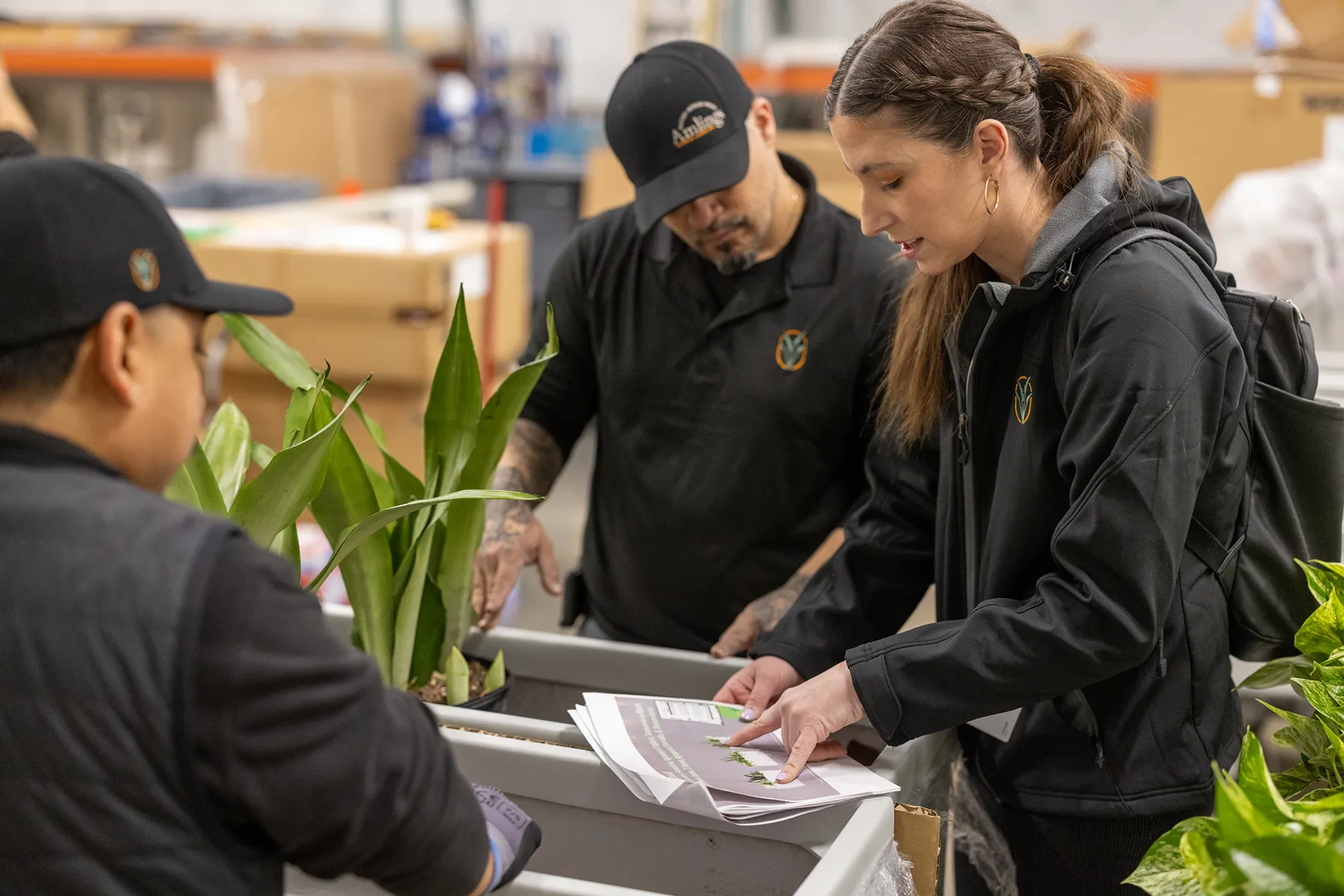
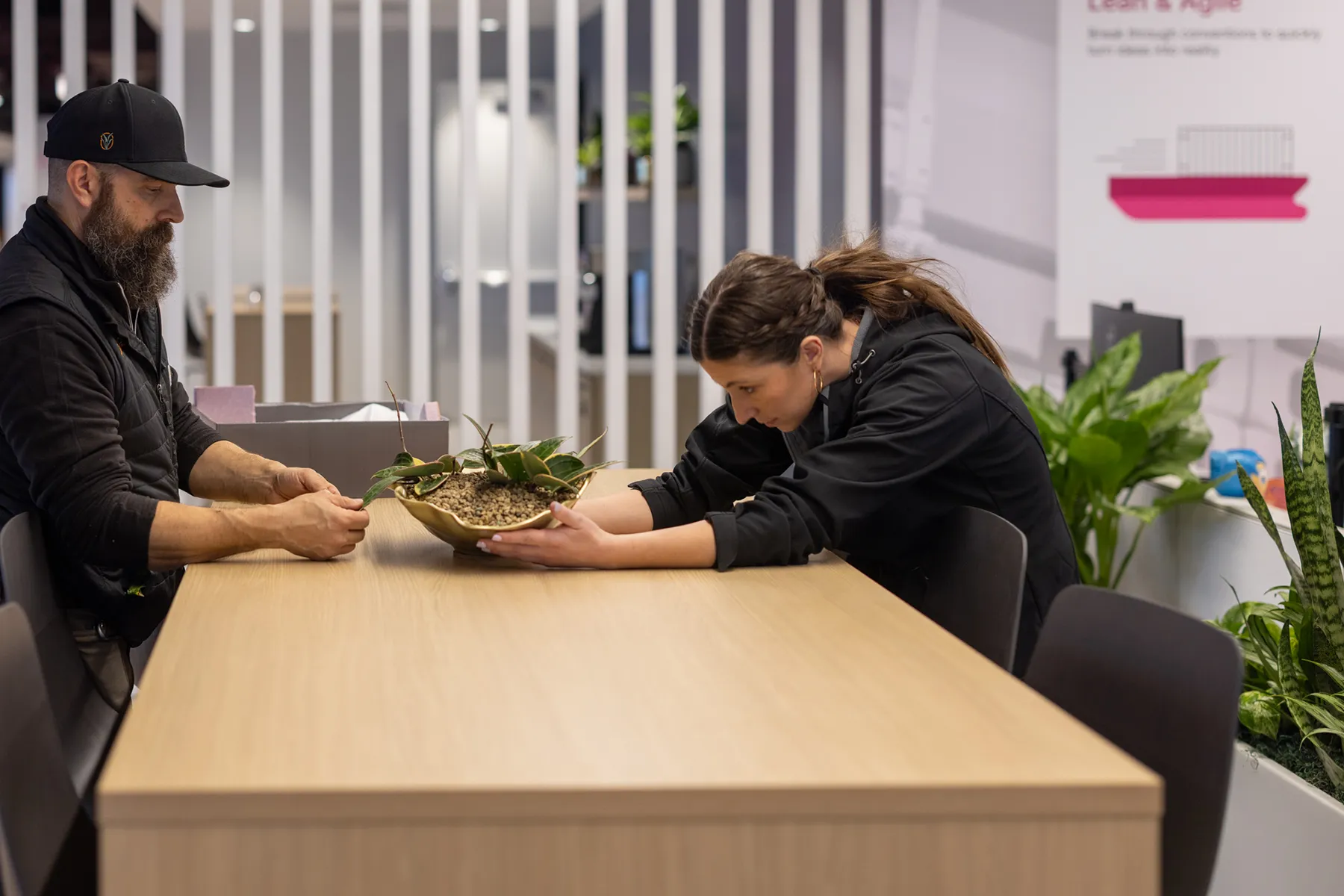
What she does know is that she spends much of her time working behind the scenes with Amlings’ service technicians, customers and management team—solving problems, juggling schedules, checking quality and generally being the person people come to when something needs figuring out.
Outside of Amlings, she’s spent years volunteering with youth organizations, gardens in the same Elmhurst yard her dad once cared for and has a Disney collection large enough to warrant its own room.
We sat down with Donna to talk about 45 years at Amlings, how much the company has changed, the customers she still remembers, scaring children in one of Chicago’s most famous haunted houses and why there are so many ducks on her desk.
Q: Forty-five years at one company is pretty incredible. How did you first end up at Amlings?
Donna: I was just looking for a job! My sister worked at Amlings Flowerland, and they were looking for someone.
I started in the plant bar, which was an area where people could shop for plants. From there, I worked in management and at several different locations. I was a flower buyer. I worked in human resources. I’ve done everything.
Q: So after 45 years, what exactly is your title now?
Donna: You have to ask Chris what my real title is. I’m serious!
I mainly work with the service side of the business now. I work with our plant technicians and with Zach and his crew. When you’ve been here as long as I have, people also tend to come to you with just about anything – in their personal or work life.
Q: What does a typical day look like for you?
Donna: I don’t have a typical day.
I deal with the technicians’ schedules. I work a lot with customers, making sure everything is okay. I do quality control and lots of reports. There are always different things going on.
That’s one reason I’ve stayed so long. The crew is fabulous, and you’re always learning something new.
Q: You’ve been at Amlings since 1981. What’s one of the biggest changes you’ve seen?
Donna: Computers!
We didn’t have computers back then. We were doing everything by hand. Today, everything is in different systems, and it’s so much easier.
But one thing that has stayed the same is that no matter what you do here, you’re always learning. You’re meeting new people and making people happy– that’s what it comes down to.
Q: After all this time, what stands out most when you think about your career at Amlings?
Donna: The customers.
That’s probably the number one thing I remember. They become family. You work with people for so long, and even after things change, you still talk to them.
Q: Any particularly memorable Amlings moments?
Donna: There are so many.
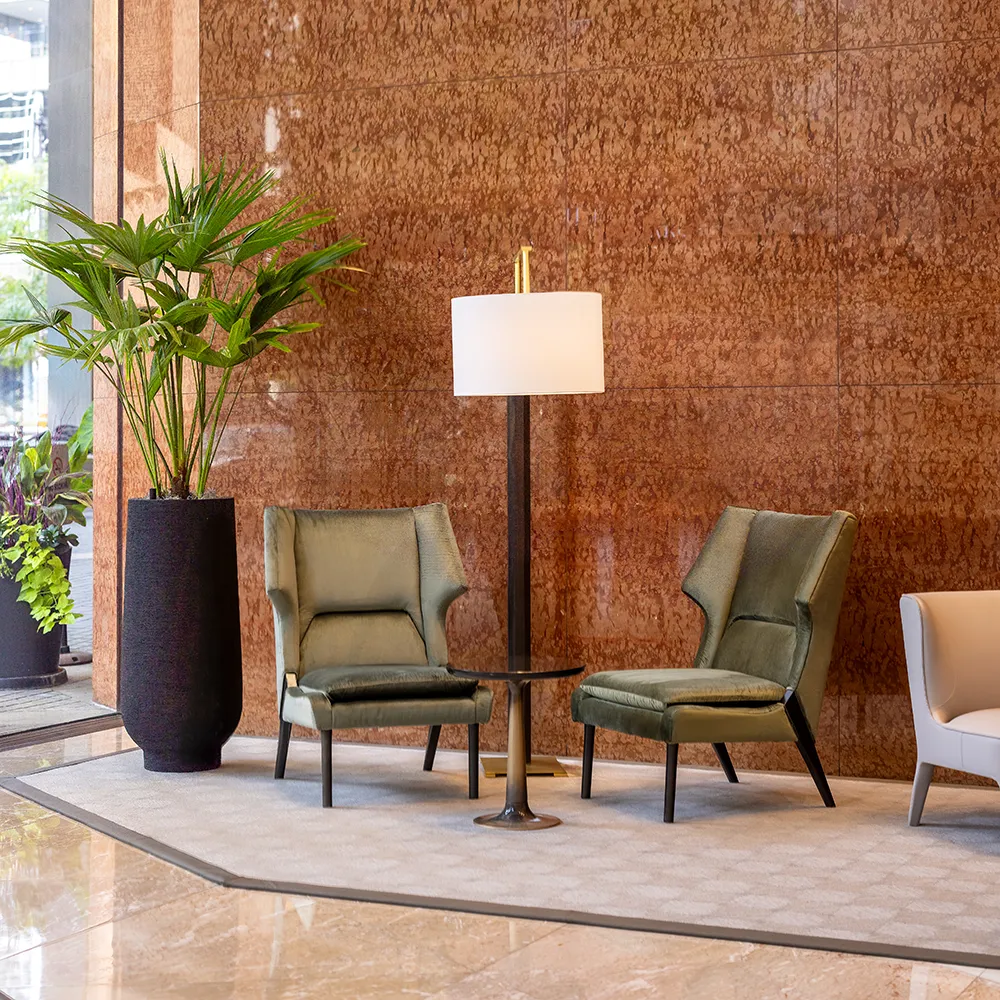
I remember we were redoing this atrium once. There were these huge bags of soil. A member of our team lost her balance in the soil and did a somersault. It looked like something out of a cartoon. That was pretty funny.
There were also some really unusual projects. I remember a musician coming to town, and we did the suite where this person was staying. We created this huge floral piece with all kinds of exotic flowers. You never knew what you are going to be working on.
Q: And then there was the Amlings haunted house. Were you involved with that?
Donna: Oh yes. I was part of the scare crew.
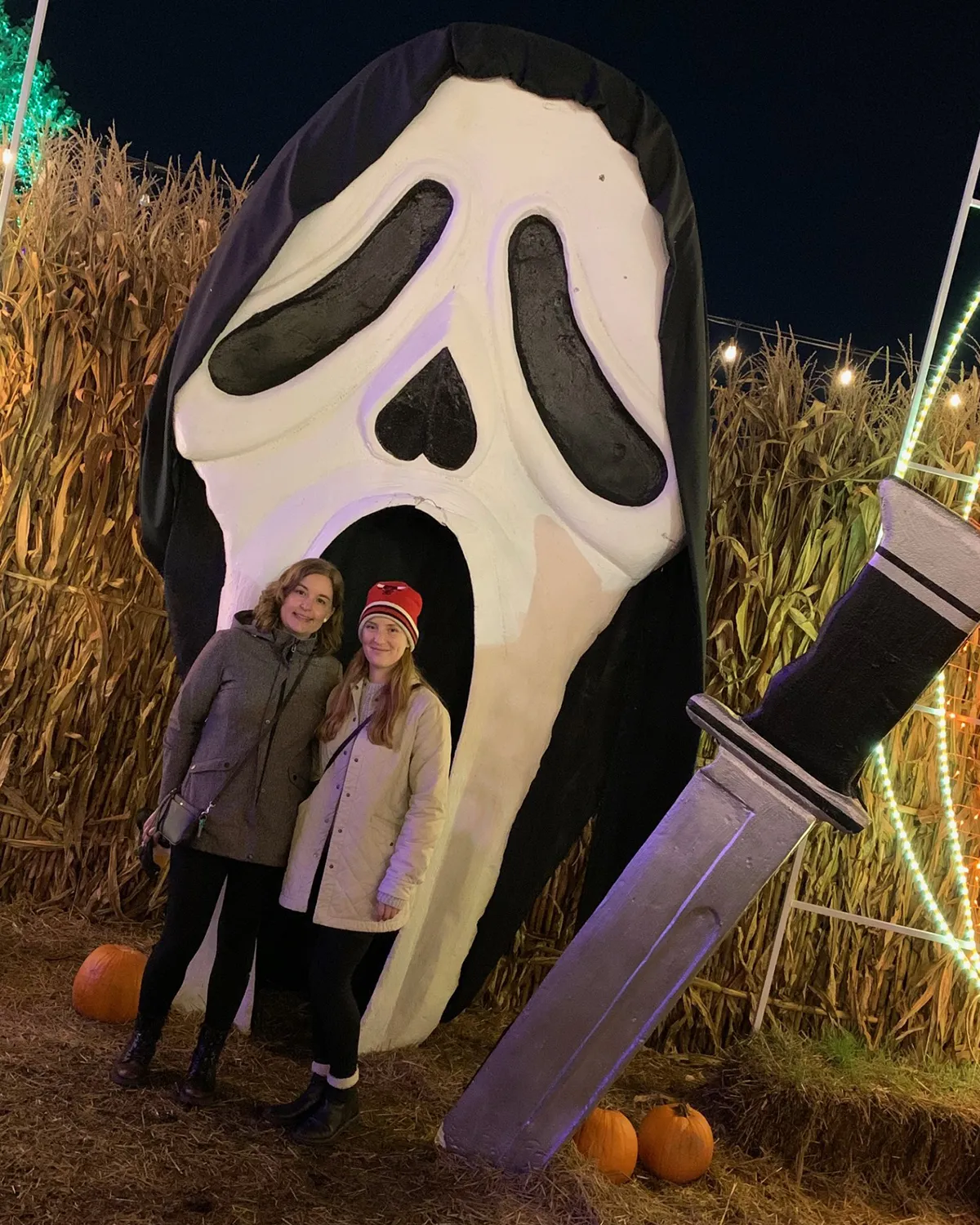
Amlings was known for the haunted house. It just kept growing, and it was so much fun. I’d wear a mask and scare people, but if I scared the little kids too much, I’d take the mask off quickly.
I did it until they closed it.
Q: We also heard something about you dressing up as a bumblebee?
Donna: Yes!
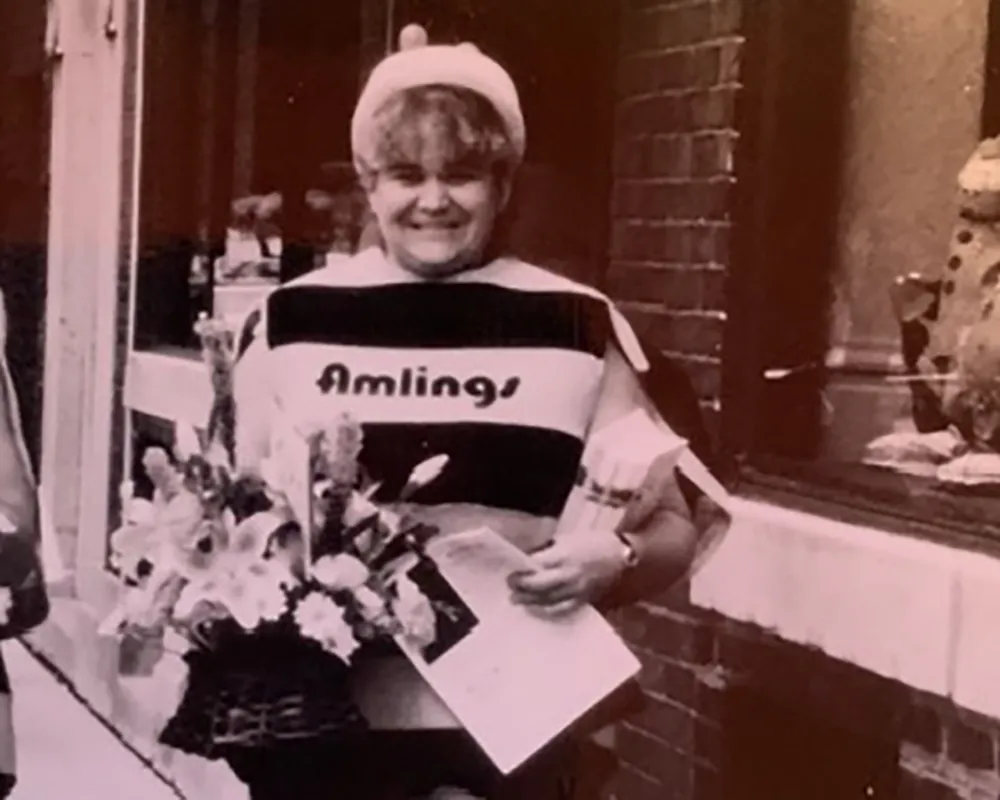
We had opened a new store downtown and there was a ribbon-cutting ceremony. We dressed up as bumblebees and rode on top of a double-decker bus around downtown Chicago, handing out seeds and flowers to businesses.
Q: After working around plants for 45 years, is your house overflowing with them?
Donna: I’ll let you in on a secret, I like outdoor plants better.
I love my yard. It was my dad’s yard, and we like to garden it. I love the colors of flowers. This year, my favorite was a salmon geranium.
Q: Your dad’s yard?
Donna: I actually live in the same house I grew up in.
My parents bought the property in Elmhurst. I got married and moved away, but when my parents passed, we eventually moved back. So I’m definitely a suburbanite.
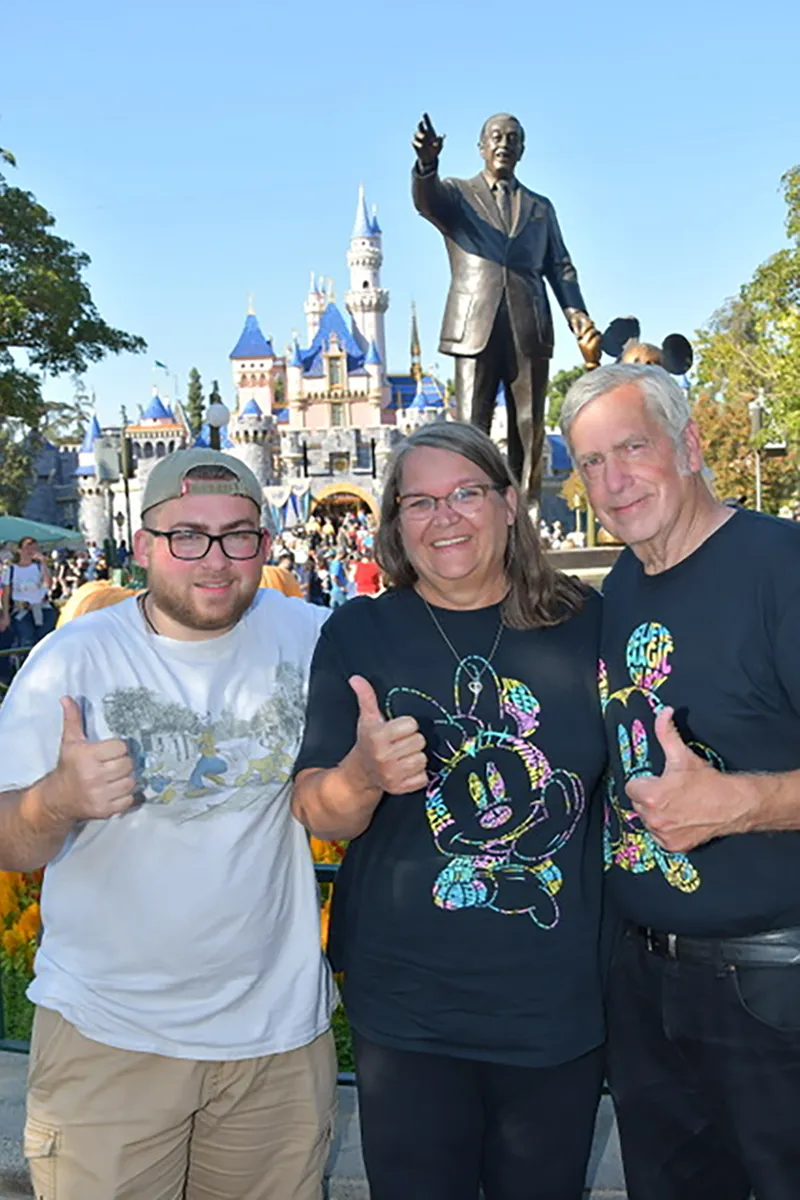
Q: We know plants aren’t your only decorating interest. Tell us about Disney.
Donna: Oh, we are Disney freaks.
I have a whole Disney room in my house. I went to Disney World the first year it opened, and I’ve gone pretty much every year since. We even went for our 25th wedding anniversary.
Q: Favorite ride?
Donna: I really do love It’s a Small World. It’s relaxing, it’s fun and the message is good. It is a small world.
Q: A lot of your time outside work is spent volunteering. Tell us about that.
Donna: Working with youth groups is my true passion.
I’m involved with Shriners and Masonic groups, Eastern Star and DeMolay. I’ve been a chapter advisor and youth group leader.
My son was really shy when he was younger, and we did all the scouting and youth-group activities together. I stayed involved, and it’s so nice to watch these kids grow up.
That’s what I love about it.
Q: And your son is all grown up now?
Donna: He’s 26 and just got married last year. He’s a nurse on a pediatric floor, and I’m very proud of him. I worked with him through all those studying years, so seeing where he is now is pretty special. AND I am going to be a first time Grandma this coming February!
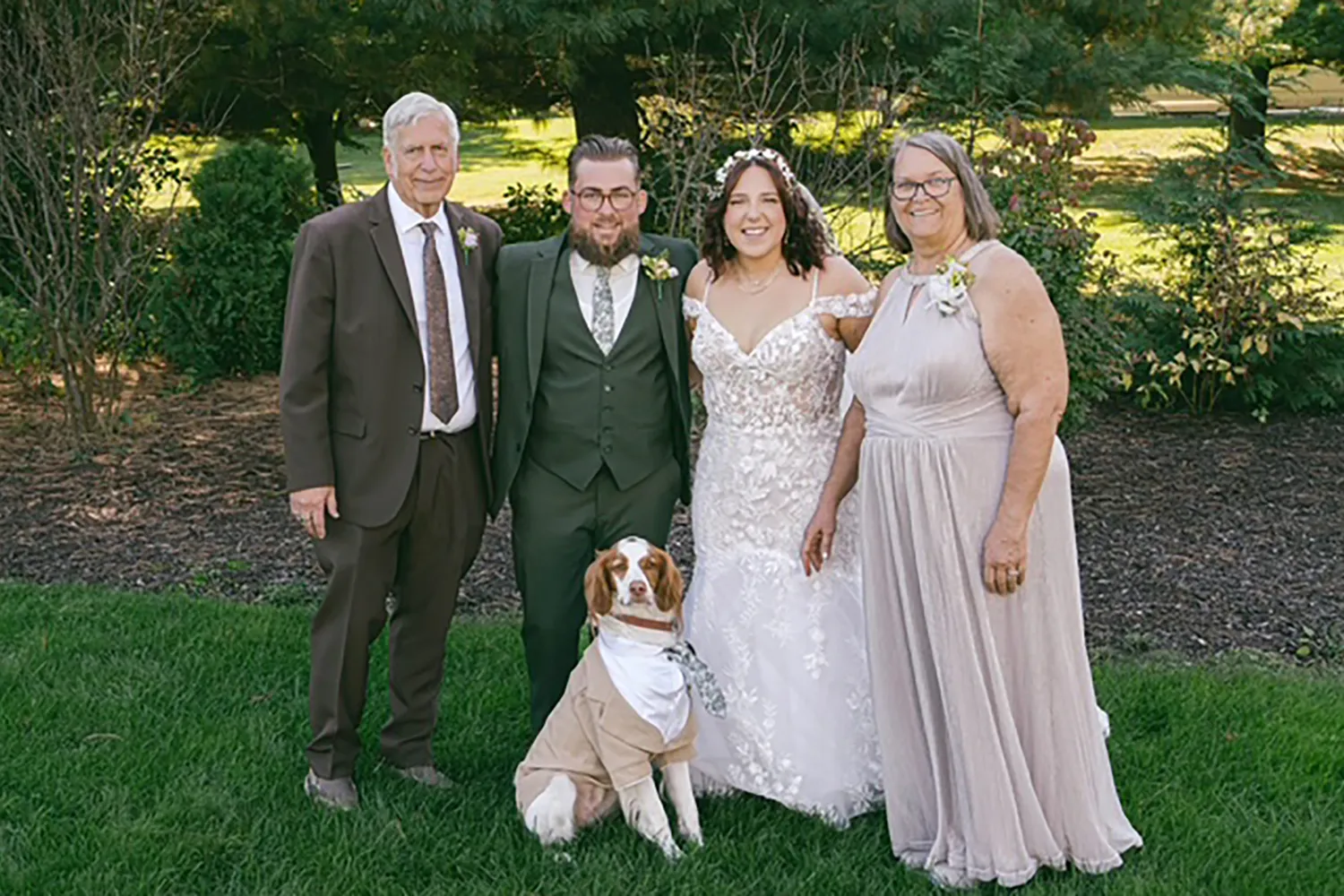
Q: We can’t finish without talking about Caruso.
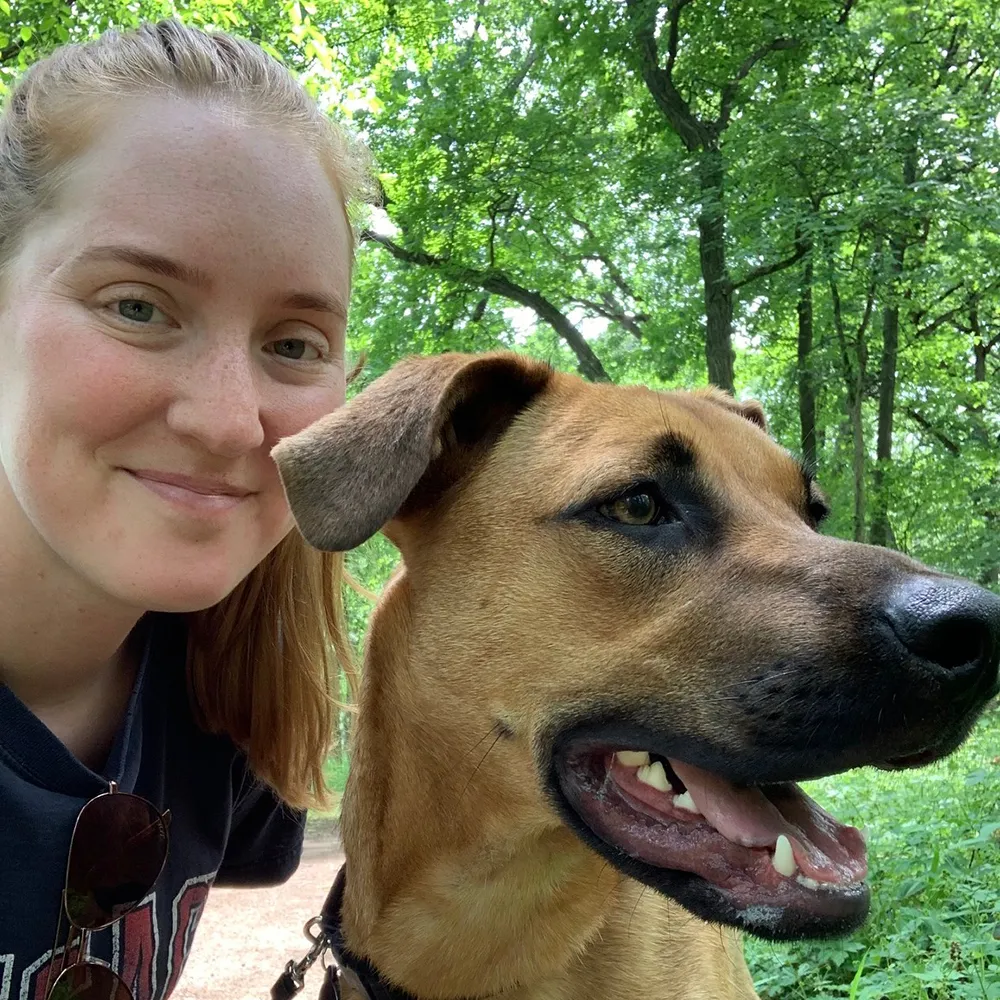
Donna: Caruso is my dog. He’s named after Alex Caruso—the basketball player.
He was actually the ring bearer in my son’s wedding. He wore a suit that matched everybody else. He’s also my service dog. About a year and a half ago, I wasn’t walking, and he was there for me. He’s trained to help me and can run and get someone from another room if I need help.
He’s pretty special.
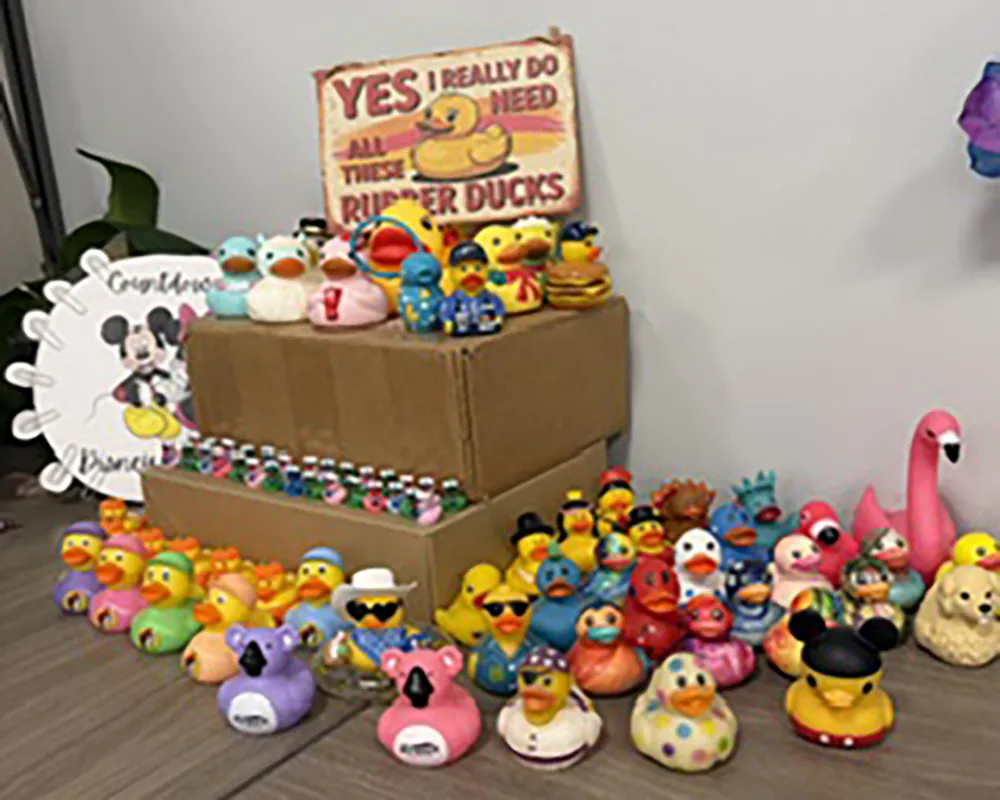
Q: Finally, we have to ask about the ducks on your desk.
Donna: I have a duck collection.
You know the saying, “Do you have all your ducks in a row?”
Well, I have my ducks and I guess you could say I help keep everybody’s ducks in a row, too.
Thanks, Donna
Forty-five years is a long time to watch a company change—and an even longer time to help make that change happen.
From Amlings Flowerland and handwritten paperwork to today’s design and service operation, Donna has been there for nearly every chapter. Along the way, she’s done a little bit of everything, built relationships that lasted decades and become the behind-the-scenes person people know they can turn to when there’s a question, a scheduling puzzle or, in her words, some “shenanigans.”
Congratulations on 45 years, Donna. We’re pretty sure you’ve earned the right to have as many ducks on your desk as you want.