
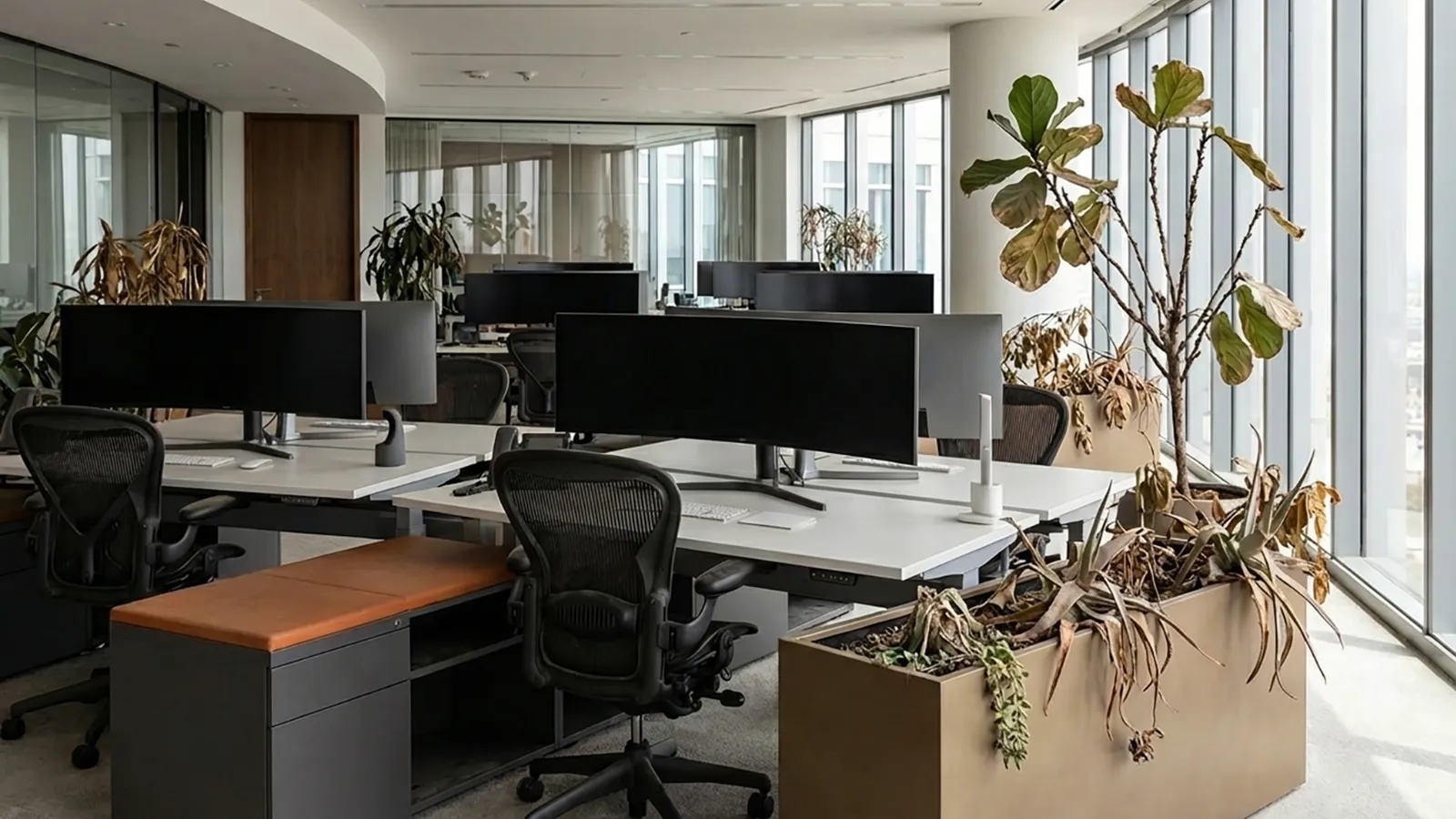
When Beautiful Spaces Quietly Start to Feel Dated
Interior designers know this feeling well.
A space that once felt fresh, intentional, and elevated suddenly feels… tired. Nothing obvious has changed. The finishes are still beautiful. The furniture still works. The layout still makes sense.
And yet, something feels off.
More often than not, the issue isn’t architecture or furniture—it’s the interior landscaping.
In markets like Chicago, where design expectations are high and competition is constant, interior landscaping plays a powerful role in how a space is perceived over time. When plant programs stay static while design trends evolve, they can quietly age an otherwise well-designed environment.
This article explores how interior landscapes age, the signs designers and property teams should look for, and how thoughtful updates—rather than full renovations—can restore sophistication and impact.
Interior Landscaping: The Most Overlooked Design Element
Plants are often treated as “finished touches,” added after architecture and interiors are complete. But unlike furniture or lighting, plants are living elements.
They grow.
They change.
They respond to care—or lack of it.
This is why the indoor plants within Chicago spaces require ongoing attention, not just installation and routine care.
When interior landscapes aren’t periodically reevaluated, they can unintentionally date a space faster than almost any other element.
How Interior Landscaping Can Age a Space
Plant Selections That Reflect a Different Era
Every decade has its plant trends.
What once felt modern and safe can begin to feel predictable or stale:
- Overused species placed everywhere
- Plants chosen purely for survival, not design impact
- Lack of variety in texture, form, and scale
Design-forward office plants and hotel lobby plants today emphasize layered compositions, intentional focal points, and a balance between reliability and interest.
If your plant palette hasn’t evolved, it may be signaling a time for a change.
Containers That No Longer Match the Architecture
Containers are one of the fastest ways interior landscaping can age a space.
Common red flags include:
- Generic shapes and finishes
- Containers chosen decades ago with limited options
- Scale that no longer fits renovated layouts
Interior designers know that vessels should feel as intentional as lighting fixtures or furniture. In Chicago commercial spaces, outdated planters can undermine even the most thoughtful interiors.
Why Designers Notice It Before Clients Do
Designers are trained to see cohesion—or the lack of it.
Clients and guests may not say, “These planters feel dated,” but they feel the disconnect. Designers see:
- Missed opportunities for impact
- Visual noise instead of clarity
- Elements that no longer support the narrative of the space
This is especially critical in property management in Chicago, where interiors must appeal to tenants, guests, and ownership simultaneously.

Office Plants That Age Instead of Elevate
The Problem With “Set It and Forget It”
Many commercial spaces still rely on office plants installed years ago and maintained just well enough to survive. But survival is not the same as relevance.
Outdated office plants often show up as:
- Sparse or leggy growth
- Imbalanced proportions
- Plants that no longer suit current lighting conditions
Without design-driven plant maintenance, even healthy plants can make a space feel tired.
Hotel Lobby Plants: Where Aging Is Most Visible
Hotel lobbies are some of the most demanding environments for interior landscaping.
They are:
- Highly visible
- Constantly photographed
- Closely tied to brand perception
When hotel lobby plants feel dated, guests notice immediately—even if subconsciously.
Common issues include:
- Plants that no longer match brand positioning
- Displays that feel static instead of curated
- Maintenance that prioritizes survival over presentation
In hospitality, interior landscaping should feel as current as the guest experience itself.
Maintenance Isn’t Just Care—It’s Design Preservation
One of the biggest misconceptions about plant maintenance is that it’s purely horticultural. In reality, strong plant maintenance is what preserves design intent over time.
Design-aware plant maintenance includes:
- Pruning for shape, not just health
- Refreshing soil and surface materials
- Rebalancing compositions as plants grow
Maintenance of interior landscaping is where design either lives on—or slowly erodes.
Why This Matters for Interior Designers
Designers are often brought in for renovations, refreshes, or tenant improvements—but interior landscaping is frequently assumed to be “handled.”
When it isn’t reevaluated, designers risk:
- New finishes paired with old plant programs
- Beautiful spaces undermined by dated greenery
- Missed opportunities to elevate the final result
Revisiting the interior landscaping in any space allows designers to complete the story—not just add a part of it.
Why This Matters for Chicago Property Management Teams
For property managers, aging interiors impact:
- Leasing success
- Tenant satisfaction
- Competitive positioning
Plants that quietly age a space can affect perception long before complaints arise. Regular evaluation of interior landscaping, office plants, and hotel lobby plants helps protect the long-term value of the asset.
Signs Your Interior Landscape May Be Aging Your Space
Ask yourself:
- When were these plants and containers originally selected?
- Do they still reflect current design standards?
- Has the surrounding space evolved while the plants stayed the same?
If the answer raises hesitation, it may be time to rethink the plant strategy—not remove plants, but reimagine them.
How Interior Landscaping Can Be Updated Without Renovation
The good news? Updating interior landscaping doesn’t require construction.
Effective updates may include:
- Introducing new plant varieties for contrast
- Replacing dated containers
- Rebalancing scale and placement
- Elevating plant maintenance standards
For Chicago commercial buildings, these changes often deliver outsized impact with minimal disruption.
Amlings’ Design-Forward Approach to Interior Landscaping
At Amlings, we approach interior landscaping as part of the design—not an afterthought.
We work with:
- Interior designers and architects
- Property management teams
- Class A office building teams
- Hotel and restaurant owners
- Facilities management
Our philosophy is simple: Design first. Maintenance always.
From office plants to hotel lobby plants, we ensure living elements evolve with the space, not against it.
If your interior landscape may be aging your space, now is the time to address it.
Contact Amlings interior landscaping services to refresh, elevate, and future-proof your interiors with design-driven greenery.
Learn More or Start the Conversation
Not sure where to begin? Curious how your existing plant program could be reimagined?
Reach out to Amlings to learn more about interior landscaping Chicago designers trust—and how thoughtful plant maintenance can extend the life of your design.
Final Thought: Let Your Landscape Evolve With Your Design
Interior design never stands still. Your plants shouldn’t either.
When interior landscaping evolves alongside architecture and interiors, spaces stay refined and memorable. If your space feels older than it should, your plants may be part of the problem.
Let’s fix that—together.