Horticultural Service Articles

Guide, Horticultural Service
The Ultimate Guide to Perfect Plant Watering
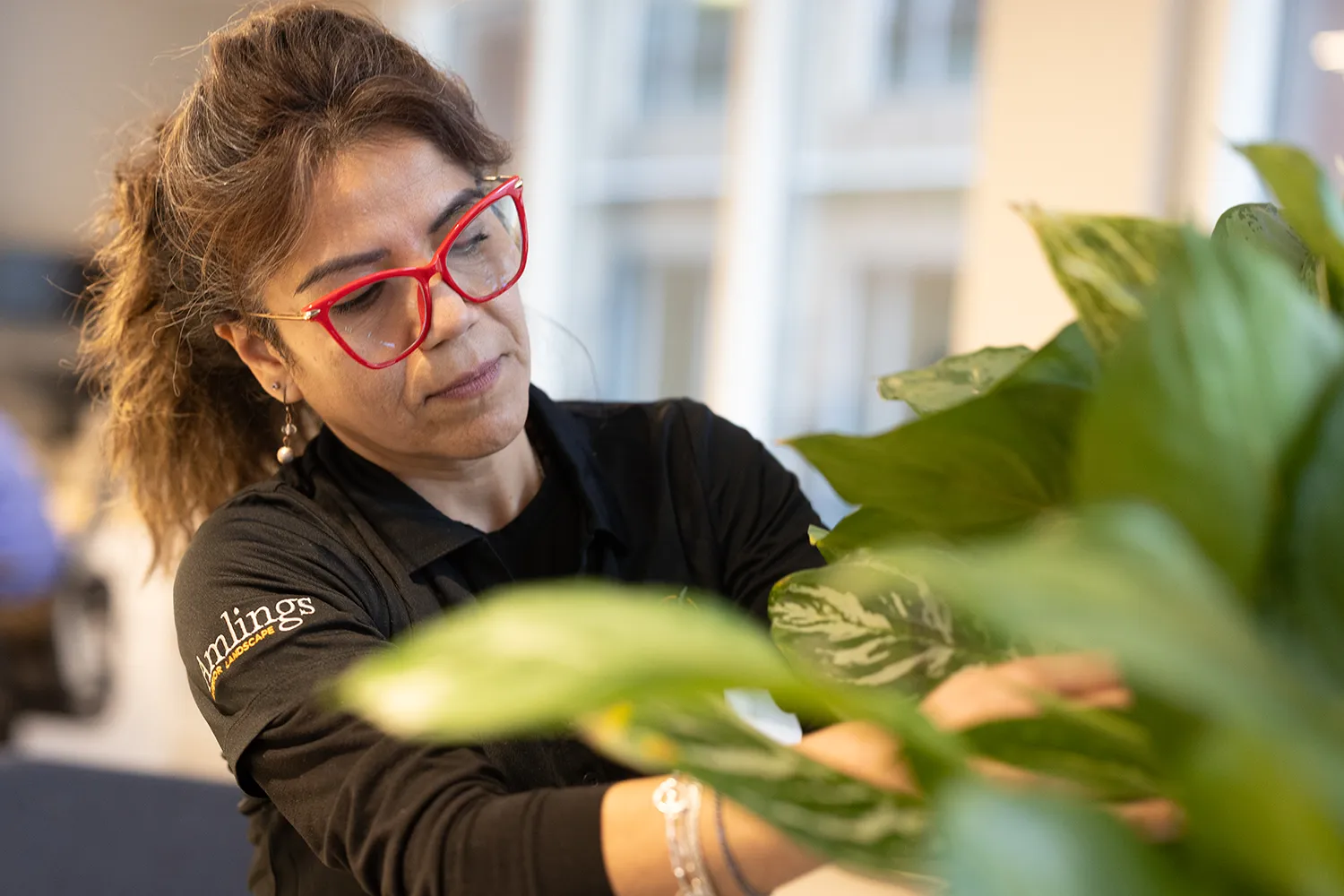
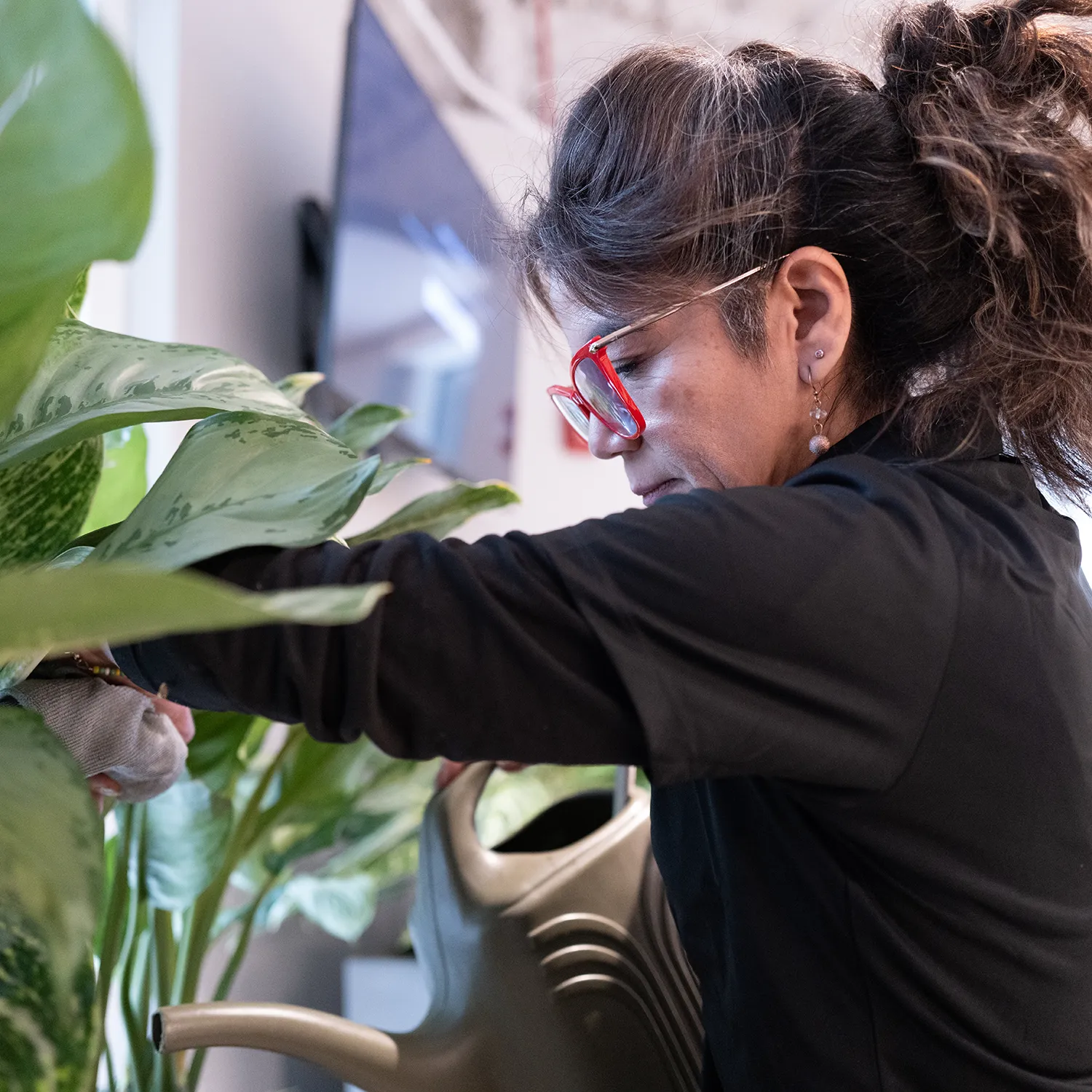
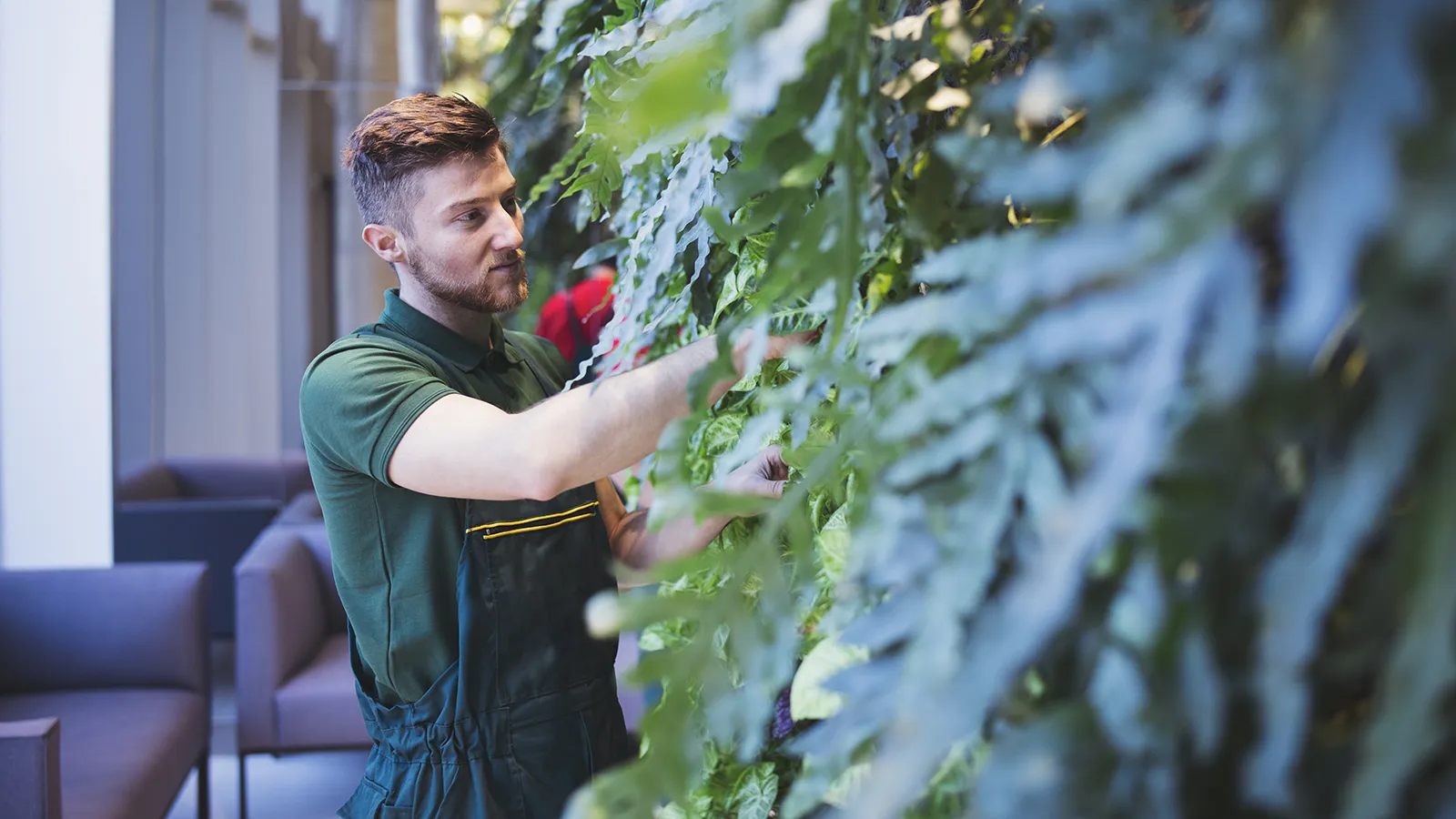
A professional Amlings technician performing a dedicated plant watering service in a corporate office, integrating thorough plant maintenance techniques to support exceptional indoor plant health.
Precision is key. A comprehensive plant watering service ensures that your premium commercial spaces receive the exact plant watering and routine plant maintenance required to sustain vibrant, long-lasting plant health.

Welcome to the comprehensive, expert-led guide designed specifically for property managers, facility directors, and owners of Class-A office buildings, premium co-working spaces, and large multi-family residential complexes. If you have invested in biophilic design and interior landscaping, you already understand that lush, vibrant greenery elevates the aesthetic appeal, psychological comfort, and market value of your property. However, preserving that investment requires far more than casual care.

Watering plants is not as simple as just pouring a glass of water into a potted plant whenever the soil looks dry. It is a deeply nuanced, highly scientific process that dictates the overarching success or failure of your interior landscape. Proper plant watering requires an understanding of botany, soil science, fluid dynamics, and environmental variables.

In this guide, we will explore the intricate science behind indoor plant irrigation, outline the vital components of professional plant maintenance, and demonstrate why securing a dedicated plant watering service like Amlings is the smartest decision you can make for your commercial property.

To ensure your premium spaces remain pristine and your botanical investments thrive, contact us for more information about our comprehensive horticultural programs today.

The Hidden Science Behind Plant Watering

When you execute a plant watering routine, you are initiating a complex biological chain reaction. To truly understand plant health, we must look below the soil surface and examine how plants interact with moisture on a cellular level.

The Mechanics of Capillary Action and Osmosis

Plants absorb water primarily through microscopic root hairs via a process called osmosis. For osmosis to occur efficiently, the concentration of water in the soil must be greater than the concentration inside the root cells. When water is introduced to the soil, it travels upward through the plants vascular system—specifically the xylem—defying gravity through a mechanism known as capillary action and transpirational pull.

A foundational review of the cohesion-tension theory (Steudle, 2001) notes that this continuous hydraulic system relies on negative pressures to draw water from the soil up to the evaporating surfaces of the leaves. Furthermore, studies exploring capillarity and cellular mechanisms (Ye et al., 2004) demonstrate that this overarching tension directly influences the gating of aquaporins (microscopic water channels) to regulate flow.

If the soil is chronically parched due to improper plant watering, the transpirational pull breaks down, leading to a loss of turgor pressure. Turgor pressure is the internal water pressure that keeps stems upright and leaves rigid. Without it, the plant rapidly wilts.

Root Respiration and the Danger of Anaerobic Soil

Conversely, excessive plant watering is equally devastating. Plant roots do not merely absorb water; they also need to breathe oxygen to convert sugars into usable energy, a process known as root respiration. When you over-saturate a potted plant without proper drainage, the water displaces all the vital oxygen pockets within the soil matrix. Scientific studies demonstrate that environmental stress from this exact type of oxygen deprivation directly and rapidly inhibits specific root respiration (Lak et al., 2020).

This creates an anaerobic (oxygen-starved) environment. While some specialized plants can survive these hypoxic conditions by developing internal, gas-filled channels called aerenchyma to transport oxygen (Wany & Gupta, 2018), most common potted plants lack this rapid adaptation. Under these conditions, roots begin to suffocate and decay, inviting destructive pathogens like Pythium and Phytophthora—the primary culprits behind root rot. Achieving optimal plant health means maintaining the delicate equilibrium between field capacity (the amount of water the soil can hold against gravity) and adequate soil aeration.

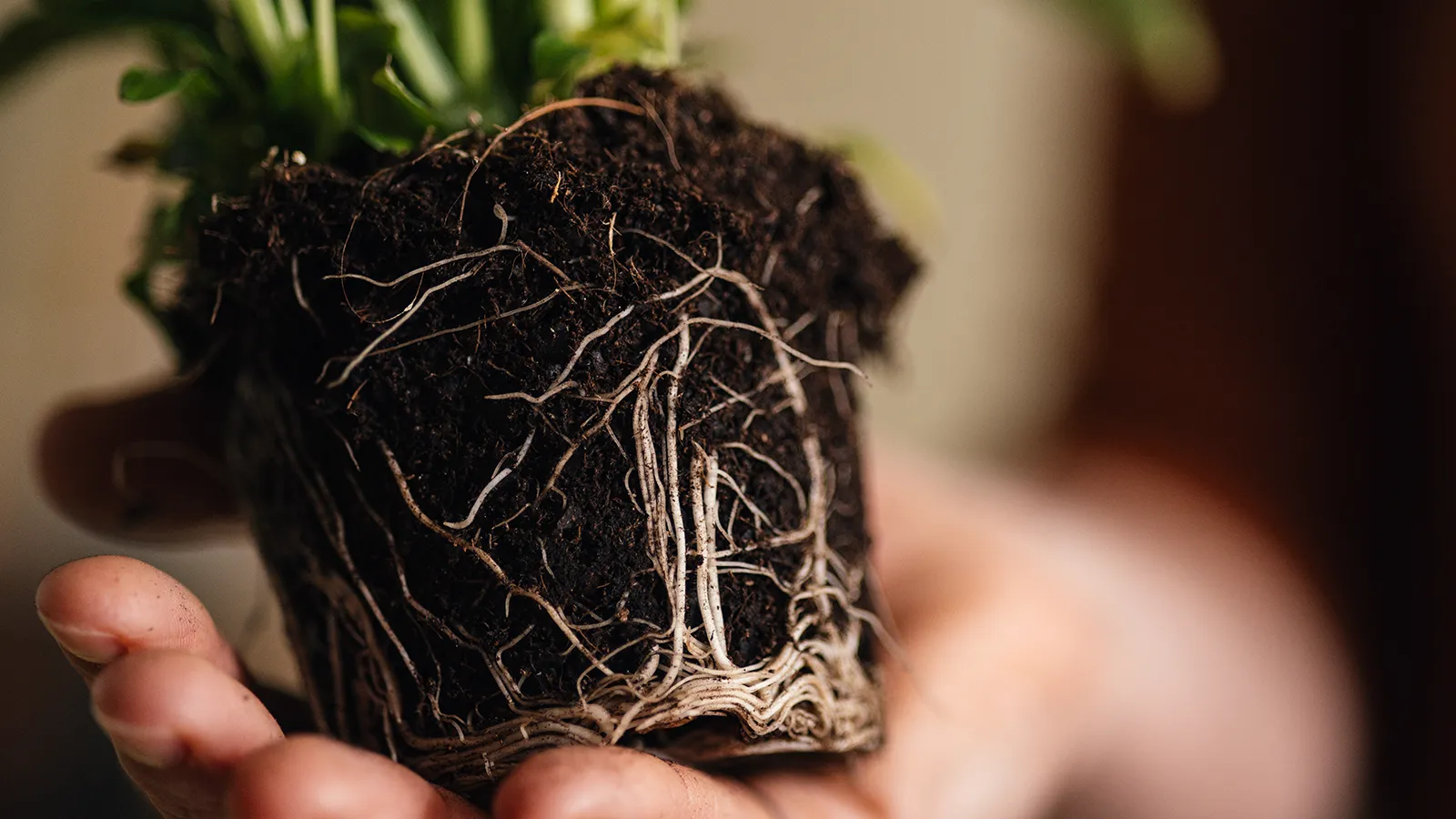
A close-up of hands holding a plant's exposed root system and dark soil, illustrating how precise plant watering and routine plant maintenance directly support structural plant health.
Proper plant watering relies on a scientific understanding of soil dynamics, root respiration, and moisture balance to guarantee long-term plant health.

Why Commercial Spaces Demand Precision Plant Maintenance

Class-A office buildings and luxury multi-family residential complexes present unique environmental challenges that require specialized skills. Professional plant maintenance is an absolute necessity in these high-end environments for several critical reasons.

The Microclimates of Premium Real Estate

Large commercial buildings are rarely uniform in their environmental conditions. A sprawling lobby with massive, multi-story glass facades experiences intense thermal loading and bright, direct sunlight during the day, followed by rapid cooling at night. Meanwhile, an interior executive conference room on the same floor may rely entirely on artificial LED lighting and aggressive, constant HVAC air conditioning.

Because of these extreme microclimates, a standardized plant watering schedule—such as watering every plant in the building every Friday—will inevitably result in disaster. The plants in the sun-drenched lobby will dehydrate and suffer from scorched, crispy foliage, while the plants in the cool, shaded conference room will drown from over-accumulation of moisture.

To secure your building’s aesthetic standard, you must move beyond generic care. If your maintenance team is struggling to keep up with these varied environmental demands, we encourage you to learn more about how Amlings can tailor a dynamic watering protocol for your specific floor plans.

The Financial Cost of Poor Plant Health

In premium co-working spaces and high-end residential communities, the visual standard must be flawless. A dying, yellowing, or pest-infested Ficus tree in your main lobby is not just an eyesore; it subtly communicates neglect to your tenants, clients, and prospective residents.

Furthermore, large commercial interior plants and bespoke planters are significant capital investments. Replacing mature, acclimatized indoor trees due to improper plant watering practices is incredibly expensive. A proactive plant maintenance program protects this investment, ensuring that your initial expenditure yields years of beautiful, air-purifying returns.

Key Variables Influencing Your Plant Watering Needs

Mastering indoor plant irrigation means understanding how environmental factors alter a plant’s metabolic rate and, consequently, its thirst. Our horticultural experts at Amlings meticulously evaluate the following variables when designing a custom plant watering service plan.

1. Light Intensity and Photosynthetic Rates

Light is the engine that drives a plant’s metabolism. Plants situated in brightly lit areas, such as near south-facing windows or under skylights, photosynthesize at a much higher rate. This rapid growth demands greater volumes of water. Conversely, plants positioned in low-light corridors or deep interior spaces process water very slowly. Applying high-light watering frequencies to low-light plants is a guaranteed pathway to root suffocation and declining plant health.

2. Temperature and HVAC Airflow

Commercial HVAC systems are designed to keep humans comfortable, but they can be brutal on tropical indoor plants. Constant drafts from air conditioning vents strip moisture from the surface of plant leaves through transpiration. Heating systems in the winter drastically lower indoor humidity levels, causing the soil to dry out rapidly. Professional plant watering requires constant adjustments to account for these artificial temperature and humidity shifts.

3. Soil Composition and Planter Dynamics

Not all potting soils are created equal. High-quality commercial plant maintenance utilizes specific soil amendments—like perlite, pumice, and orchid bark—to ensure rapid drainage and adequate root aeration. Furthermore, many Class-A office buildings utilize decorative planters that do not have traditional drainage holes. In these scenarios, professionals use sub-irrigation systems or sophisticated top-dressing techniques to prevent a “perched water table” (a saturated zone of soil at the bottom of the pot) from destroying the root system.

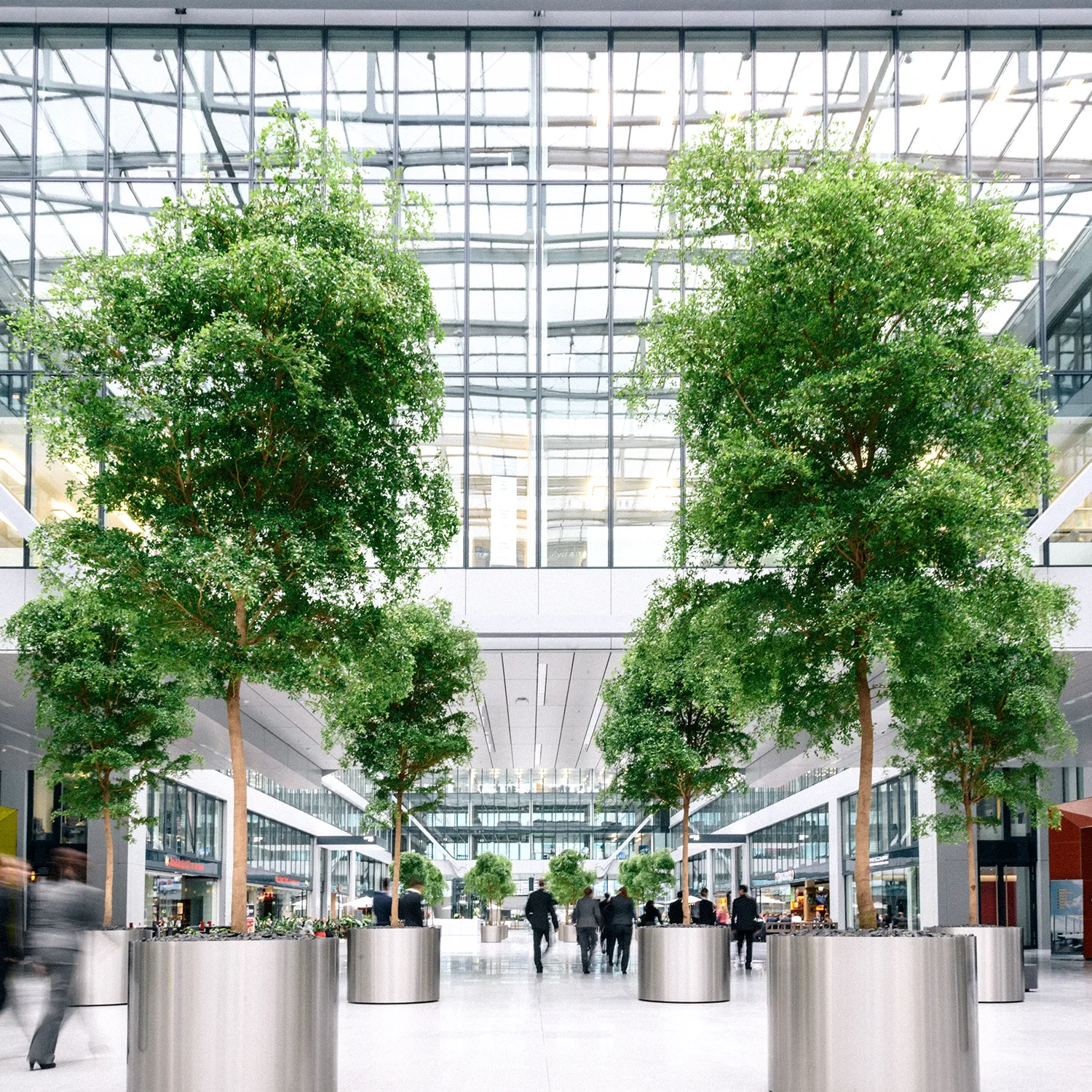
A wide view of a bright, modern Class-A office lobby featuring large indoor trees that require specialized plant maintenance and strategic plant watering.
Variables such as architectural glass, HVAC airflow, and indoor lighting heavily dictate the customized plant maintenance approach required in premium commercial spaces.

Diagnosing Plant Health: The Water Balance

Even with the best intentions, subtle shifts in environmental conditions can tip the scales. Knowing how to read the visual cues of your foliage is an essential component of professional plant maintenance. Here is how experts diagnose watering imbalances to protect overall plant health.

The Symptoms of Overwatering

Overwatering is the number one cause of indoor plant mortality in commercial settings. Because the roots are drowning in an anaerobic environment, they ironically cannot absorb the water or nutrients the plant needs. Symptoms of chronic overwatering include:

  • Yellowing Leaves (Chlorosis): Lower leaves turn a sickly yellow and drop off easily when touched.
  • Soft, Mushy Stems: The base of the plant becomes structurally compromised and soft, indicating advanced rot.
  • Foul Odors: A distinct, swampy smell emanating from the soil indicates bacterial and fungal decay.
  • Edema: Blister-like lesions on the undersides of leaves where plant cells have burst from excessive water pressure.

The Symptoms of Underwatering

When plant watering is neglected, the plant engages in extreme conservation measures. It will sacrifice older foliage to preserve the newly developing growth at the apical meristem. Symptoms of severe dehydration include:

  • Crispy, Brown Margins: The edges and tips of the leaves become dry, brittle, and brown.
  • Severe Wilting: The entire plant droops dramatically as internal turgor pressure plummets.
  • Dry, Contracted Soil: The potting medium pulls away from the sides of the container, causing water to run straight down the sides and out the bottom without actually soaking the root ball.

Diagnosing these issues before they become terminal requires a trained eye. If you are noticing these symptoms within your facilitys greenery, it is time to intervene. Contact us for more information regarding our emergency diagnostic and rehabilitation services.

The Superior Strategy: Securing a Plant Watering Service

For facility managers and property owners, delegating interior landscaping to the custodial staff is a common, yet fatal, mistake. Custodial teams excel at sanitation and building upkeep, but they lack the botanical education required for advanced plant health diagnostics. This is why partnering with a premier plant watering service is the industry standard for elite properties.

Precision Moisture Measurement

When the experts from Amlings arrive on-site, they do not guess when it comes to plant watering. Professional technicians utilize sophisticated soil moisture meters, tensiometers, and manual core soil probes. These tools allow our technicians to extract a cross-section of the soil profile, analyzing moisture levels at the very bottom of the planter, not just the top inch. This scientific approach ensures that water is delivered only when the root zone actually requires it, preventing both drought stress and root rot.

Integrated Pest Management (IPM)

Pest infestations—such as fungus gnats, spider mites, mealybugs, and scale—are intrinsically linked to watering practices. For instance, chronically damp topsoil is the ideal breeding ground for fungus gnats. A professional plant watering service includes regular pest scouting as a core component of plant maintenance. By optimizing the watering schedule and applying targeted, eco-friendly treatments, our service prevents minor pest introductions from escalating into full-blown building-wide infestations.

Nutrition and Water Quality Management

Municipal tap water in commercial buildings often contains high levels of chlorine, chloramine, fluoride, and dissolved minerals (hard water). Over time, these chemicals accumulate in the potting soil, leading to toxic salt buildup that burns delicate root tips and causes leaf necrosis. A top-tier plant maintenance program includes regular soil flushing, the use of distilled or filtered water for highly sensitive species, and the precise administration of water-soluble fertilizers tailored to the specific growth phase of each plant.

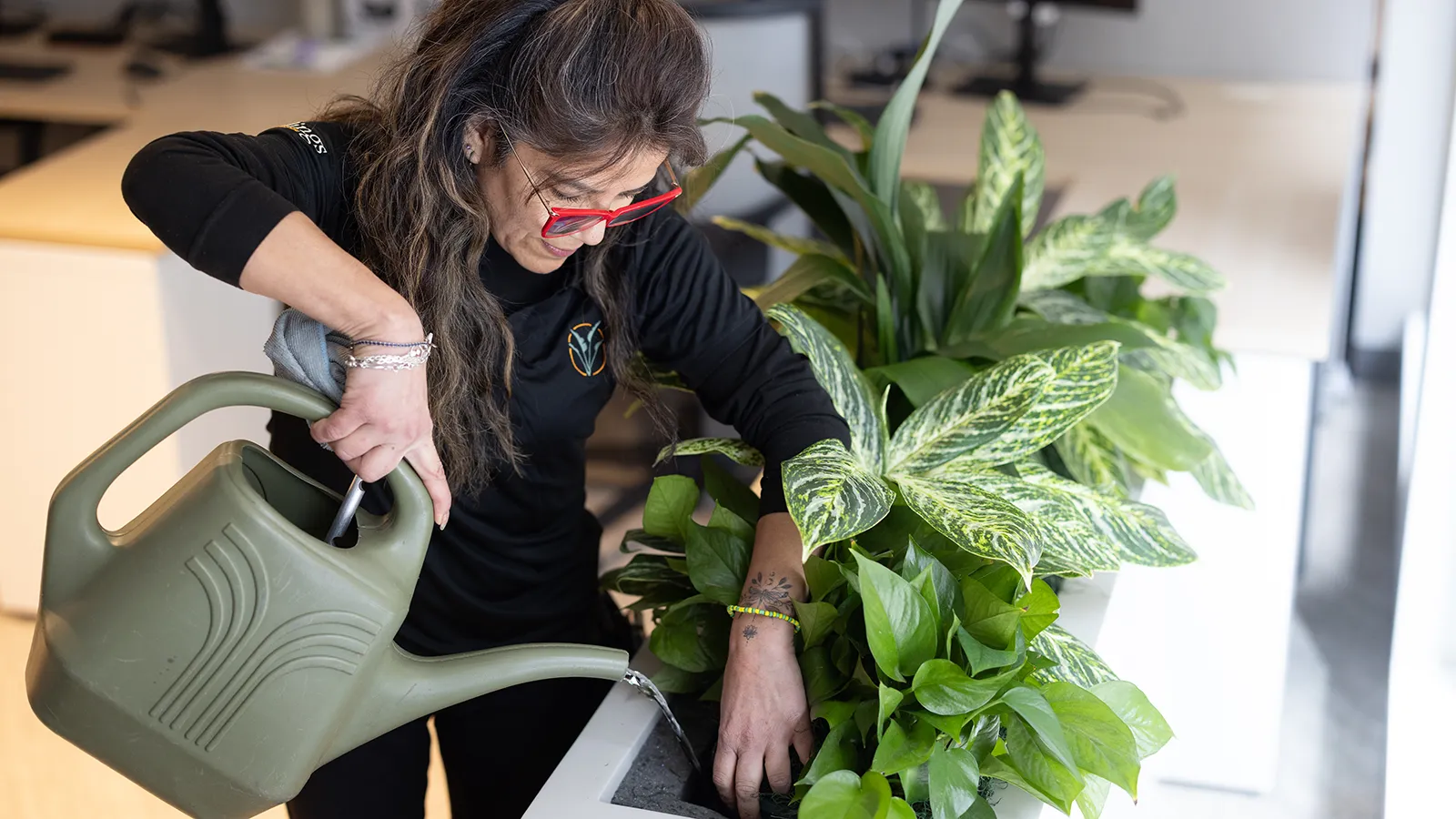
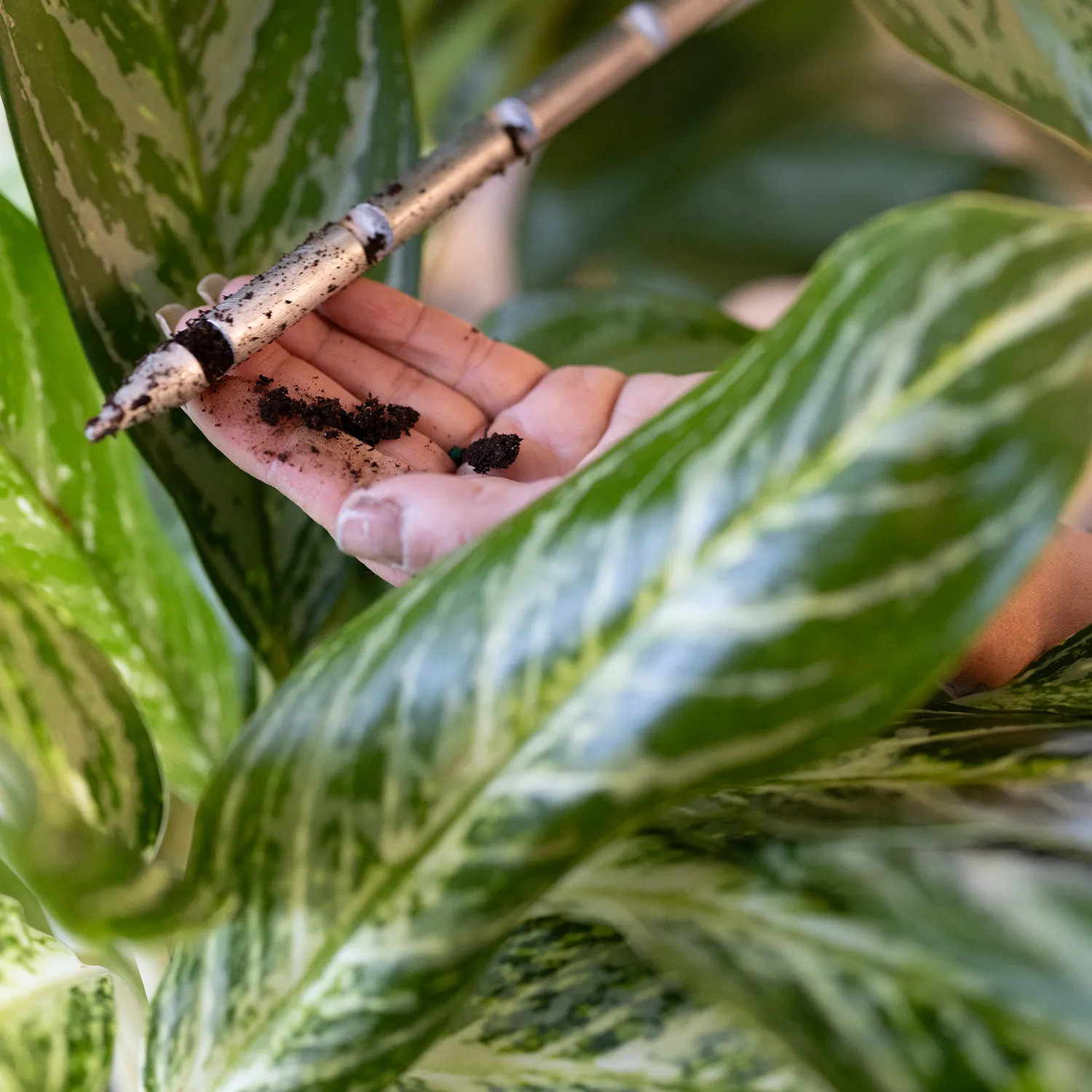
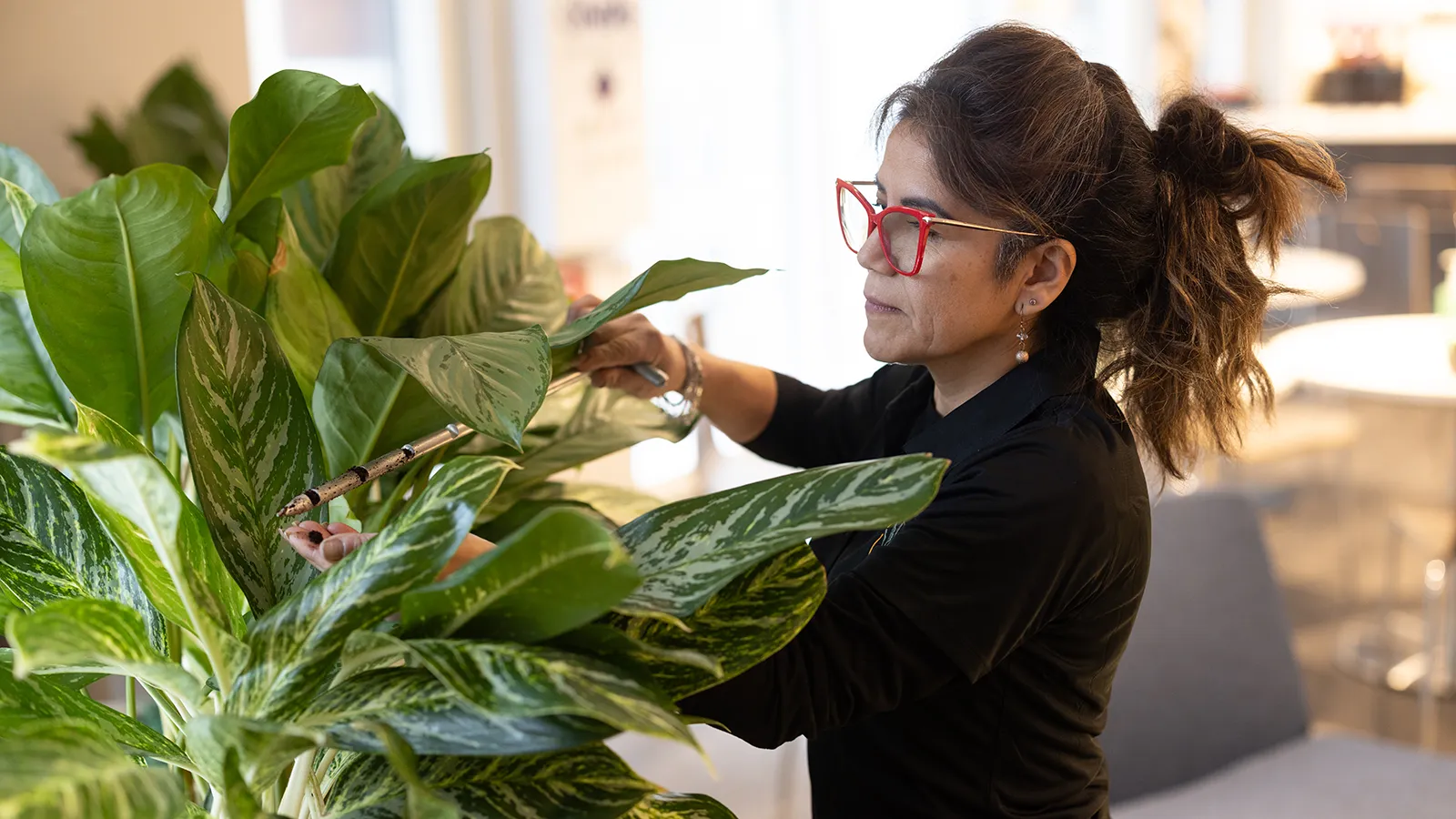
An Amling Horticultural Technician provides a plant watering service, carefully pouring water into a white modern planter filled with lush, green indoor plants.A close-up view of a person performing routine plant maintenance by checking soil moisture with a metal probe to ensure optimal plant health. The person's hand holds small clumps of dark soil, surrounded by large, vibrant green leaves with white variegated patterns.
A dedicated plant watering service utilizes advanced moisture probing tools to eliminate the guesswork and ensure your commercial investments thrive.

How Amlings Transforms Your Green Spaces

At Amlings, we understand that your commercial space is a reflection of your brand.’s prestige. Owners of Class-A office buildings, high-end co-working spaces, and luxury multi-family complexes cannot afford the visual liability of dead or dying greenery.

Our comprehensive plant watering service goes far beyond simple hydration. We provide a holistic approach to plant health that includes:

  • Customized Watering Algorithms: We map your building’s microclimates, adjusting our hydration strategies for seasonal changes, HVAC schedules, and architectural lighting.
  • Expert Pruning and Cleaning: Dust accumulation on leaves inhibits photosynthesis. Our technicians meticulously clean foliage, prune dead organic matter, and rotate plants to ensure even, upright growth.
  • Seamless, Unobtrusive Service: We understand the flow of premium commercial environments. Our technicians operate quietly and cleanly, ensuring zero disruption to your executives, tenants, or residents.
  • Total Replacement Guarantees: When you utilize our full-service plant maintenance programs, we assume the risk. If a plant declines under our care, we replace it seamlessly, ensuring your aesthetic remains flawless year-round.
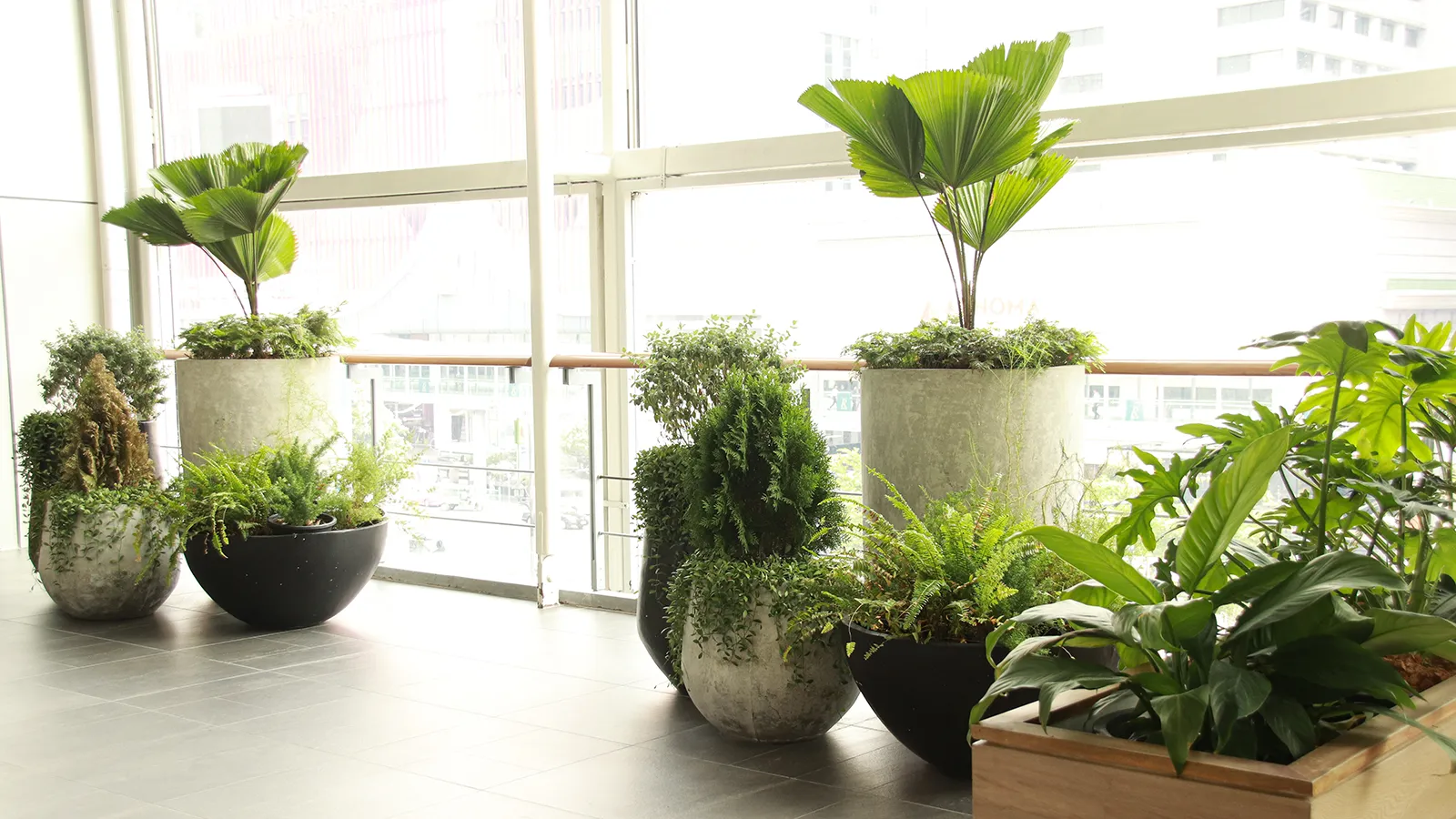
A vibrant, thriving atrium in a premium co-working space, showcasing the exceptional plant health achieved through Amlings' professional plant watering service.
Partnering with Amlings guarantees that your interior landscapes remain vibrant, healthy, and visually stunning, elevating the prestige of your entire property.

Make the Smart Choice for Your Propertys Biophilic Design

Plant watering is a rigorous, scientific discipline. The health, longevity, and beauty of your interior landscaping are entirely dependent on how effectively water, light, and soil dynamics are managed. For commercial properties aiming to provide world-class, stress-reducing, and air-purifying environments, leaving this delicate balance to chance is simply not an option.

Don’t let improper watering techniques compromise the elegance of your building. Protect your investment, impress your tenants, and ensure your greenery thrives for years to come by trusting the horticultural experts.

Ready to elevate your propertys interior landscape? Contact Amlings today and let our premier plant watering service transform your commercial space into a thriving, vibrant oasis. Contact Amlings Interiors Today
Read More
Horticultural Service
The Importance of Being Proactive in Office Plant Maintenance

Have you ever walked into a beautifully designed modern office, only to have your eyes drawn immediately to a yellowing, drooping, or completely dead potted ficus in the corner? If you manage a corporate workspace, you already know the profound frustration of failing plants. You invested time and budget into creating a lush, welcoming environment, but without the right support, that investment quickly becomes a visual liability. When your greenery starts to fail, it sends the wrong message to your employees, your executives, and your visiting clients.

This is exactly why securing a highly proactive office plant maintenance is not just an aesthetic luxury, but an operational necessity. You need a solution that takes the burden off your shoulders. You need a trustworthy vendor who understands that living things require dynamic, responsive care. If you are currently frustrated with failing plants, unresponsive vendors, and workspaces that look more neglected than nurtured, this comprehensive guide will show you exactly what a premium office plant maintenance should look like, and how it can permanently resolve your corporate landscaping woes.

A bright modern lobby demonstrating the flawless aesthetic achieved through a professional office plant service and routine office plant maintenance.
Partnering with a premier interior plantscaping company ensures your corporate indoor plants always look healthy, vibrant, and perfectly integrated into your design.

The Hidden Costs of Neglected Corporate Indoor Plants

The implementation of biophilic design—the practice of connecting people and nature within built environments—has become a cornerstone of modern corporate architecture. The inclusion of corporate indoor plants is meant to boost morale, clean the air, and create a welcoming atmosphere. However, when these living elements are neglected, they achieve the exact opposite effect.

Dying plants are a glaring sign of neglect. They subconsciously signal to employees and clients that the company lacks attention to detail. Furthermore, failing corporate indoor plants can harbor pests like fungus gnats or spider mites, which can quickly spread throughout the office and become a genuine nuisance to staff. The presence of decaying organic matter can also negatively impact indoor air quality, entirely defeating the purpose of having greenery in the first place.

According to a seminal study conducted by the University of Exeter, employees were 15% more productive when workplaces were filled with just a few houseplants. But this psychological benefit relies entirely on the plants being healthy and vibrant. When plants are struggling, the psychological boost turns into psychological distress. Watching a living thing slowly perish in your peripheral vision while you try to work is inherently demoralizing. This is the exact scenario a professional office plant maintenance is designed to prevent.

Are you tired of watching your office greenery slowly decline? Contact us to learn more about how a professional horticultural team can revive your workspace.

A vibrant office space demonstrating the benefits of a premium office plant maintenance.
Healthy corporate indoor plants dramatically improve workplace morale and aesthetic appeal, but only when maintained by a proactive office plant service.

What to Look for in an Interior Plantscaping Company

When you are looking for a better solution to your workplace greenery problems, selecting the right partner is paramount. Something to consider when selecting a partner to maintain plants in your modern offices is, how responsive will your vendor be when things go wrong?

Plants are, after all, living and perishable things. They are sometimes unpredictable, and plants can go downhill fast unexpectedly. Hopefully, your vendor will be proactive in keeping the number of plant emergencies to the bare minimum. But if something does go wrong unexpectedly, will your vendor be responsive and ‘on it’ right away to address the problem? Or will it be hard to get a response and take days for the issue to be addressed?

Far too many facility managers find themselves in a position where they have to actively manage their interior plantscaping company. You should not have to be the one to notice that the Dracaena in the boardroom has root rot. You should not have to send three emails to get a technician to clean the dust off the lobby palms. An exceptional interior plantscaping company operates invisibly but effectively, anticipating the needs of the environment before issues become visible to the untrained eye.

When evaluating an interior plantscaping company, you must ask about their routine. Do they just water the plants and leave, or do they practice comprehensive care? Comprehensive care includes soil moisture probing, pest inspection, pruning of necrotic tissue, leaf shining, and fertilization. If your current vendor is essentially just a person with a watering can, you are not receiving the full value of an office plant maintenance.

The Mechanics of Expert Office Plant Maintenance

To truly understand why your current plants might be failing, it helps to understand what goes into proper office plant maintenance. The corporate environment is incredibly hostile to tropical foliage. HVAC systems create unnatural drafts and strip moisture from the air. Artificial lighting, while sometimes sufficient for low-light species, often fails to provide the full spectrum of light required for robust photosynthesis. Weekend temperature drops, when building managers turn down the heat or AC to save money, can shock delicate root systems.

Expert office plant maintenance combats these hostile conditions through precise, science-backed horticultural practices.

Micro-Climate Monitoring: A top-tier office plant service evaluates the specific micro-climates within your building. The plant near the sunny, south-facing window needs a completely different care regimen than the plant situated in the artificially lit interior corridor.

Sub-Irrigation Systems: Modern office plant maintenance relies heavily on sub-irrigation (bottom-watering) systems. These systems allow the plant to drink exactly what it needs via capillary action, drastically reducing the chances of human error resulting in overwatering or underwatering—the two most common causes of indoor plant death.

Integrated Pest Management (IPM): Instead of waiting for a full-blown infestation, professional technicians look for microscopic signs of pests during every visit. They use safe, non-toxic horticultural oils and biological controls to eliminate threats before they compromise the plant’s health.

Soil Ecology Management: Over time, the soil in a potted plant becomes depleted of nutrients and compacted, preventing oxygen from reaching the roots. Routine aeration and tailored fertilization schedules are mandatory components of effective office plant maintenance.

If your current provider is failing on these fronts, it is time to upgrade your office plant service.

Ready to stop worrying about your greenery? Contact Amlings today and let our expert horticulturalists transform your failing plants into a flawless corporate landscape.

An Amlings horticultural expert inspecting corporate indoor plants at their local greenhouse facility to guarantee a rapid, proactive office plant replacement service for all office plant service clients.
We ensure your proactive office plant service and routine office plant maintenance never miss a beat.

The Necessity of an Office Plant Replacement Service

Even with the most rigorous, scientifically sound office plant maintenance program, nature is ultimately in control. Because plants are inherently perishable, even the most carefully curated interior landscapes can occasionally behave unpredictably or decline suddenly. A sudden draft from a broken HVAC vent, a spilled cup of coffee in a planter, or simply the end of a plant’s natural life cycle can result in an unsightly specimen.

This is where the concept of an office plant replacement service becomes your most valuable asset. The hallmark of truly premium office plant maintenance is that dead or struggling plants should be replaced without you needing to request it.

Imagine the relief of walking into your office on a Monday morning. Last week, you noticed a large fern in the reception area was looking a bit brown around the edges. You made a mental note to call your vendor. But when you arrive on Monday, a fresh, vibrant, perfectly sized replacement fern is already sitting in its place. You didn’t have to send an email. You didn’t have to wait for an approval process. You didn’t have to stare at a dying plant for two weeks.

A proactive office plant replacement service protects your brand and your investment. It guarantees that your biophilic design always looks exactly as it was intended to look on day one. When interviewing a potential interior plantscaping company, their policy on replacements should be a decisive factor. If they charge costly fees for every replacement or require a lengthy authorization process that leaves dead plants sitting in your office, they are not providing true office plant maintenance.

A technician performing a proactive office plant replacement service to maintain workspace aesthetics.
A reliable office plant replacement service guarantees that struggling greenery is swapped out seamlessly, without you ever having to ask.

The Amlings Philosophy: Responsive, Proactive, Flawless

At Amlings, we understand that plants are living, dynamic elements of your biophilic design. We recognize the profound frustration that building managers and office administrators feel when they are forced to micromanage their vendors. Your plant care team should never be someone you have to actively manage.

Our horticultural specialists are trained to provide museum-level quality care, meaning we anticipate health issues long before they surface. We keep plant emergencies to the absolute bare minimum—if a plant begins to struggle, our technicians proactively replace it through our integrated office plant replacement service to protect your brand and your investment.

But when the truly unexpected happens, responsiveness is everything. Unlike traditional plant services where you might wait days for a callback, Amlings acts as a dedicated partner. If an issue arises—perhaps a large tree was knocked over during a weekend event, or a localized pest issue suddenly bloomed—our local team is “on it” immediately. We resolve the problem swiftly to ensure your environment remains flawless and continues to inspire.

This level of responsiveness is the defining characteristic of a superior office plant service. We don’t just water plants; we manage living assets. We view ourselves as an extension of your facility management team, taking complete ownership of the corporate indoor plants so you can focus on running your business.

Discover the peace of mind that comes with museum-quality care. Contact us to learn more about the Amlings proactive approach to interior landscaping.

Biophilic Design ROI: Why Quality Office Plant Service Matters

For corporate decision-makers, every vendor relationship must be evaluated through the lens of Return on Investment (ROI). Investing in a premium office plant service might seem like an operational expense, but it is actually an investment in human capital.

Research published in the Journal of Environmental Psychology has repeatedly demonstrated that exposure to natural elements in the workplace significantly reduces physiological stress. Lower stress levels correlate directly with reduced absenteeism and lower employee turnover. In an era where retaining top talent is a primary corporate objective, the environment you provide matters immensely.

Furthermore, healthy corporate indoor plants contribute to better indoor air quality. While a single small plant wont purify an entire office building, a well-designed, dense installation of appropriate species can help filter out Volatile Organic Compounds (VOCs) emitted by carpets, paint, and office equipment. The famous NASA Clean Air Study highlighted the ability of certain houseplants to remove toxins from sealed environments. However, a plant can only perform this biological function if its stomata (the pores on its leaves) are clean and its root system is healthy. Dust-covered, sickly plants do not clean the air. Therefore, rigorous office plant maintenance is directly tied to the health benefits your greenery provides.

When you settle for a subpar interior plantscaping company, you are bleeding ROI. You are paying for the aesthetic and physiological benefits of biophilic design, but receiving none of them. By partnering with a responsive, proactive office plant service, you ensure that your investment pays daily dividends in the form of employee wellbeing, client impressions, and aesthetic excellence.

Transitioning to a New Interior Plantscaping Company

If you are currently trapped in a cycle of frustration with your existing vendor, making the switch to a new office plant service might feel daunting. However, a professional interior plantscaping company will make this transition entirely seamless.

When you choose to upgrade your office plant service, the process typically begins with a comprehensive audit of your current corporate indoor plants. Horticultural experts will assess the lighting, airflow, and current health of your existing inventory. They will identify which plants can be rehabilitated through expert office plant maintenance and which ones require immediate utilization of an office plant replacement service.

A trustworthy vendor will also communicate clearly about the transition timeline. They will introduce you to your dedicated technician, establish clear lines of communication for those rare emergencies, and set up a transparent schedule so you always know when your office plant service is being performed. You transition from a state of constant worry to a state of total peace of mind.

Overcoming the Unpredictability of Nature in the Office

The core challenge of indoor landscaping is that you are bringing wild, living organisms into a sterile, artificial environment. It is a testament to botanical resilience that corporate indoor plants survive at all under fluorescent lights and constant air conditioning.

Because we are dealing with nature, anomalies will occur. A plant that has thrived in the exact same spot for three years might suddenly drop all its leaves due to a microscopic fungal infection in the soil. A newly installed specimen might experience transplant shock and fail to acclimate to your building’s humidity levels.

This unpredictability is exactly why the “wait and see” approach used by amateur plant services fails. A premium office plant service operates on the principle of immediate intervention. When a plant shows the first signs of chlorosis (yellowing leaves indicating chlorophyll loss), a trained technician doesn’t just add water and hope for the best. They diagnose the root cause—is it a nutrient lockout? Is the soil pH imbalanced? Is there a subtle cold draft from a recently adjusted air vent?

If the plant cannot be rapidly stabilized, the proactive office plant replacement service protocol is triggered. The aesthetic integrity of your office is never compromised while a plant struggles to recover. The struggling plant is removed to a greenhouse environment where it can be rehabilitated out of sight, and a fresh, healthy plant takes its place immediately. This guarantees that your corporate indoor plants always reflect the high standards of your business.

A specialist from a premier interior plantscaping company conducting precise office plant maintenance to diagnose environmental stressors on corporate indoor plants.
A premium office plant service relies on immediate, scientific intervention rather than guesswork to diagnose issues.

Partner with the Best in Office Plant Service

Your office environment is a physical manifestation of your corporate culture. Failing, neglected plants communicate apathy and a lack of attention to detail. Conversely, vibrant, thriving greenery communicates vitality, care, and a commitment to excellence.

You should not have to spend your valuable time chasing down a vendor to ask them to remove a dead tree from your lobby. You need a partner who understands the crucial role of proactive office plant maintenance in corporate landscaping. You need a team that acknowledges the unpredictable, perishable nature of living things and counters it with unwavering responsiveness and an automatic, seamless office plant replacement service.

At Amlings, we pride ourselves on being that partner. We deliver the proactive, museum-level care that your modern office demands. When you choose us as your interior plantscaping company, you are choosing a local team that is “on it” immediately, ensuring your environment remains flawless, inspiring, and continuously vibrant. Stop settling for struggling greenery and unresponsive vendors.

Ready to experience the ultimate in horticultural care?
Contact Amlings today and let us transform your workspace into a thriving, worry-free environment.Contact Amlings Interiors Today
Read More
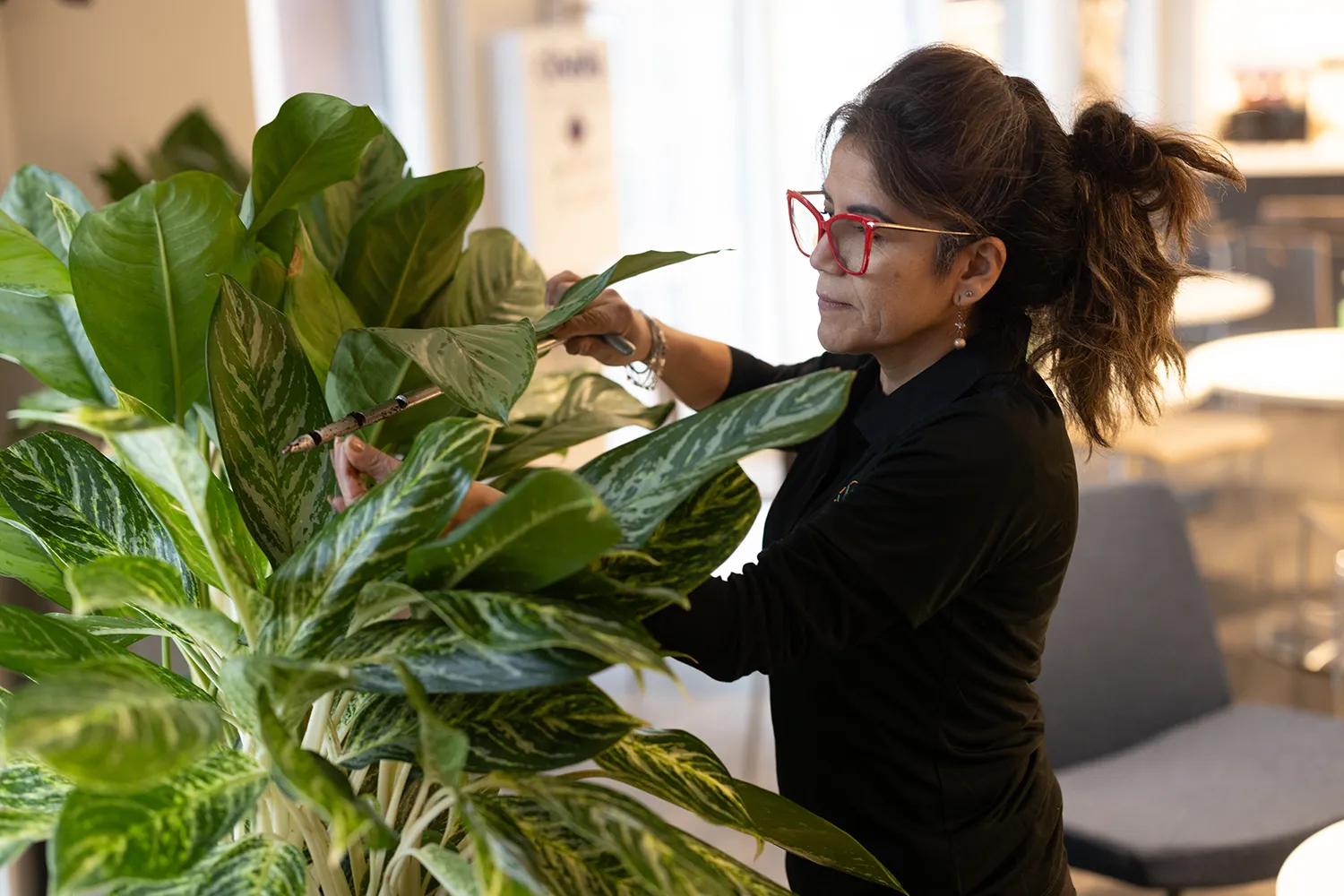
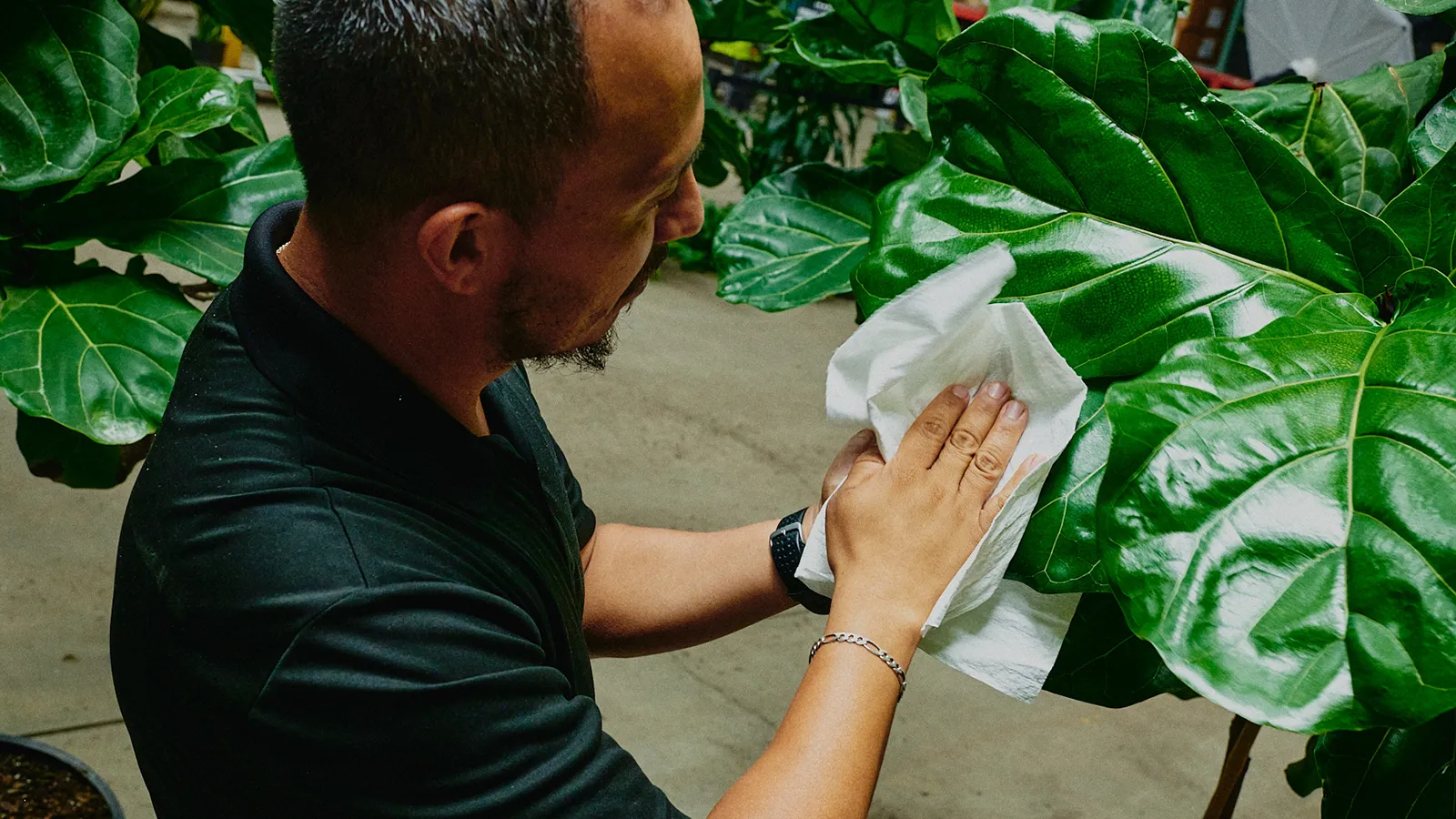
An Amlings horticultural technician providing expert indoor plant services by carefully cleaning a large architectural office plant.
Horticultural Service, Plant Maintenance, Property Management
Stop Plant Death: Invest in Office Plant Service

As a CEO, facilities director or office manager in Chicago, you are constantly searching for strategic ways to improve your workplace culture, boost daily productivity, and make your commercial space more inviting for both employees and high-profile clients. Adding a touch of lush greenery seems like the simplest, most cost-effective solution available. You might head to a local nursery or big-box store, purchase a few beautiful, towering ficus trees and a dozen trailing pothos plants, and assign the front desk receptionist or the nighttime cleaning crew to water them once a week.

Fast forward two months into the brutal Midwest winter: the Ficus is dropping leaves at an alarming rate, the pothos is turning a sickly yellow, and fungus gnats are swarming around the employee break room. The substantial investment that was supposed to breathe vibrant life into your office has now become a depressing, highly visible eyesore.

The widespread misconception that plant care is as simple as adding tap water is incredibly common, but the stark reality of maintaining thriving greenery in a commercial environment is far more complex than most business leaders realize. To truly reap the well-documented aesthetic and psychological benefits of indoor greenery—especially in a city known for its extreme seasonal shifts—you need a professional office plant service.

Below, we will comprehensively explore the hidden complexities of commercial horticulture, why relying on a basic plant watering service will ultimately cost your business more money, and how investing in professional indoor plant services can fundamentally transform your Chicago property from a sterile environment into a thriving corporate oasis.

The Hidden Complexities of Commercial Plant Care in Chicago

It is dangerously easy to underestimate what a living organism needs to survive and thrive. In their natural, tropical habitats, the plants we typically bring indoors have access to a delicate, perfectly evolved balance of dappled sunlight, high natural humidity, pure rainwater, and complex, nutrient-cycling soil microbiomes.

A modern office building is an entirely alien—and often downright hostile—environment. When you factor in the unique architectural and climatic challenges of the Windy City, the difficulty level multiplies exponentially.

The Challenge of Extreme HVAC Systems and Humidity
Modern commercial buildings are tightly sealed environments designed for maximum energy efficiency. HVAC systems are built to strictly regulate temperature and keep human occupants comfortable, but they achieve this by actively stripping moisture from the air.

During a harsh Chicago winter, when temperatures plummet below freezing and the lake-effect winds howl through the Loop, office heating systems run constantly. This aggressive heating drops indoor humidity levels well below 20%. Most of the tropical indoor plants utilized in corporate design require an ambient humidity range of 40-60% just to survive, let alone grow.

Without an expert, scientific understanding of indoor micro-climates, plants placed directly under heating vents, near drafty entryway doors, or in highly air-conditioned server rooms will suffer from chronic dehydration. This happens regardless of how thoroughly or frequently their soil is soaked. The dry air pulls moisture directly out of the leaves faster than the root system can replenish it, leading to crispy brown edges and inevitable plant death.

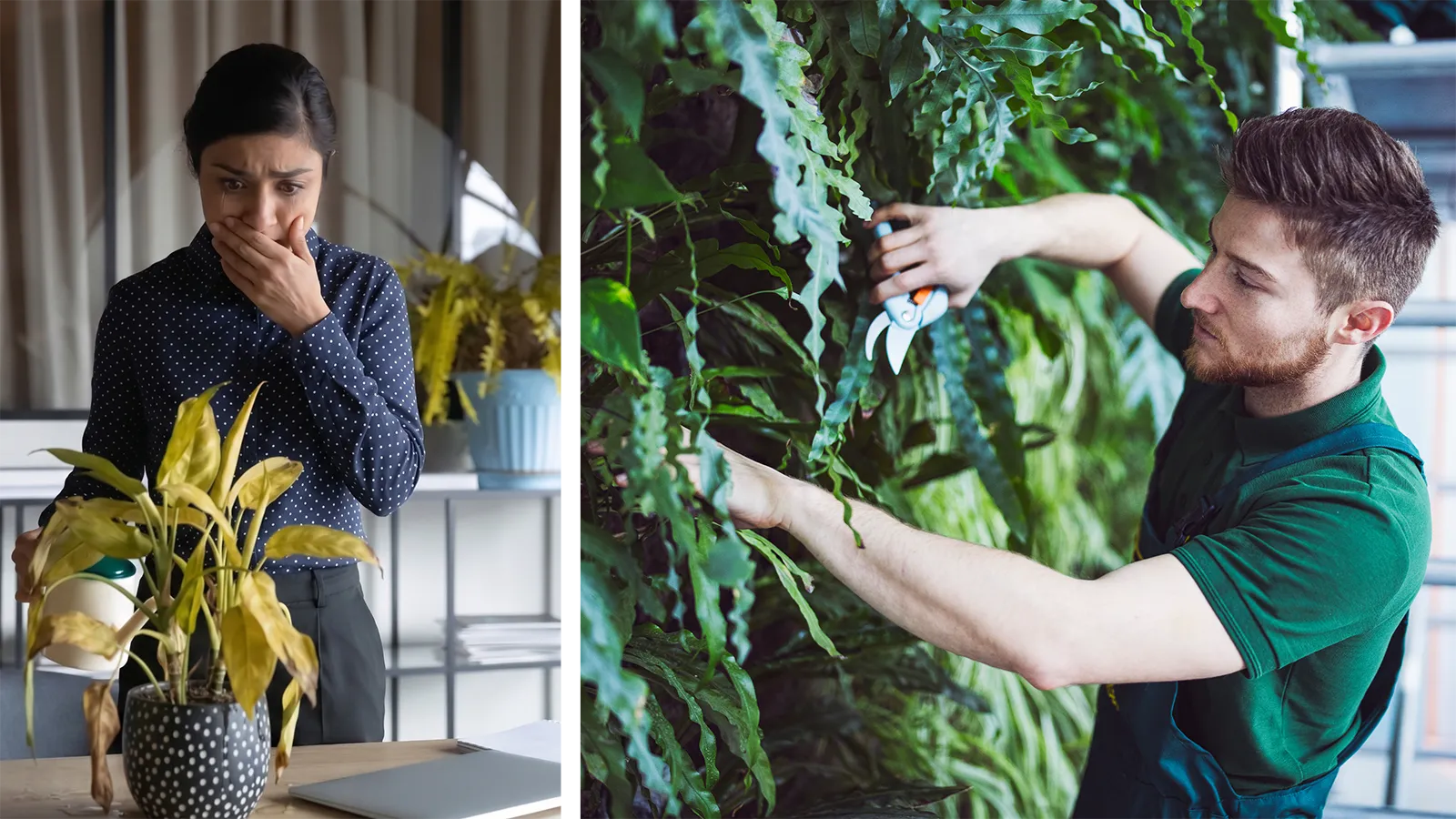
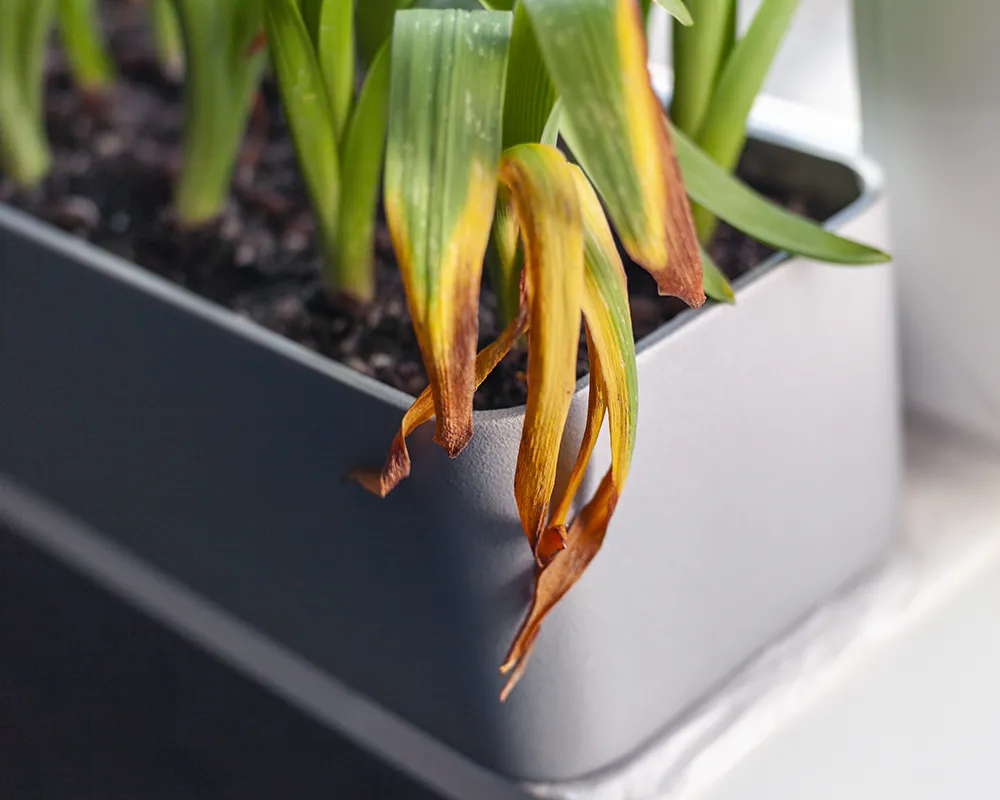
A wilting tropical plant in a corporate setting suffering from low humidity, highlighting the critical need for a professional office plant service.
Without proper indoor plant services, the harsh winter heating in Chicago office buildings can quickly dehydrate and destroy expensive greenery.

Lighting: The Invisible and Highly Variable Factor
Human beings can adapt to artificial lighting. We are often completely unable to distinguish between the bright fluorescent or LED lights of a cubicle farm and the actual, measurable light energy required for a plant to conduct photosynthesis. What looks sufficiently bright to the human eye may register as near-total darkness to a living plant.

This is compounded by Chicago’s notoriously gray, overcast winters. The amount of natural ultraviolet light penetrating the windows of a high-rise on Wacker Drive in January is a fraction of what it is in July.

Professional office plant services utilize specialized light-metering equipment to measure exact foot-candles (FC) of light in various zones of your specific office. This scientific approach ensures that a low-light tolerant ZZ plant isnt mistakenly placed in a scorching, direct-sun, south-facing window during the summer, and a light-hungry Bird of Paradise isnt slowly starved in a dim, interior hallway during the winter.

Soil Chemistry and Lake Michigan Water Quality
While Chicago boasts some of the best municipal tap water in the country sourced directly from Lake Michigan, this water is still chemically treated with chlorine, fluoride, and various hard minerals to make it strictly safe for human consumption and plumbing infrastructure.

Over time, these heavy chemicals and hard minerals accumulate in the incredibly limited soil volume of a decorative potted plant. Because office plants do not have the benefit of heavy rainstorms to flush their soil, this accumulation leads to severe root burn and nutrient lockout—a condition where the plant literally starves because the mineral buildup prevents its roots from absorbing food.

Furthermore, the lack of natural drainage in most sleek, modern, decorative commercial planters means that a well-meaning employee overwatering a plant creates a stagnant, toxic pool of water at the very bottom of the pot. Root rot quickly sets in, effectively suffocating the plant from the bottom up.

Whether you are the CEO of a fast-paced logistics firm trying to keep global supply chains moving, or an office manager at a prominent Loop law firm juggling intense daily operations, your primary focus should always be on your companys growth and your teams productivity—not on whether your lobbys foliage is surviving the week.

Ready to stop replacing dying plants and focus on your actual business? Contact Amlings services today to ensure your corporate greenery receives the precise, scientific care it needs to thrive year-round.

Why a Basic Plant Watering Service Isnt Enough

When office managers and administrative teams finally realize that internal staff simply cannot keep up with the demands of plant maintenance, they often try to solve the problem by looking for the cheapest possible outsourcing option: a simple plant watering service.

While having a dedicated individual come into the office with a watering can might initially seem like a smart step in the right direction, it is a fundamentally flawed and financially wasteful approach. Watering is only one microscopic fraction of comprehensive horticultural care. A budget service that only provides hydration will entirely miss the critical, early warning signs of botanical distress.

Here is exactly what a basic watering routine misses, and why a full-service horticultural approach is mandatory:

  • Microscopic Pest Management: Spider mites, mealybugs, thrips, and fungus gnats absolutely thrive in indoor corporate environments because there are no natural predators (like ladybugs or specific wind patterns) to keep their populations in check. A highly trained technician from a comprehensive office plant service knows exactly how to identify these microscopic pests long before they infest the entire floor. They can treat these outbreaks proactively and safely, without ever exposing your employees, clients, or office pets to harsh, disruptive agricultural chemicals.
  • Detailed Pruning and Foliage Cleaning: Offices are dusty environments. Dust accumulation on broad-leaf plants physically blocks light absorption, drastically slowing down the process of photosynthesis and causing the plant to slowly decline. Professional indoor plant services include meticulous, leaf-by-leaf cleaning, dusting, and the strategic pruning of dead or dying foliage. This ensures the plants continuously look pristine, architectural, and healthy.
  • Targeted Fertilization and Soil Aeration: Plants restricted to commercial pots eventually exhaust every single nutrient available in their soil. Proper, sustainable care requires a rigorous, seasonal fertilization schedule tailored specifically to the exact species, its current growth phase, and the unique light conditions of its placement. Furthermore, regular soil aeration is required to ensure that vital oxygen can reach the deeply compacted root system.

If you are paying an individual or a company just to pour tap water into a decorative pot once a week, you are actively facilitating overwatering—which remains the absolute number one cause of indoor plant death in commercial spaces.

Contact us for more information on how our comprehensive, science-backed maintenance plans fundamentally differ from standard, risky watering routines.

The Financial and Psychological ROI of Professional Office Plant Services

Investing capital into an office plant service is not merely an aesthetic interior design choice; it is a highly strategic business decision backed by decades of significant academic and corporate research. Property managers, real estate developers, and CEOs who fundamentally understand this dynamic see a highly tangible return on their investment.

1. Dramatically Boosting Employee Productivity and Daily Morale
A bare, starkly minimalist office might look exceptionally sleek in an architectural rendering, but to the actual human beings working inside it for eight to ten hours a day, it can quickly feel sterile, exhausting, and completely uninspiring.

A widely cited, comprehensive study conducted by researchers at the University of Exeter found that enriching a previously lean or austere office space with strategically placed plants could increase overall employee productivity by up to a staggering 15%. Employees who actively engage with a biophilic environment and have natural, living elements around their immediate workstations consistently demonstrate increased concentration, remarkably higher overall workplace satisfaction, and significantly better cognitive function during complex tasks. In the depths of a gray Chicago February, this burst of vibrant green can be a massive morale lifter, combating the effects of seasonal fatigue.

2. Enhancing and Filtering Indoor Air Quality
Since the famous and heavily referenced NASA Clean Air Study was published in the late 1980s, the scientific community has known that certain specific indoor plants can actively help mitigate the dangers of indoor air pollution.

Volatile Organic Compounds (VOCs)—such as benzene, formaldehyde, and trichloroethylene—are constantly emitted by standard office carpets, fresh paint, printer ink, synthetic furniture, and industrial cleaning supplies. While potted plants are absolutely not a complete replacement for a modern, well-maintained building ventilation system, a dense, intelligently curated installation provided by top-tier indoor plant services can significantly contribute to a much healthier, fresher micro-environment. This holistic approach to workspace wellness potentially reduces employee sick days, chronic headaches, and mid-afternoon fatigue.

3. Fiercely Protecting Your Capital Investment
We know that buying high-quality, mature, disease-free commercial plants and the heavy, commercial-grade decorative planters required to house them is a significant capital expense.

When you attempt to manage this massive investment internally with untrained staff, or when you gamble by using a budget plant watering service, you inevitably face the frustrating and recurring cost of constant replacements. You are essentially throwing money away every time a plant turns brown and has to be hauled out to the dumpster.

A professional office plant service completely flips this dynamic by operating on a strict model of preventative, proactive care. At Amlings, our expert horticultural technicians ensure your initial capital investment is fiercely protected, essentially saving your facilities budget thousands of dollars in the long run by keeping your original assets alive and thriving.

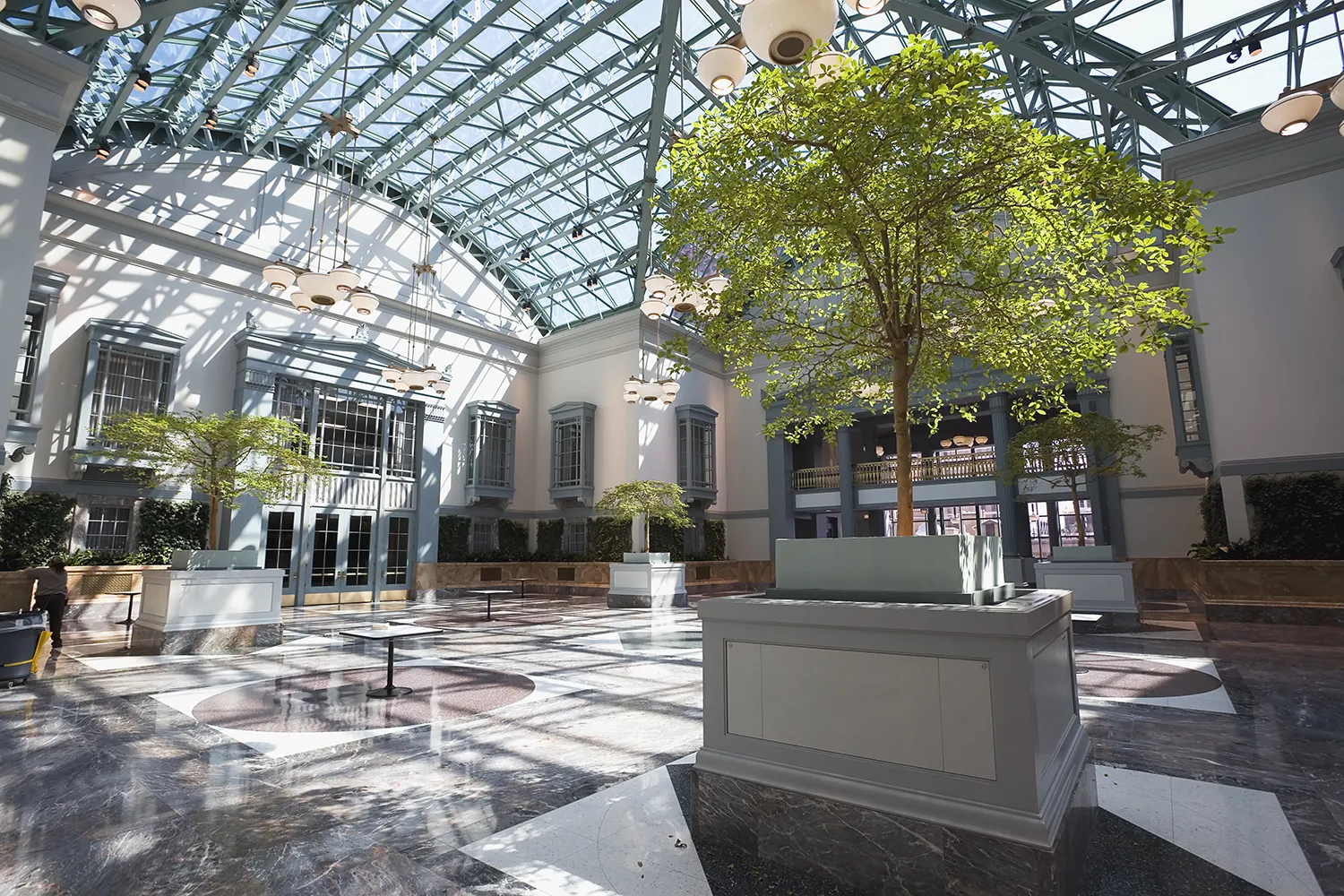
A bright, thriving corporate atrium in a Chicago high-rise, expertly maintained by a professional office plant service.
High-end indoor plant services ensure your valuable corporate spaces remain lush, inviting, and completely free of dying, unsightly foliage.

Designing the Perfect Corporate Oasis in the Windy City

The absolute best office plant services in the industry do much more than basic maintenance; they act as highly specialized spatial and environmental designers. When you partner with a high-end provider like Amlings, the meticulous process begins long before a single leaf is brought through your revolving doors.

The Deep-Dive Consultation and Site Assessment
Our senior horticultural experts will physically walk through your specific property to thoroughly assess the multitude of environmental variables we discussed earlier: changing light angles, HVAC airflow patterns, intense winter draft zones, employee traffic patterns, and overall spatial dimensions.

They also consult deeply with your leadership team regarding your specific brand aesthetic. Does your River North exposed-brick tech startup require sleek, highly architectural snake plants housed in matte-black geometric containers? Does your prestigious LaSalle Street law firm demand classic, imposing, ten-foot Dracaenas potted in elegant, heavy ceramic? We ensure the biology matches the branding perfectly.

Custom, Seamless Installation
The physical installation process is highly choreographed to be completely seamless and non-disruptive to your daily operations. Plants are carefully staged and repotted using advanced, commercial-grade soil mediums tailored to each specific species. Our installation team meticulously ensures proper drainage, optimal root spacing, and precise placement within your chosen decorative planters, setting up every single plant for long-term health and structural stability from day one.

Ongoing, Maintenance and Protection
This is the specific phase where the true, undeniable value of an office plant service shines brightest. Amlings technicians arrive at your facility on a strict, reliable schedule. Our professionals are fully insured, and work quietly and efficiently in the background to clean, water, fertilize, prune, and meticulously inspect every single plant on your floor plan.

Dont leave your expensive office aesthetics to chance or amateur care. Contact Amlings services today and let our Chicago-based design experts craft a completely custom, guaranteed greenery plan for your workspace.

How Amlings Transforms Your Chicago Workspace

When you make the definitive choice to partner with Amlings, you are emphatically not just hiring a basic plant watering service; you are securing a strategic partnership with dedicated, highly educated horticultural professionals who understand the specific demands of the Chicago corporate landscape. We intimately understand that CEOs, founders, and Facilities Managers have more than enough critical, high-level issues on their daily plates without having to stress over the yellowing pothos leaves in the executive boardroom.

Our comprehensive indoor plant services definitively include:

Expert Design and Micro-Climate Consultation: Flawlessly matching the exact right biological plant species to the exact right lighting conditions, HVAC realities, and overall corporate culture of your specific space.

Premium, Disease-Free Sourcing: We source our greenery strictly from the absolute top-tier, commercial-grade growers in the country, ensuring you receive highly robust, acclimated, and disease-free plants from day one.

Comprehensive, Scientific Care: Our dedicated technicians are rigorously trained in advanced, non-toxic pest management, precise moisture control technologies, and aesthetic, structural pruning techniques.

The Amlings Guarantee: We firmly stand by our horticultural work. If any plant in your facility begins to look tired, unhealthy, or overgrown, we swap it out swiftly and silently, ensuring your office environment always looks absolutely impeccable.

The physical state of your office environment speaks volumes to your employees and visiting clients about your companys core values. Dying, neglected plants signal a lack of attention to detail and a concerning tolerance for mediocrity. Conversely, vibrant, meticulously cared-for greenery immediately signals intense vitality, a sharp attention to detail, and a deep, visible commitment to employee well-being and workspace excellence.

Contact us for more information on quickly scheduling your initial, comprehensive site assessment and taking the first critical step toward a permanently greener, healthier office.

The Bottom Line on Corporate Greenery

The reality is clear: successfully tending to commercial greenery is a highly specific science and a nuanced art form that goes far, far beyond the incredibly limited capabilities of a basic weekly watering routine. Discerning CEOs, savvy real estate directors, and experienced office managers who truly recognize the intense complexities of indoor horticulture—from navigating the harsh realities of Chicago’s brutal HVAC winter climates to precisely balancing soil chemistry and managing light degradation—understand that outsourcing this task to proven experts is the absolute only sustainable, financially sound path forward.

A professional office plant service fundamentally elevates your commercial space, significantly boosts daily employee morale, actively cleans your indoor air, and aggressively protects your bottom line by completely eliminating the costly revolving door of dying, replacement plants. It is a highly visible, daily investment in your companys physical atmosphere and long-term, sustained success.

An Amlings horticultural technician providing expert indoor plant services by carefully cleaning a large architectural office plant.
Trust the established professionals. Moving beyond a basic plant watering service to a comprehensive maintenance routine keeps your commercial space permanently vibrant.

Are you finally ready to breathe sustainable life back into your commercial property? Dont wait for another expensive Ficus to fail on your watch. Contact Amlings today and experience the ultimate, guaranteed standard in corporate plant care.

Ready to bring life into your office? Contact Amlings Interiors Today
Read More
Property Management, Horticultural Service, Plant Maintenance
Balancing the Budget: Expert Plant Care Service Pays

Protect Your Investment and Your Budget

When trimming budgets, line items labeled interior landscaping often come under scrutiny first. Plants can be mis-categorized strictly as décor—aesthetic nice-to-haves that simply need a bit of water to look green. Consequently, in an effort to cut costs, the temptation to cancel a professional plant care service and transfer that responsibility internally is high.

This is a fundamental categorization error that can harm brand reputation and negatively impact the bottom line.

Interior plants are capital assets. Depending on the size of your facility, the initial investment in commercial containers, Green Walls, and plants can range from thousands to tens of thousands of dollars. When these assets are not maintained by a professional, they depreciate rapidly. The result is a cycle of costly replacement (considered a Capital Expenditure) that far exceeds the cost of preventative maintenance (otherwise known as Operational Expenditures).

This article creates a business case for shifting your mindset: moving from viewing interior plant care as an optional cleaning expense to viewing it as an asset, that needs to be maintained and protected.

Uniformed professional technicians with specialized equipment providing a scheduled plant care service in a high-rise office corridor.
Complex architectural features like Green Walls are significant financial investments that require specialized indoor plant care service to survive and thrive.

The Financial Mathematics of Plant Mortality

To understand the value of a professional service, one must first calculate the true cost of plant failure. Commercial-grade plants are significantly more expensive than those found at a local garden center. They are acclimatized for interior environments and grown to specific architectural standards.

When a plant dies due to improper care—usually overwatering by well-meaning but untrained staff—you pay twice. You pay for the initial asset that was lost, and you pay for the replacement asset, plus the delivery and installation labor fees.

A professional plant care service operates both as an on-site maintenance crew and an insurance policy. By paying a predictable monthly fee, you transfer the risk of plant loss to the vendor. At Amlings, for example, our maintenance programs include a replacement guarantee. If a plant fails under our care, we replace it at no additional cost to you. This converts a variable, potentially high replacement cost into a fixed, predictable operating expense, stabilizing your budget and protecting your bottom line.

Protect Your Bottom Line: Stop paying for replacements. Explore Amlings Ongoing Maintenance Plans to secure your assets today.

The Janitorial Myth: Why Watering Isnt Enough

The most common objection during contract reviews is, Why cant the cleaning crew just water the plants?

This question assumes that keeping a plant alive in a commercial environment is solely about adding water. In reality, watering is only a fraction of the equation. Commercial buildings are hostile environments for plant life. They suffer from dry air (low humidity), high foot traffic, fluctuating HVAC temperatures, and artificial lighting that lacks the full spectrum required for photosynthesis.

The average person is not trained to recognize the subtle signs of root rot, fungal infections, or pest infestations until it is too late. Overwatering is the number one killer of indoor plants. For example, an untrained individual sees a drooping leaf and adds water, unaware that the plant is drooping because its roots are drowning.

This is where the expertise of a horticultural technician becomes non-negotiable.

The Role of the Horticultural Technician

A horticultural technician is a specialized asset manager. Their site visits involve a rigorous checklist that goes far beyond irrigation:

  1. Moisture Metering: Using sub-soil probes to determine moisture content at the root level, not just the surface.
  2. Pest Management (IPM): Early detection of scale, mealybugs, and spider mites before they spread to other plants.
  3. Pruning and Trimming: Removing necrotic tissue to direct energy to new growth and maintain the architectural shape of the plant.
  4. Soil Chemistry: Adding nutrients and fertilizers tailored to the specific species and season.
  5. Aeration: Keeping soil loose to ensure oxygen reaches the root system.

When you hire a plant care service, you are paying for this technical expertise, ensuring your assets remain viable for years rather than months.

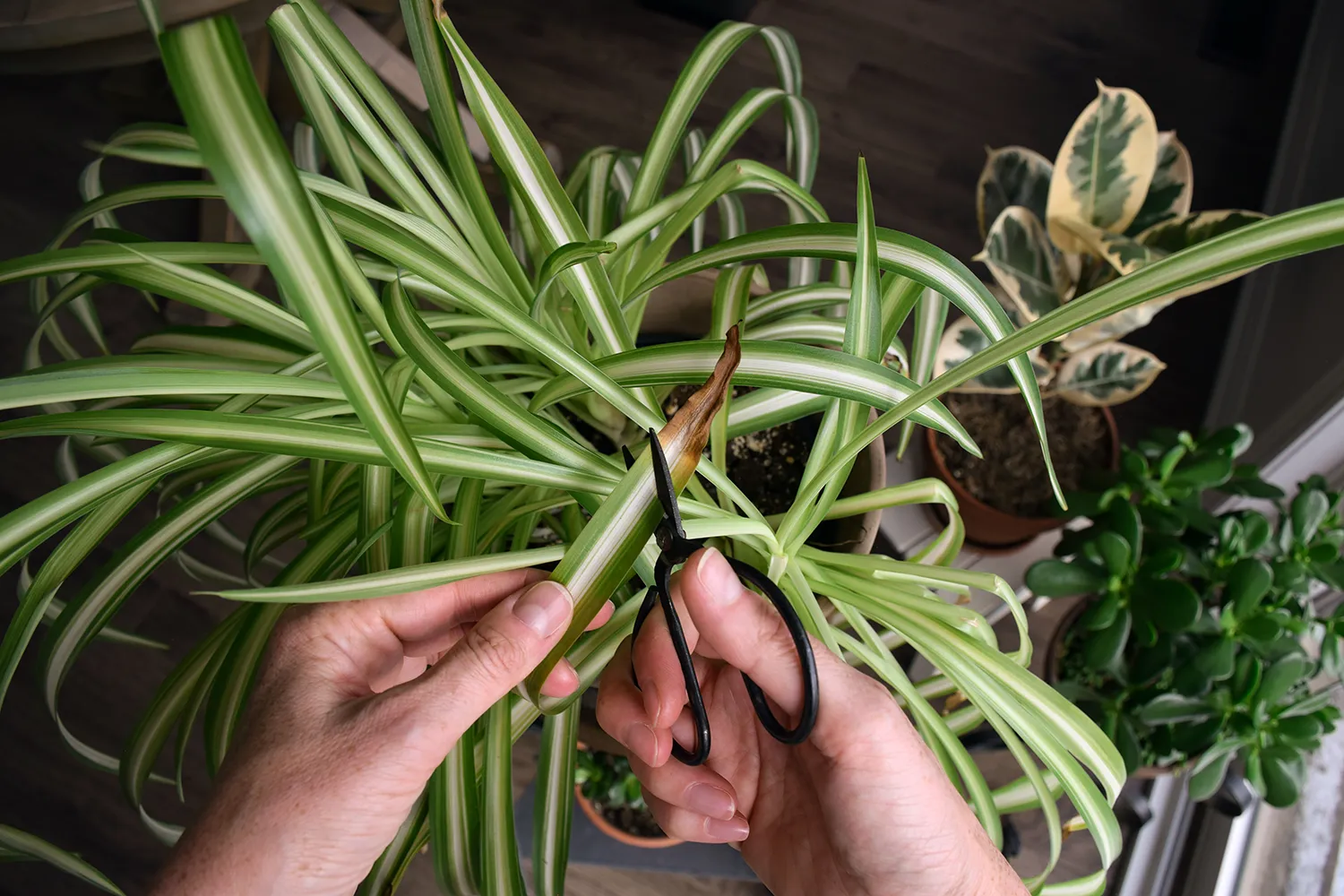
Close-up of a horticultural technician precisely pruning a commercial office plant to maintain its architectural shape.
Unlike a janitor, a horticultural technician is trained to prune and shape your foliage, preventing the overgrown jungle look that depreciates your propertys aesthetic.

The Specific Challenges of the Chicago Market

For property managers operating in the Midwest, local expertise is vital. An office plant service Chicago provider understands the unique environmental stressors of the region.

Chicago winters present a dual threat: extreme cold drafts near entryways and windows, and bone-dry air caused by aggressive heating systems. A generic approach does not work here. Tropical plants located in a Chicago lobby in January require a completely different hydration schedule than they do in July.

A Chicago office plant service provider will proactively adjust watering volumes and rotation schedules based on seasonal light changes and HVAC cycles. They know which species can survive a drafty vestibule on Wacker Drive and which ones will perish if placed near a heating vent. This localized knowledge prevents asset loss that a generic national provider or internal staff member would miss.

Comprehensive Indoor Plant Services: The Scope of Work

When evaluating vendor contracts, it is essential to compare apples to apples. High-quality indoor plant services provide a comprehensive scope of work that protects the facilitys appearance and hygiene.

Dust and Shine: The Hidden Hygiene Factor

Plants breathe through stomata on their leaves. In an office environment, dust accumulates rapidly, clogging these pores and suffocating the plant. Furthermore, dusty plants look neglected, reflecting poorly on the buildings management. A professional service includes regular foliage cleaning and leaf shining, which maximizes photosynthesis and ensures the Class A appearance of your lobby.

Pest and Disease Control

Interior environments can become breeding grounds for pests like fungus gnats, which are a nuisance to tenants. Indoor plant services include Integrated Pest Management (IPM). This involves using non-toxic, environmentally safe treatments to control pest populations without endangering office workers. Relying on internal staff often leads to reactive measures (spraying chemicals) rather than proactive prevention.

Aesthetic Quality Control

A dying plant looks worse than no plant at all. It signals financial distress, neglect or poor management to potential tenants and visitors. Professional technicians are trained to spot plants that have lost their aesthetic value. If a plant becomes leggy, sparse, or discolored, it is flagged for replacement immediately under the maintenance warranty, ensuring the visual standard of the building never dips.

Is your lobby looking tired? Dont let dusty, dying plants hurt your brand. Contact Amlings for a Free Consultation and revitalize your space.

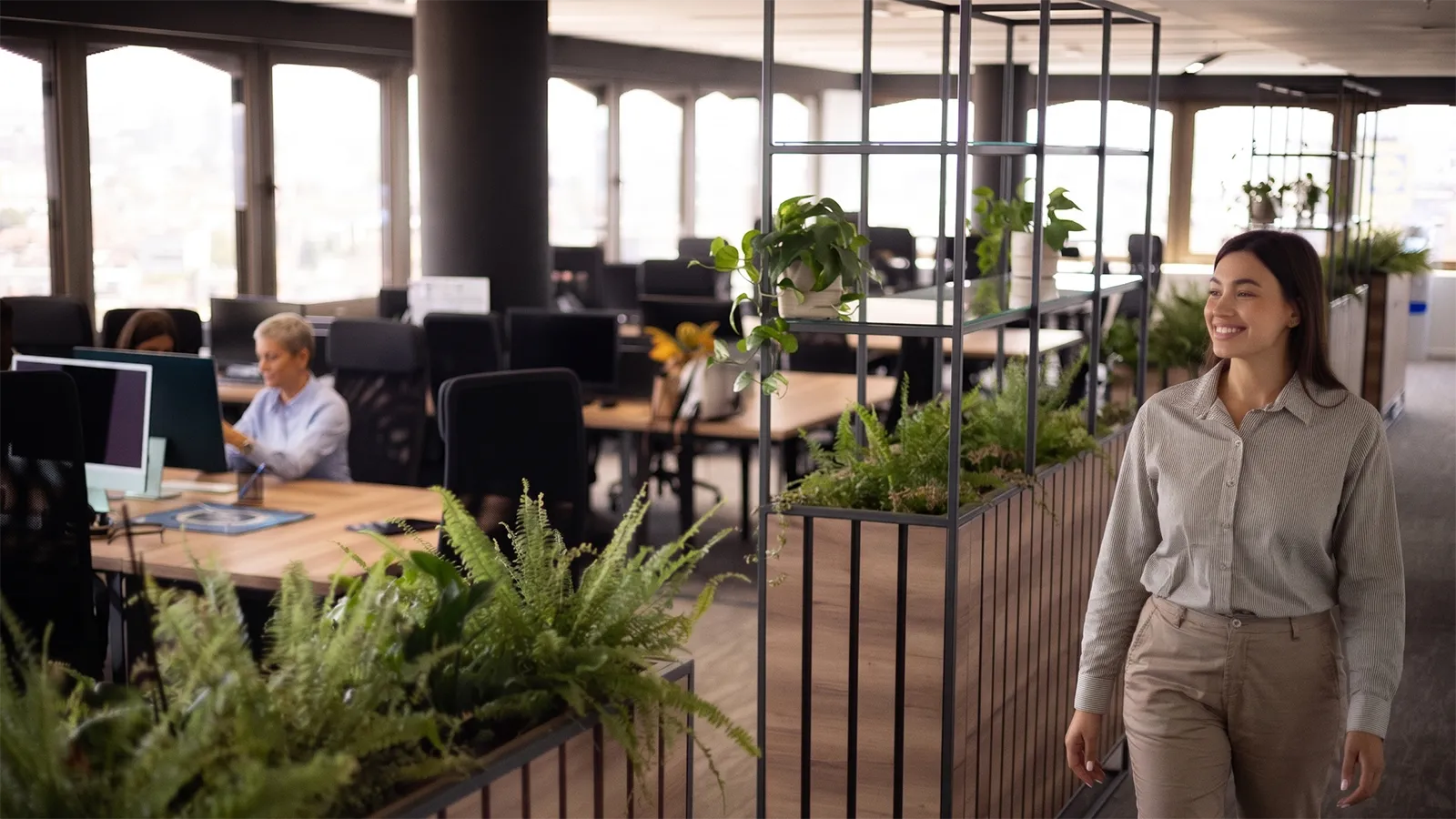
Business professionals collaborating in a modern workspace surrounded by greenery provided by a top-tier plant care service.
Studies show that a high-quality plant care service directly contributes to tenant retention and productivity by creating a stress-reducing environment.

The ROI of Biophilic Design

While this article focuses on asset protection, the operational benefits of healthy plants extend to tenant retention. Research consistently shows that biophilic design (integrating nature into the built environment) yields a tangible ROI.

According to studies from the University of Exeter, offices with high-quality greenery saw a 15% increase in productivity. Furthermore, a report in the Journal of Environmental Psychology suggests that the presence of indoor plants significantly lowers stress levels and reduces perceived fatigue among workers.

For a property manager, this translates to higher tenant satisfaction and retention rates. However, this ROI is only realized if the plants are thriving. Dead or dying plants have the opposite effect—psychologically creating a sense of neglect. Therefore, the investment in a plant care service is a direct investment in tenant experience and lease renewals.

Vendor Consolidation and Risk Mitigation

From an operational standpoint, outsourcing plant care simplifies vendor management. Rather than managing the granular details of purchasing soil, fertilizers, and replacement plants (and processing multiple invoices), a single contract covers all labor and materials.

Furthermore, professional vendors carry liability insurance. If a water leak occurs during a watering cycle, or if a heavy planter is knocked over, a professional service has the coverage to handle the damages. If an internal employee damages flooring or electronics while watering plants, the cost comes directly out of your facilitys budget.

Checklist for Reviewing Your Plant Care Contract: When reviewing proposals for plant care service, ensure the following are included:

  1. Guaranteed Replacement: Does the monthly fee cover the cost of replacing dead plants?
  2. Certified Technicians: Are the staff trained horticultural technicians?
  3. Regular Quality Assurance Visits: Does a manager inspect the techs work periodically?
  4. Sustainable Practices: Do they use eco-friendly pest control?

Insure Your Interior

Reframing your plant care service as an asset protection strategy is the financially sound approach to facility management. The cost of a maintenance contract is a fraction of the capital required to replace neglected inventory. By utilizing a professional service, you gain the expertise of a horticultural technician, the specific knowledge required for office plant service Chicago environments, and the peace of mind that comes with a full replacement guarantee.

Your interior landscape is an investment. Protect it with the same rigor you apply to your HVAC and elevator systems.

Partner with Amlings for comprehensive asset protection. Get Started Today
Read More