
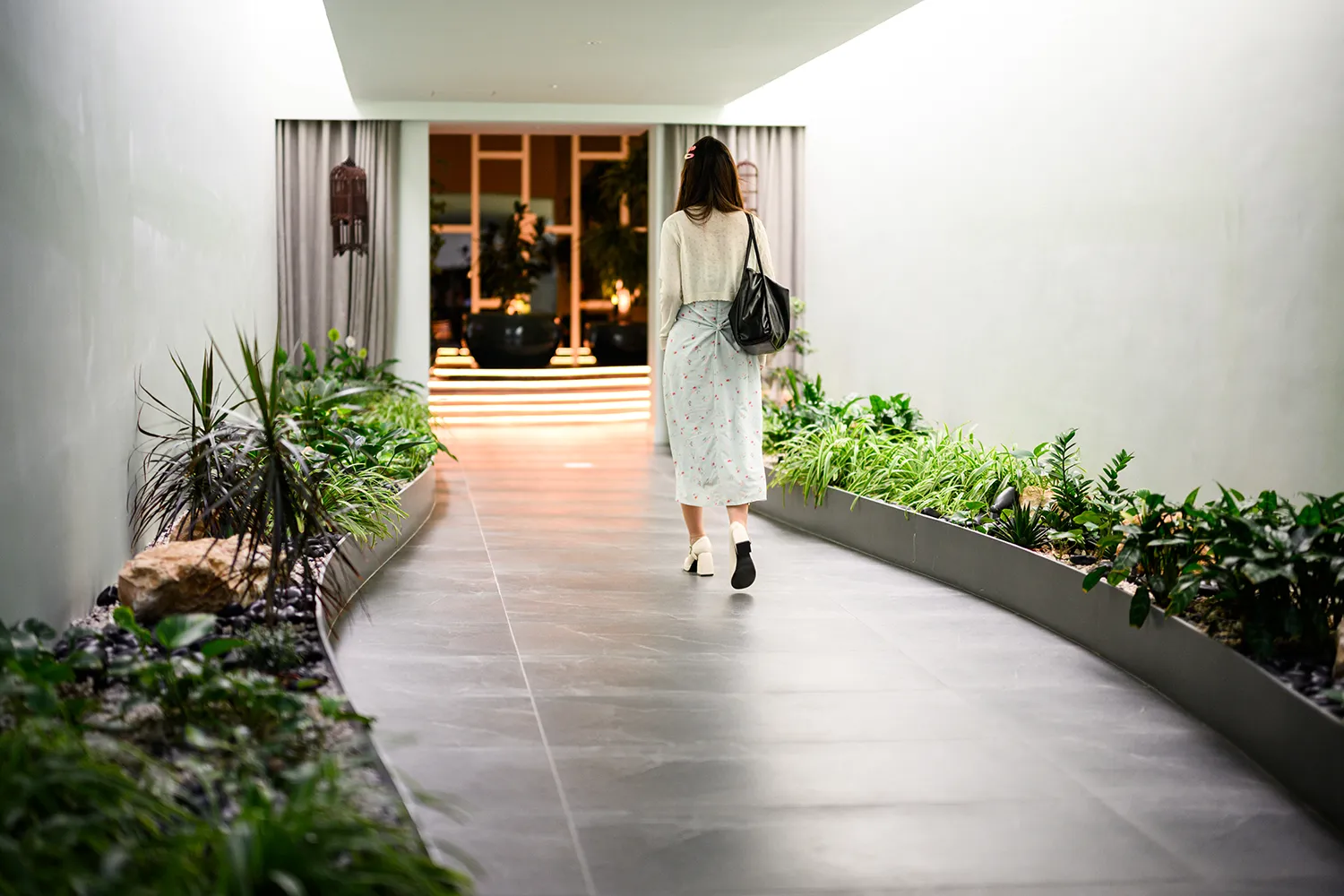
The Biological Imperative of Modern Architecture
In the modern era, we spend approximately 90% of our lives indoors. This shift from sun-drenched savannas to fluorescent-lit cubicles has created a sensory rift that impacts our cognitive function, stress levels, and overall well-being. Biophilic Design is not merely an aesthetic trend; it is an evidence-based architectural framework aimed at re-establishing the vital connection between humans and the natural world.
For design professionals, facility managers, property owners and hospitality professionals, integrating biophilic design principles is an investment in human capital. Whether it is a corporate headquarters, a manufacturing facility, or a hospital or healthcare office, the application of nature-inspired elements has been proven to reduce heart rates, increase productivity, and shorten post-operative recovery times.
To truly master this discipline, one must look toward the foundational scientific framework established by Terrapin Bright Green. Their seminal research identified 14 patterns that categorize how we experience nature in the built environment. These patterns are organized into three distinct “pillars.”
Pillar 1: Nature in the Space
The first pillar of Biophilic Design involves the direct, physical presence of nature within an environment. This is the most recognizable form of the practice, involving multi-sensory interactions that ground the occupant in the present moment.
1. Visual Connection with Nature
A visual connection refers to a view of elements of nature, living systems, and natural processes. This could be a window looking out onto a landscaped courtyard or an extensive interior “living wall.”
2. Non-Visual Connection with Nature
Design is not just for the eyes. Auditory, haptic, olfactory, or gustatory stimuli—such as the sound of trickling water, the scent of cedar, or the feeling of a natural breeze—provide a powerful sense of calm.
3. Non-Rhythmic Sensory Stimuli
Nature is unpredictable. The gentle sway of grasses in the wind or the momentary dappling of light through leaves prevents “sensory boredom.” Research by Harvard’s T.H. Chan School of Public Health suggests that these subtle movements can significantly lower blood pressure.
4. Thermal & Airflow Variability
Subtle changes in air temperature, humidity, and airflow mimic the natural environment, keeping the occupant refreshed and alert rather than stifled by stagnant, climate-controlled air.
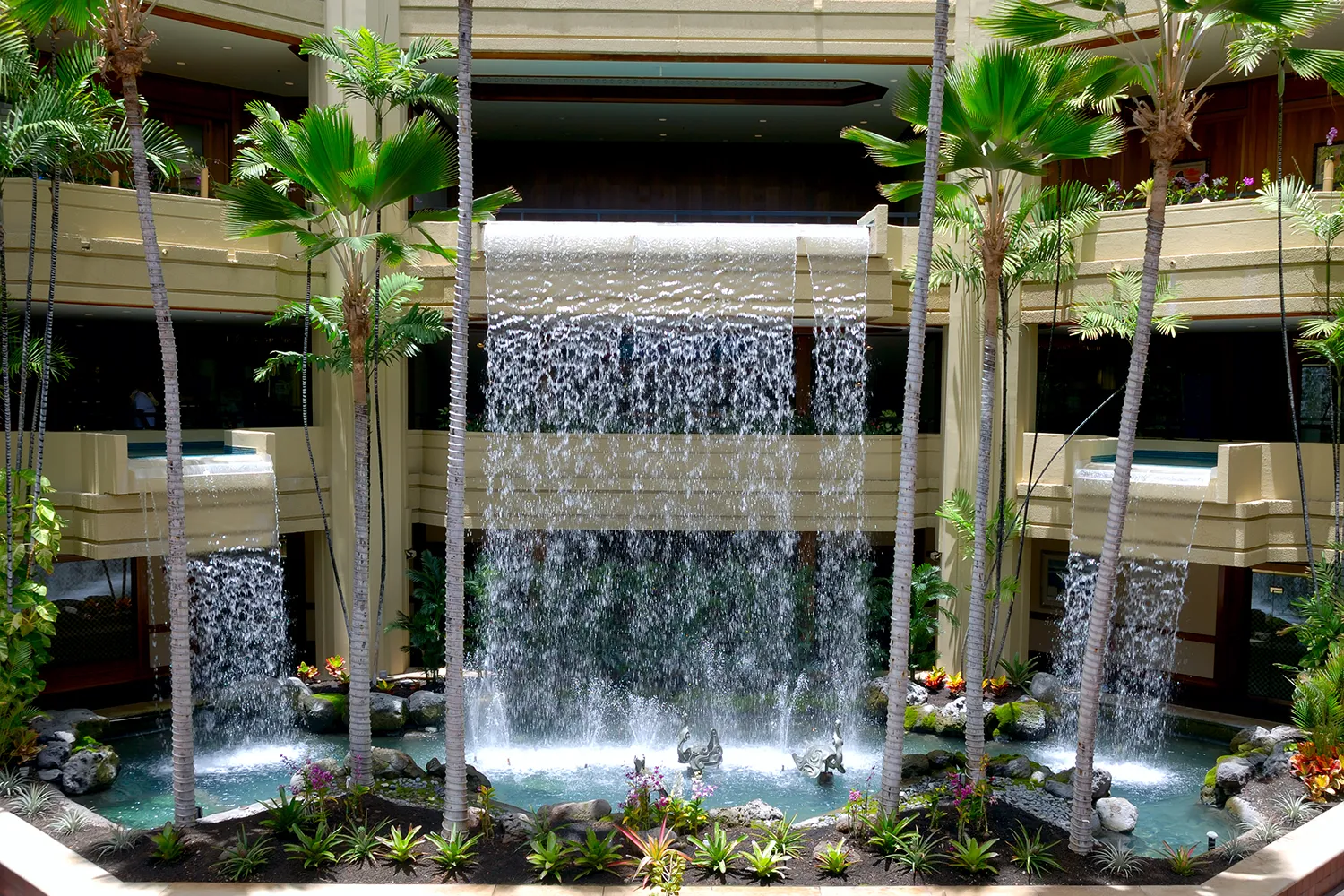
5. Presence of Water
Water is the essence of life. Whether it is the visual sparkle of a fountain or the rhythmic sound of a stream, water features enhance the experience of a place.
6. Diffuse and Dynamic Light
Leveraging natural light cycles (circadian lighting) helps regulate human sleep-wake cycles. This involves using transitions of light and shadow that change throughout the day.
7. Connection with Natural Systems
This involves awareness of seasonal changes or ecological processes, such as the blooming of specific plants or the movement of the sun across a stone floor.
Ready to revitalize your workspace? Contact Amlings services today to consult with experts who specialize in bringing “Nature in the Space” to life through custom horticultural installations.
Pillar 2: Natural Analogues
Where the first pillar deals with living things, the second pillar of Biophilic Design focuses on non-living evocations of nature. Natural analogues use organic shapes, patterns, and materials to mimic the complexity of the outdoors.
8. Biomorphic Forms & Patterns
Humans possess an innate preference for “Curvilinear” forms over sharp, 90-degree angles. This pattern utilizes structural elements that mimic the shapes found in shells, leaves, or honeycombs.
9. Material Connection with Nature
Using minimally processed materials—such as wood grain, stone, leather, and hemp—creates a tactile and visual connection to the earth. These materials should reflect the local ecology to provide a “sense of place.”
10. Complexity & Order
Nature is complex but organized. Think of the fractal patterns in a fern or a snowflake. Terrapin Bright Green emphasizes that providing a balance between “boring” and “overwhelming” creates an environment that is both stimulating and restorative.
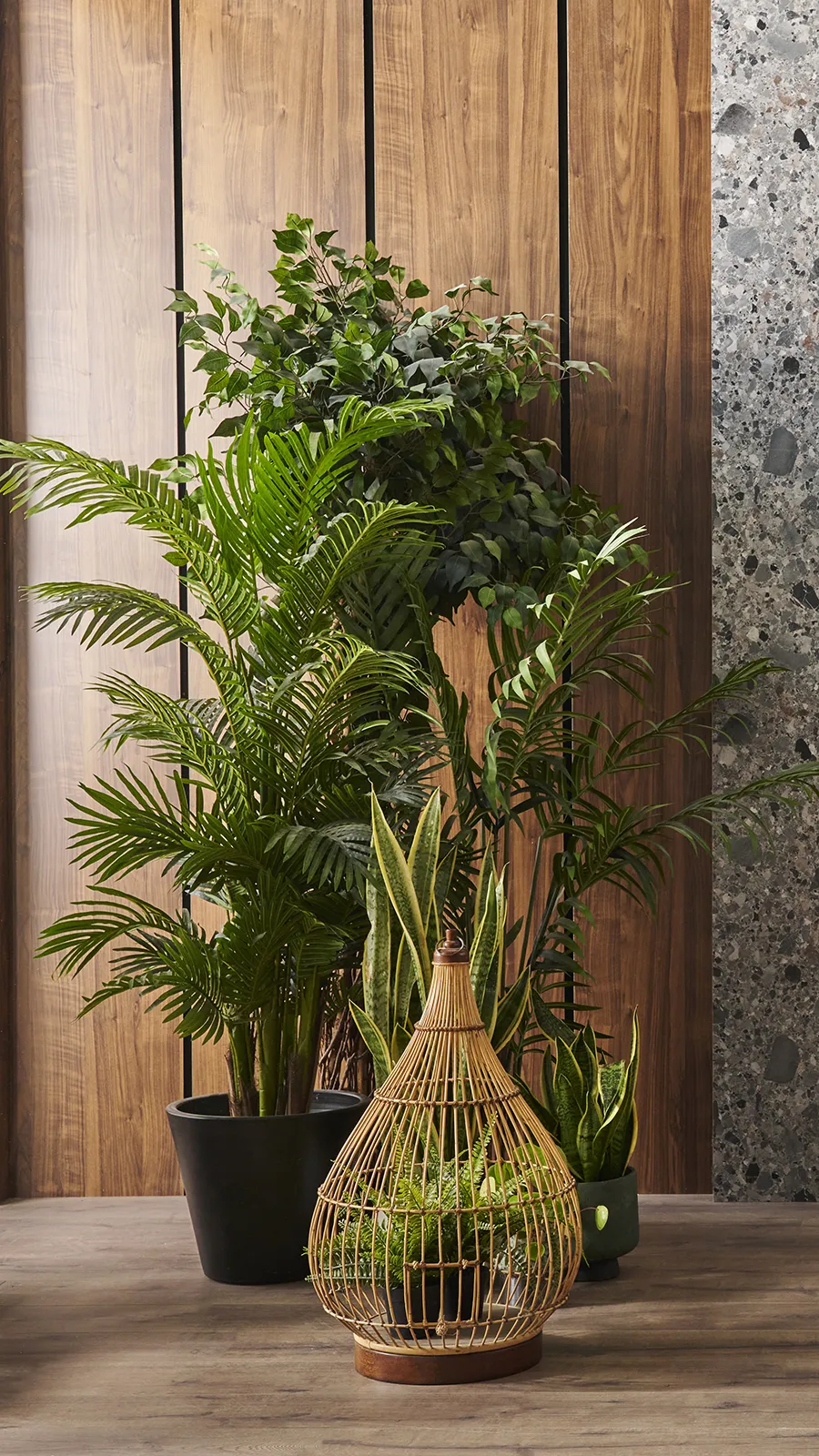
Pillar 3: Nature of the Space
The final pillar addresses the spatial configuration of the room itself. It draws on our evolutionary history as hunters and gatherers who needed to see long distances while remaining protected from predators.
11. Prospect
Prospect is the ability to see over a distance. In an office, this translates to open floor plans or glass partitions that allow the eye to travel, reducing the “claustrophobia” of modern cubicles.
12. Refuge
A refuge is a place of withdrawal. It is a “nook” or a cocoon-like space where an individual feels protected from behind and overhead. These spaces are essential for deep focus and stress reduction.
13. Mystery
Mystery is the promise of more information. A winding hallway or a partially obscured view invites exploration and engages the mind’s curiosity.
14. Risk/Peril
A controlled sense of risk—such as a glass floor over a high atrium or a cantilevered walkway—triggers a brief dopamine rush and heightens awareness.
The ROI of Biophilic Design Principles
For high-level decision-makers, the data is clear. According to studies published by Human Spaces, environments that utilize biophilic design can lead to:
- 15% increase in perceived well-being.
- 6% increase in productivity.
- 15% increase in creativity.
By adhering to the frameworks provided by Terrapin Bright Green, architects can move beyond “greening” a building and start “humanizing” it.
Implementation Strategy for Design Professionals
Integrating these biophilic design principles requires a tiered approach:
- Audit the Environment: Identify where natural light is lacking or where “Nature in the Space” can be introduced.
- Select Materials Early: Choose wood and stone finishes during the initial schematic design phase.
- Balance Prospect and Refuge: Ensure the floor plan offers both collaborative “prospect” areas and private “refuge” zones.
If you are looking for more technical guidance on plant selection and maintenance, contact us for more information or browse our portfolio to learn more about our previous installations.
Transform Your Space Today
The evidence is undeniable: we are biological beings in a digital world. Embracing Biophilic Design is the key to creating spaces that don’t just house people but help them flourish. Whether you are designing a high-rise or a boutique office, the three pillars provide the roadmap to success.
Ready to elevate your environment? Contact Amlings services now to begin your journey toward a healthier, more productive, and nature-inspired space.
Contact Amlings Interiors Today