
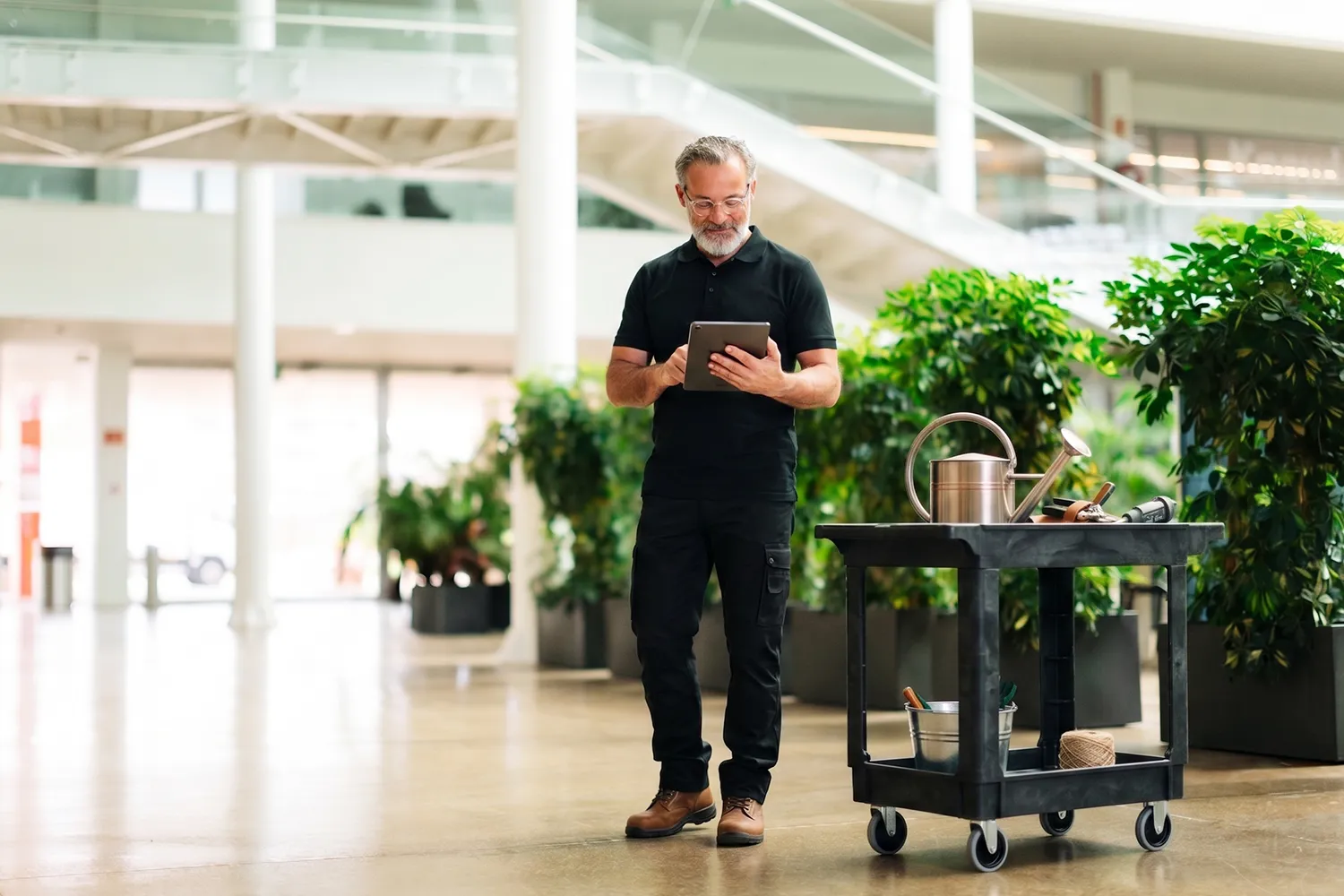
Plants in a commercial property are highly visible assets. Healthy, clean, well-shaped greenery can help a lobby, office, hotel, or amenity floor feel intentional and well managed. Plants covered in dust, surrounded by fallen leaves, or showing extensive yellowing can communicate the opposite.
That is why a commercial plant maintenance service should provide much more than occasional watering. It should function as a recurring horticultural program with clear responsibilities, consistent presentation standards, preventive plant-health practices, defined replacement terms, and accountable reporting.
For facilities managers and property managers, the challenge is that vendors do not always describe these services in the same way. One proposal may include pruning, cleaning, pest monitoring, and replacements in its monthly price. Another may quote a lower price but charge separately for every replacement, treatment, or special visit. A third may promise to “maintain plants as needed” without defining what acceptable maintenance looks like.
This guide explains what should be included, what may cost extra, and how to compare competing proposals. It is also designed to help managers who are dissatisfied with their present vendor identify the gaps in their current service.
Ready to replace inconsistent plant care with a more accountable program? Learn more about Amlings’ ongoing plant maintenance or contact us for more information.
What Is Included in a Commercial Plant Maintenance Service?
A professional commercial plant maintenance service is a contracted program for caring for live plants in managed commercial environments. Depending on the property, that may include individual floor plants, desktop plants, planter beds, atrium specimens, blooming displays, and living walls.
The core scope should generally address:
- Site assessment and plant inventory
- Watering and drainage management
- Pruning, grooming, and shaping
- Leaf and container cleaning
- Fertilization and growing-medium care
- Pest and disease monitoring
- Plant rotation or relocation
- Removal and replacement of declining plants
- Service reporting and issue escalation
- Supervisory quality control
The most important word is defined. A good proposal does not merely list these tasks. It explains how they will be performed, how frequently the site will be visited, what appearance standard will be maintained, what is included in the base price, and what circumstances could produce an additional charge.
Office Plant Maintenance Services Start With a Site Audit
Reliable office plant maintenance services begin before the first routine visit. The provider should inspect the property and create a baseline inventory.
That inventory should identify each plant or display by location, approximate size, species or plant type, container, ownership status, and current condition. Large properties may benefit from numbered locations, floor-plan references, or digital asset tags.
The assessment should also document environmental conditions that influence plant performance, including:
- Natural and artificial light
- Distance from windows
- HVAC supply and return vents
- Temperature fluctuations and exterior-door drafts
- Heat from equipment or direct sun
- Container drainage
- Ceiling height and access
- Occupant traffic and risk of physical damage
- Security, loading, elevator, and after-hours requirements
Light is especially important because plants have different light requirements, and even plants commonly used in offices must be matched to the conditions in a specific location. The University of Minnesota Extension’s indoor-lighting guidance identifies foliage plants suitable for different light levels, including office environments.
A proposal prepared without a plant inventory or environmental assessment may be little more than an estimate. By contrast, a properly scoped commercial plant maintenance service can assign realistic labor, visit frequency, care methods, and replacement assumptions to the actual site.
Facilities managers should request a copy of the final inventory and baseline photographs. These materials make it easier to measure performance, document recurring failures, and manage a future vendor transition.
Plant Watering Service Based on Conditions, Not Guesswork
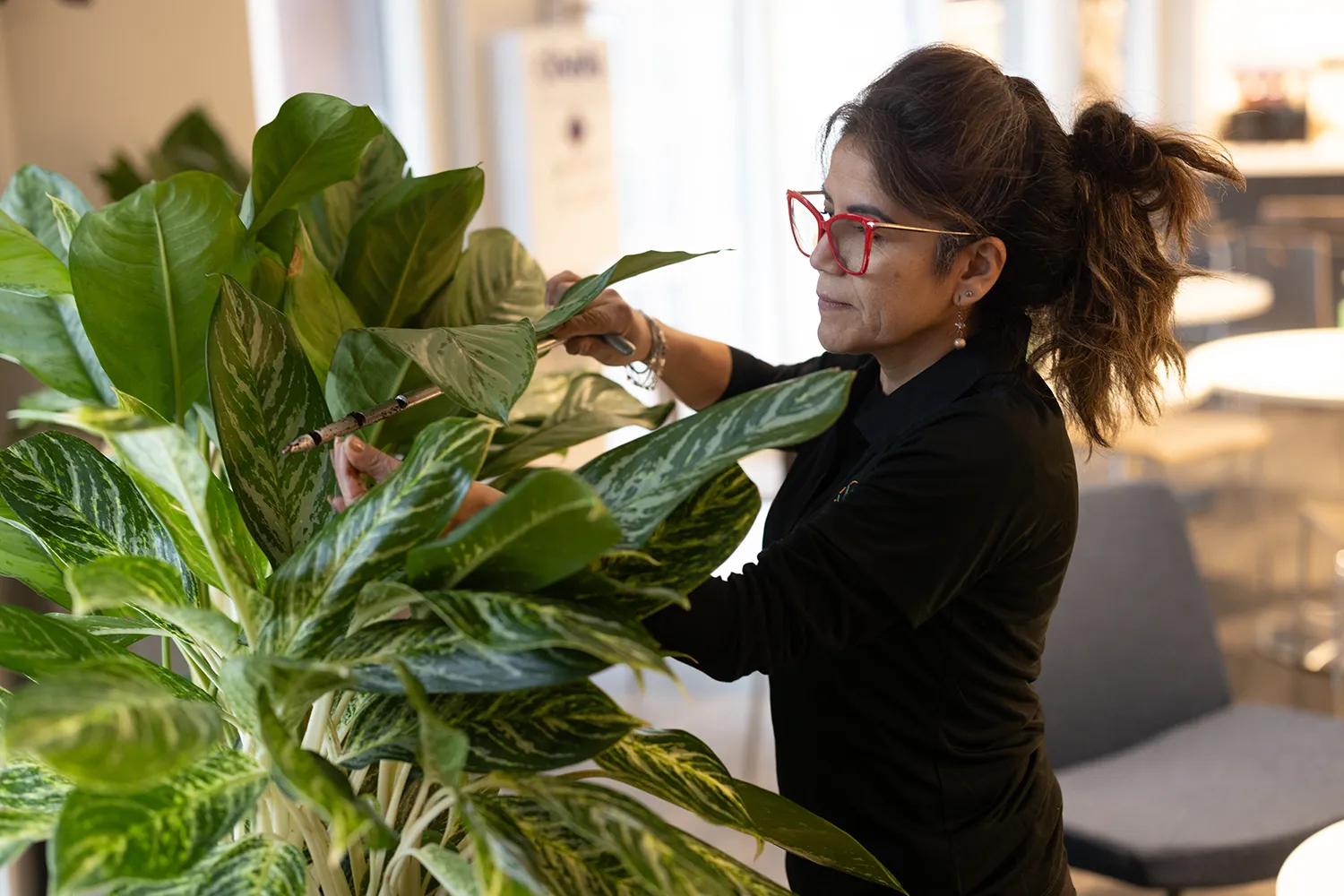
A plant watering service should never be reduced to pouring the same amount of water into every container on the same day.
Water requirements vary according to species, plant size, root condition, container volume, drainage, light exposure, temperature, humidity, seasonal growth, and HVAC operation. Two identical plants on different floors may require different treatment because one receives bright filtered light while the other sits near a heating vent.
A qualified technician should assess soil or growing-medium moisture before watering. Depending on the plant and container, that assessment may involve touching the medium, checking below the surface, evaluating container weight, using a moisture-reading tool, and observing foliage or root-zone symptoms.
The technician should then:
- Apply an appropriate amount of water.
- Confirm that liners, reservoirs, and drainage systems are functioning.
- Prevent overflow onto floors, furniture, walls, or electrical equipment.
- Remove standing water when necessary.
- Document unusual moisture conditions or recurring drainage problems.
- Adjust future care when seasons, lighting, or building operations change.
The University of Minnesota Extension recommends letting the plant and soil condition guide watering rather than relying solely on a calendar. It also notes that many houseplants prefer steady moisture without remaining saturated.
A proposal should therefore state more than “weekly watering.” It should explain whether each visit includes a moisture assessment, who supplies water, how technicians handle containers without drainage, and what happens when a missed visit, building closure, or extended holiday changes the schedule.
Pruning, Grooming, and Presentation Care
Pruning is both a horticultural task and a presentation task. A plant may still be alive while looking uneven, leggy, damaged, or inappropriate for a premium commercial environment.
Routine grooming should include:
- Removing yellow, brown, broken, or dead leaves
- Cutting back damaged stems
- Removing spent flowers
- Pinching or pruning growth to maintain the desired form
- Managing vines and trailing plants
- Adjusting stakes and ties
- Removing debris from the soil surface
- Keeping foliage from blocking walkways, signs, artwork, or sightlines
- Checking the stability of tall or top-heavy specimens
The desired appearance should be discussed during onboarding. A creative office may welcome a more natural form, while a luxury hotel or Class A office lobby may require highly controlled symmetry and immediate removal of visibly declining foliage.
The provider should also have a sanitation procedure for pruning tools, particularly when a plant shows possible pest or disease symptoms. Prospects can ask how technicians prevent a problem on one plant from being carried to another.
Pruning should not be used to conceal a plant that is failing repeatedly. When excessive cutting has left a specimen sparse, misshapen, or undersized for its location, the technician should recommend replacement or relocation.
Cleaning Leaves, Containers, and Display Areas
Cleaning is a fundamental part of professional office plant maintenance services, yet it is frequently omitted from vague proposals.
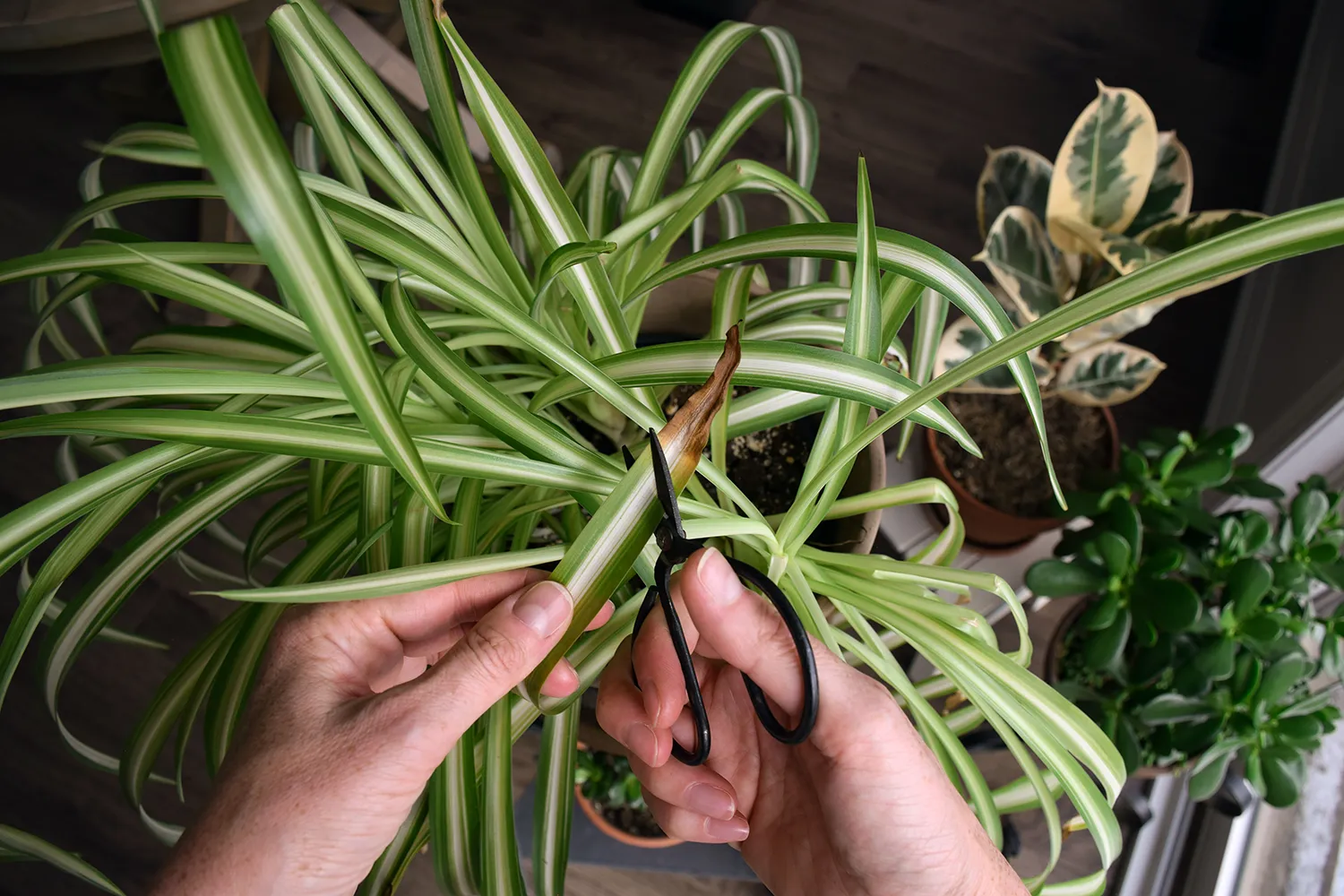
Dust-covered foliage can reduce the visual quality of an otherwise healthy installation. Routine service should include an appropriate cleaning method for the plant type, such as gently wiping broad leaves or using another plant-safe method for dense or delicate foliage.
The University of Minnesota Extension recommends cleaning dusty leaves and notes that commercial leaf-shine products are unnecessary and can clog leaf pores. A vendor should be able to explain whether it uses water, cloths, brushes, approved cleaning products, or a combination of methods for different plants.
Cleaning should extend beyond the leaves. A complete visit may also include:
- Wiping decorative containers
- Removing water marks and soil residue
- Straightening inner pots and liners
- Refreshing or leveling decorative top dressing
- Picking up fallen foliage
- Cleaning minor water or soil spills created during service
- Checking that display labels, irrigation lines, and accessories remain discreet
- Leaving the immediate floor area orderly
The proposal should specify responsibility for significant stains, damaged flooring, leaking containers, or pre-existing water damage. It should also explain how technicians report a container that needs repair or replacement.
Pest Monitoring and Integrated Plant Health Management
Pest monitoring should occur during every regular visit, not only after occupants complain about flying insects.
Technicians should inspect likely problem areas, including:
- Leaf undersides
- Leaf joints and new growth
- Stems and branch junctions
- Soil or growing-medium surfaces
- Container rims and drainage areas
- Crowded foliage
- Nearby plants that may have been exposed
Common indoor plant problems may include fungus gnats, spider mites, scale insects, mealybugs, aphids, and whiteflies. The University of California’s Statewide Integrated Pest Management Program emphasizes prevention, sanitation, pest exclusion, and proper growing conditions as foundations of long-term control. It also notes that many apparent pest or disease problems are connected to improper care, particularly watering.
A responsible provider should identify the likely problem before treating it. The service plan should describe:
- How suspected infestations are reported
- Whether affected plants are isolated or removed
- What treatment methods may be used
- Who authorizes treatments
- How products are selected for occupied properties
- Whether follow-up inspections are included
- When a plant will be replaced instead of repeatedly treated
- How the provider prevents new plants from introducing pests
Property managers should request a written pest-response procedure. The procedure should include an escalation contact, documentation expectations, and a communication plan for issues that could affect tenants or employees.
Plant Rotation, Relocation, and Seasonal Adjustment
“Rotation” can describe two different services, so proposals should define the term.
The first is rotating a container in place so that different sides of the plant receive available light. This can support more balanced growth in locations where light arrives predominantly from one direction. University of Minnesota Extension guidance notes that periodically turning plants can help give each side more equal access to light.
The second is relocating or exchanging plants among different areas. A technician may recommend this when a plant has outgrown its location, receives unsuitable light, is repeatedly damaged by traffic, or needs a temporary recovery period.
Seasonal adjustments may also be necessary when:
- The sun angle changes
- Heating or cooling systems begin operating
- Exterior doors create winter drafts
- A lobby becomes hotter during summer
- Occupancy patterns change
- Furniture or partitions alter light exposure
- Construction temporarily affects access or air quality
A high-quality commercial plant maintenance service should not repeatedly treat symptoms while ignoring a poor location. The provider should identify the environmental cause, document it, and recommend a practical relocation, species change, lighting adjustment, or container modification.
Office Plant Replacement Service and Warranty Terms
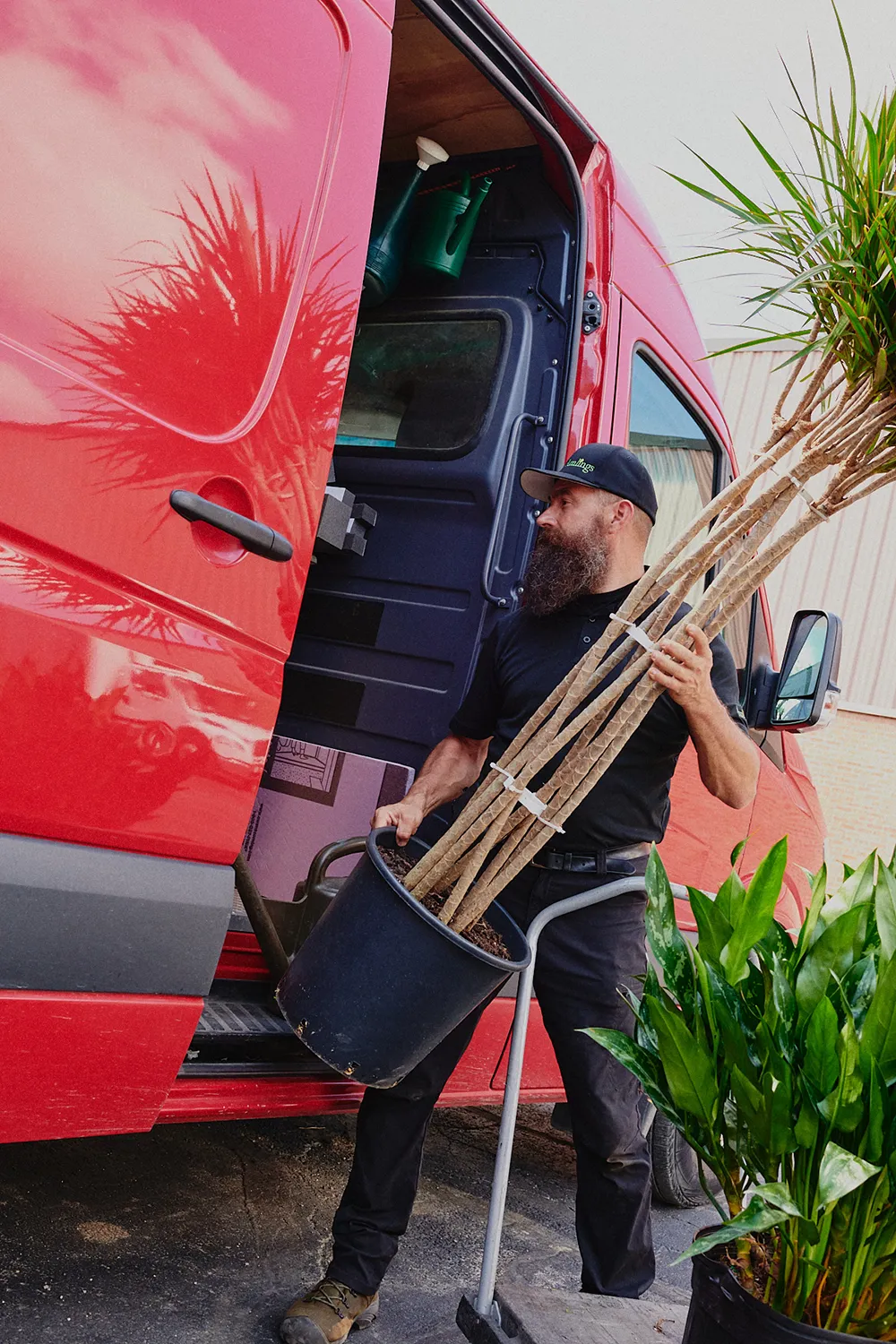
An office plant replacement service protects the visual continuity of the installation, but replacement terms vary widely among providers.
Some agreements include replacement of plants that decline under normal covered conditions. Others charge for all replacement material. Some cover standard plants but exclude large specimens, seasonal flowers, owner-supplied plants, specialty containers, vandalism, construction damage, or failures caused by building conditions.
The proposal should define:
- The condition that qualifies a plant for replacement
- Whether the standard is biological survival or acceptable appearance
- Which plants are covered
- Which causes are excluded
- Whether labor, delivery, and disposal are included
- Whether the replacement will be like-for-like
- Who approves substitutions
- The target replacement time
- How unavailable or special-order specimens are handled
- Whether temporary plants are supplied during long lead times
- Who owns the replacement plant
Do not assume that “guaranteed maintenance” includes unlimited replacements. Ask the vendor to place every warranty and replacement promise in the written agreement.
Appearance matters. A plant does not need to be completely dead before it becomes unsuitable for a reception area or executive floor. A buyer-focused office plant replacement service should establish when sparse foliage, permanent damage, severe asymmetry, or repeated pest problems justify removal.
Reporting That Makes an Indoor Plant Care Service Accountable
A provider may perform acceptable work but still create management problems if it does not communicate. Reporting turns an indoor plant care service from an invisible activity into an accountable facility program.
A routine service record should identify:
- Date and approximate time of service
- Technician
- Areas completed
- Significant work performed
- Plants requiring follow-up
- Pest or disease observations
- Watering or drainage concerns
- Environmental conditions affecting performance
- Replacements requested or completed
- Property damage or access restrictions
- Recommendations for the property team
Large or multi-building accounts may also benefit from monthly or quarterly summaries. These can track recurring failures by location, replacement counts, unresolved facility conditions, plant additions, service exceptions, and open recommendations.
Photographs are particularly valuable when a plant is hidden in a restricted area, when an environmental issue persists, or when approval is needed for a replacement. Ask whether the vendor’s system can provide time-stamped notes, issue photographs, and a record that is accessible to the account manager.
Reporting should be useful rather than burdensome. A report that says only “service completed” provides little value. A strong report helps the facilities team make decisions and demonstrates that the provider is monitoring the entire installation.
Quality Control Beyond the Assigned Technician
Quality control should not depend entirely on one technician noticing and correcting every problem.
A mature commercial plant maintenance service should include additional oversight, such as:
- A technician checklist for every visit
- Periodic supervisor or horticulturist inspections
- Account-manager reviews
- Spot audits of high-visibility areas
- Replacement and open-issue tracking
- Defined corrective-action time frames
- Backup coverage for vacations and absences
- A documented escalation process
- Regular client feedback
Facilities managers should ask how frequently a supervisor visits the property and whether those inspections are scheduled or unannounced. They should also ask who reviews repeated plant failures, pest recurrence, replacement delays, and complaints about technician performance.
A useful quality scorecard can evaluate plant vitality, cleanliness, fullness, alignment, container condition, display consistency, issue response, and reporting. This makes expectations more objective and allows both parties to discuss service performance without relying on general impressions.
What May Be an Add-On Rather Than Standard Maintenance
Some related services may appear in the same proposal but should not automatically be considered part of routine maintenance.
Potential add-ons include:
- Initial plant and container design
- New installations or major redesigns
- Container replacement
- Plant moves related to construction
- Supplemental lighting
- Living-wall irrigation repairs
- Large-scale repotting
- Blooming-plant rotations
- Fresh floral arrangements
- Exterior planters and rooftop displays
- Holiday or seasonal installations
- After-hours or emergency visits
- Work requiring special lifts or equipment
Amlings, for example, presents ongoing maintenance alongside separate services for design and installation, living plant walls, exterior displays, and holiday or seasonal installations. Buyers should therefore ask which elements are included in the maintenance agreement and which will be quoted as projects.
Ready to purchase Amlings services? Request a commercial consultation and ask for a clearly defined maintenance proposal based on your property’s plant inventory, design standards, and reporting requirements.
Office Plant Maintenance Services vs. Basic Plant Watering
A basic plant watering service may be enough for a small collection of low-value plants overseen by an attentive internal employee. It is rarely enough for a commercial interior in which plants contribute to the property’s presentation.
| Service element | Basic watering visit | Full office plant maintenance services |
|---|---|---|
| Site assessment | Limited or none | Plant inventory, condition review, and environmental assessment |
| Watering | Water applied on a routine schedule | Moisture-based decisions adjusted for species, location, and season |
| Grooming | May remove obvious dead leaves | Regular pruning, shaping, staking, and presentation care |
| Cleaning | Usually excluded | Leaves, containers, top dressing, and immediate display area addressed |
| Fertilizing | Inconsistent or separately charged | Planned applications based on growth and site conditions |
| Pest monitoring | Reactive | Routine inspection, documentation, and defined response process |
| Rotation | Usually excluded | In-place rotation, relocation, or species-change recommendations |
| Replacements | Separately charged or undefined | Written replacement criteria, exclusions, approvals, and turnaround |
| Reporting | Visit confirmation only | Work logs, issue notes, photographs, and recommendations |
| Quality control | Dependent on one technician | Supervisor oversight, audits, and account management |
The lower-priced proposal is not necessarily the lower-cost program. When pruning, cleaning, treatments, reporting, and replacements are excluded, the property may face additional invoices or gradually declining presentation quality.
Buyer-Focused Commercial Plant Maintenance Checklist
Use this checklist when evaluating a new proposal, renewing an agreement, or auditing an existing commercial plant maintenance service.
| Checklist requirement | What the proposal should state | Warning signs |
|---|---|---|
| Plant inventory | Locations, plant quantities, approximate sizes, containers, and baseline condition | Price submitted without a site visit or inventory |
| Watering | Visit frequency, moisture-assessment method, drainage procedures, and spill prevention | “Water as needed” with no explanation |
| Pruning | Removal of damaged growth, shaping, staking, spent-bloom removal, and presentation standard | Pruning described only as an optional task |
| Cleaning | Leaf cleaning, container wiping, debris removal, top-dressing care, and cleanup after service | Dust, water marks, and fallen leaves treated as janitorial problems |
| Fertilizing | Products, approximate schedule, documentation, and measures to avoid overapplication | Automatic fertilizing at every visit |
| Pest monitoring | Inspection method, reporting, treatment approval, follow-up, and escalation | Treatment begins only after occupants complain |
| Rotation and relocation | In-place rotation, authority to move plants, and approval process for location changes | Plants repeatedly fail in unsuitable locations |
| Replacements | Covered plants, qualifying conditions, exclusions, labor, disposal, substitutions, and turnaround | “Replacement guarantee” without written terms |
| Reporting | Visit records, issue notes, photos, recommendations, and open-item tracking | No record beyond an invoice |
| Quality control | Supervisor reviews, backup technicians, corrective-action timelines, and account contact | No one audits the assigned technician’s work |
A strong proposal should allow the buyer to check every row without relying on verbal assurances. When a provider says an item is “typically included,” ask for it to be added to the scope of work.
Have an existing proposal that does not answer these questions? Contact us for more information about what a complete commercial plant-care scope should cover.
Questions to Ask Before Hiring an Indoor Plant Care Service
The following questions can be copied into a request for proposal, vendor interview, or renewal review.
1. Will you inventory every plant before finalizing the price?
Ask whether the inventory will identify locations, plant sizes, containers, and existing damage. Confirm who updates the inventory when plants are added, removed, or relocated.
2. What exactly happens during a routine visit?
Request a task-level description. “Plant maintenance” should be translated into watering, moisture checks, pruning, cleaning, pest inspection, debris removal, reporting, and any other included work.
3. How do technicians decide when and how much to water?
Listen for a condition-based process rather than a fixed amount applied to every plant. Ask how the provider handles drainage-free containers and prevents damage to surrounding finishes.
4. What training do your technicians receive?
Ask about plant identification, watering, pruning, pest recognition, product handling, building protocols, and customer service. Also ask how new technicians are introduced to the property.
5. Who covers the route when our regular technician is absent?
The provider should have a backup plan that preserves access requirements and service continuity during vacations, illness, holidays, and staffing changes.
6. How do you monitor and respond to pests?
Ask what technicians inspect, how they document suspected pests, which treatment methods may be used, who approves treatment, and how follow-up visits are handled.
7. What does your office plant replacement service include?
Request the replacement standard, exclusions, labor and delivery terms, disposal process, approval requirements, and expected turnaround in writing.
8. Are replacements based on plant death or appearance?
This distinction is important in high-visibility properties. A living but badly damaged plant may still fail the property’s appearance standard.
9. Which services can generate additional charges?
Ask specifically about replacements, treatments, repotting, soil, decorative top dressing, container repair, after-hours visits, special equipment, and construction-related moves.
10. What report will we receive after each visit?
Request a sample. Check whether it identifies the technician, areas serviced, open issues, pest observations, replacement requests, and recommendations.
11. How is quality independently checked?
Ask about supervisor visits, account-manager reviews, spot audits, scorecards, and time frames for correcting a missed or substandard service.
12. How quickly will you respond to an urgent appearance issue?
A fallen specimen, water leak, pest complaint, or damaged lobby display may require attention before the next scheduled visit. Ask whether emergency response is included or billed separately.
13. Who owns the plants and containers?
Clarify whether plants are purchased, leased, or supplied under another arrangement. Ownership affects replacements, removals, contract termination, and transitions to a new provider.
14. Can you provide references for comparable properties?
A vendor experienced with small offices may not be prepared for a multi-tower property, hospital, luxury hotel, secured corporate campus, or large living-wall installation.
15. What happens at contract termination?
Ask who owns the inventory data, what happens to leased plants, how open replacements are resolved, and whether the vendor will cooperate with an orderly transition.
How to Compare Commercial Plant Maintenance Proposals
Do not compare only the monthly totals. First normalize the scope.
One proposal may assume 150 plants while another counts 174. One may include replacement coverage while another treats replacements as billable materials. One may schedule weekly visits and another may plan fewer visits with longer service times. Unless these differences are identified, the prices cannot be compared fairly.
Create a comparison sheet with the following categories:
- Verified plant quantity
- Properties, floors, and rooms covered
- Planned visit schedule
- Estimated labor per visit
- Watering and drainage procedures
- Pruning and cleaning
- Fertilizing
- Pest monitoring and treatment
- Rotation and relocation
- Replacement coverage
- Reporting
- Supervisor inspections
- Emergency service
- Additional-charge rates
- Contract term and termination rights
Pricing for a commercial plant maintenance service may be influenced by the number and size of plants, plant varieties, container systems, property access, service hours, security procedures, parking or loading requirements, replacement coverage, and the complexity of specialized installations.
Ask each finalist to provide a base price and clearly itemized optional services. A particularly useful comparison is:
- Maintenance without replacement coverage
- Maintenance with defined replacement coverage
- Maintenance plus optional design or seasonal services
This format makes it easier to understand whether a lower price represents operational efficiency or simply a narrower scope.
Warning Signs Your Current Vendor Is Underperforming
A single yellow leaf does not prove that a vendor is failing. Plants are living organisms, and changes in light, HVAC operation, construction, and occupant behavior can affect them. The stronger test is whether the provider notices problems, communicates them, and takes effective action.
Warning signs include:
- Plants are routinely dusty or surrounded by debris.
- The same locations experience repeated plant failures.
- Containers contain standing water or frequently leak.
- Plants are uneven, sparse, badly leaning, or growing into walkways.
- Pest problems are reported by occupants before the technician notices them.
- Dead or heavily damaged plants remain on display for extended periods.
- Replacements arrive without approval or do not match the design.
- Technicians miss visits without notification.
- The property receives no useful service records.
- Facility conditions are blamed for failures but never documented.
- Different technicians provide visibly inconsistent care.
- The account manager appears only when the contract is up for renewal.
When these patterns occur, request a documented corrective plan with dates, responsible parties, and measurable outcomes. If the vendor cannot provide one, begin a competitive review.
Before changing providers, photograph the current installation, confirm plant and container ownership, obtain the latest inventory, document open replacements, and establish a transition date. This reduces disputes and gives the new provider a clear baseline.
Why Consider Amlings for Commercial Plant Care?
Amlings positions its ongoing maintenance program around presentation quality as well as plant health. Its current service description emphasizes regular watering and grooming, seasonal adjustments, proactive communication, and care intended to protect the property’s appearance. The company describes its standard as “museum-quality” maintenance for commercial property managers, owners, and hospitality clients.
Amlings also combines maintenance with interior landscape design and installation, living-wall services, exterior displays, and seasonal installations. That can be valuable when a property needs not only routine care but also a redesign, plant additions, or a broader interior-landscape strategy.
Amlings’ contact page states that the company services commercial accounts, making its offering directly relevant to facilities managers, building owners, property managers, and other commercial decision-makers.
During the proposal process, ask Amlings to document the plant inventory, visit schedule, replacement terms, reporting format, quality-control process, and any recommended design changes. That gives both parties a shared definition of success.
Choose a Service That Protects the Whole Presentation
The right commercial plant maintenance service protects more than individual plants. It protects the appearance of the property, the investment in containers and installations, and the facilities team’s time.
Look for condition-based watering, skilled pruning, regular cleaning, appropriate fertilization, preventive pest monitoring, thoughtful rotation, clear replacement standards, useful reporting, and independent quality control. Then insist that those responsibilities be written into the proposal.
Do not settle for a vendor whose entire scope amounts to “water the plants.” Purchase Amlings services by requesting a commercial consultation today, and build a plant-care program that keeps every display healthy, clean, consistent, and ready to represent your property.