
As the concrete and steel landscape of Chicago continues to evolve and grow, a silent evolution is taking root indoors. For decades, the standard approach to bringing nature into a workspace involved a few lonely potted ficus trees scattered in the corners of a fluorescent-lit room. Today, that outdated model is being entirely replaced. Welcome to the era of biophilic architecture—a design philosophy that fundamentally integrates the natural world into the very fabric of our built environments.
For Chicago businesses, building and property managers, and interior designers, embracing this shift is no longer just an aesthetic choice; it is a strategic business imperative. Biophilic architecture moves far beyond the basic houseplant. It is about permanent, structural interior landscape elements that breathe life into a space. By weaving living ecosystems seamlessly into the layout of a modern urban office, we can dramatically improve human health, cognitive function, and overall well-business.
If you are looking to elevate your space, it is time to think bigger. Contact us today to learn more about how permanent natural elements can revitalize your urban property.
The Core Philosophy of Biophilic Architecture
To truly understand how to implement these changes, we must first look at the science. Biophilic architecture is rooted in “biophilia,” a term popularized by biologist E.O. Wilson in the 1980s, which describes the innate human instinct to connect with nature and other living systems.
In the context of the built environment, biophilic architecture involves creating a sustained, engaging, and highly structural connection with natural elements. It is not about simply decorating a room with greenery; it is about utilizing nature as a foundational building material. When we spend over 90% of our lives indoors—a reality especially true during the brutal Chicago winters—our physiological and psychological well-being depends on the quality of that indoor environment.
Research from institutions like the Harvard T.H. Chan School of Public Health has repeatedly demonstrated that indoor environments heavily influence cognitive function. Workspaces that incorporate natural light, organic patterns, and living vegetation see measurable drops in occupant stress levels and significant increases in productivity.
When we talk about biophilic architecture, we are talking about permanent fixtures. We are talking about spaces where the flora is just as important to the blueprint as the drywall and the plumbing.

The Evolution of Commercial Interior Design
Historically, commercial interior design treated nature as an afterthought. A desk plant or a lobby fern was considered a sufficient nod to the outdoors. However, this superficial approach fails to capture the immense benefits of true biophilic design.
Today’s forward-thinking commercial interior design recognizes that employees, clients, and tenants demand more from their environments. The modern urban office is transforming into a holistic habitat. This evolution requires a shift from transient decorations to permanent architectural integrations.
Think of how a traditional office operates: rigid cubicles, harsh lighting, and sterile walkways. Now, imagine a commercial interior design strategy where wayfinding is guided by continuous living borders, where breakrooms are enveloped in cascading foliage, and where the air is actively filtered by the building’s own permanent flora. This is the new standard.
Integrating permanent landscape elements requires early collaboration between architects, building managers, and botanical design specialists. It requires planning for irrigation, drainage, specialized lighting, and structural load-bearing early in the commercial interior design process.
Are you ready to modernize your workspace? Contact Amlings today to implement comprehensive, structural biophilic design solutions in your commercial property.
The Vertical Revolution: Green Walls and Plant Walls
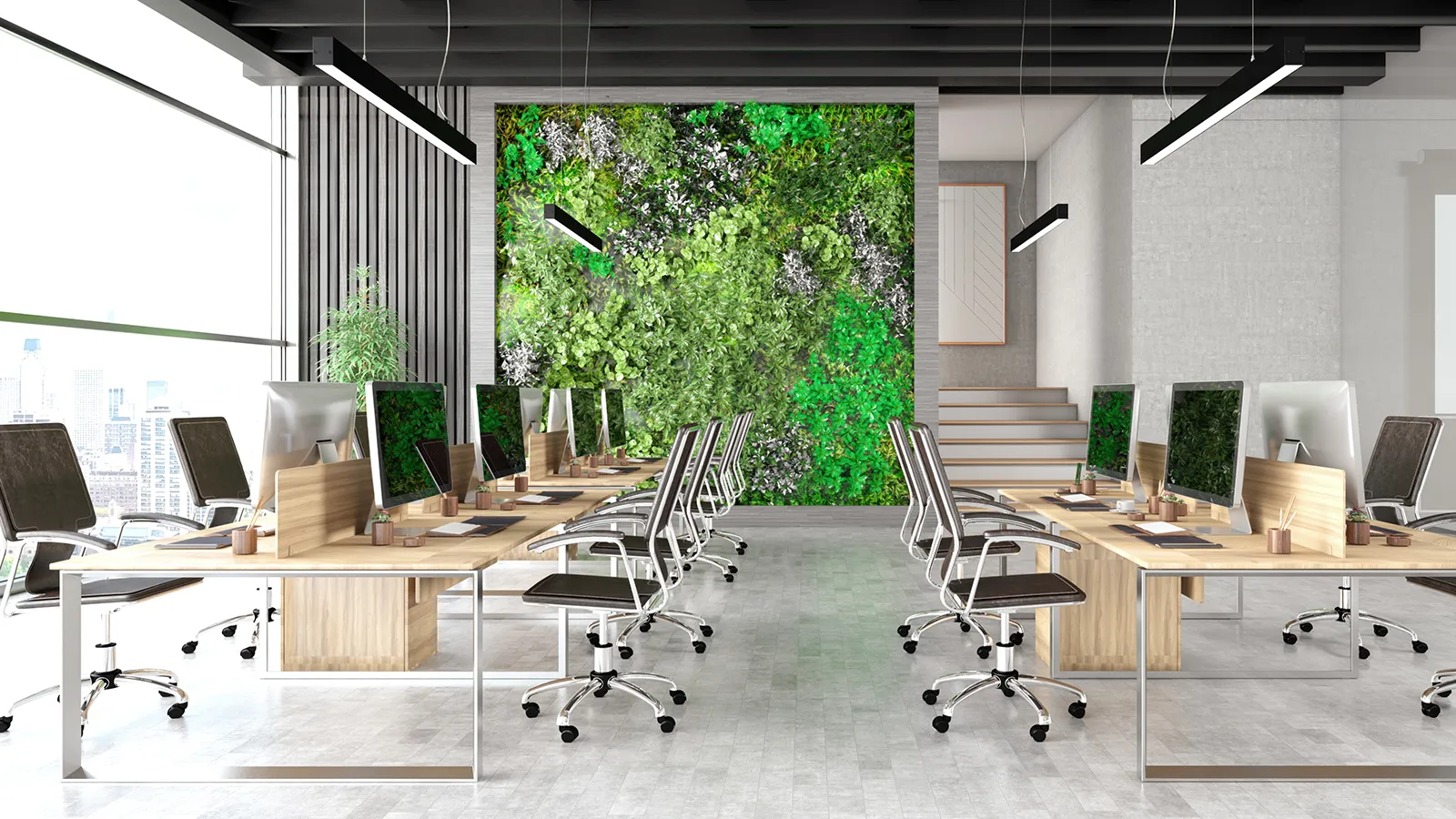
When floor space in a bustling Chicago high-rise is at a premium, the most effective way to introduce massive amounts of biomass into a room is to look up. The green wall (often referred to interchangeably as living walls or plant walls) is the crown jewel of modern biophilic architecture.
What is a Green Wall?
A green wall is a vertically built structure intentionally covered by vegetation. Unlike climbing vines that can damage the building, modern plant walls are highly engineered systems. They feature integrated hydroponic or soil-based substrates, automated drip-irrigation systems, and specialized collection gutters that make them entirely self-sustaining and safe for interior drywall.
The Engineering Behind Plant Walls
Building a successful green wall goes far beyond hanging plants on a vertical grid. The architectural integration of plant walls requires precise engineering:
- Waterproofing and Structure: A robust moisture barrier protects the building’s infrastructure, while a sturdy frame supports the immense weight of wet soil and growing root systems.
- Automated Irrigation: Modern green walls are connected directly to the building’s plumbing. Timed irrigation loops ensure that exactly the right amount of water is delivered to each tier of the wall, preventing both drought and root rot.
- Horticultural Lighting: Because most Chicago offices do not have massive skylights, plant walls rely on precisely calibrated, energy-efficient LED grow lights. These lights are tuned to specific spectrums (often mimicking the color temperature of daylight) to ensure the plants thrive without casting a harsh glare on computer screens.
The Benefits of Living Plant Walls
The integration of a green wall offers compounding returns for building managers:
- Acoustic Dampening: The dense foliage and growth substrates of plant walls act as incredible sound absorbers. In open-plan commercial interior design layouts, a strategically placed green wall can significantly reduce ambient noise and echo.
- Active Biofiltration: Plants naturally absorb volatile organic compounds (VOCs) emitted by carpets, paints, and printers. Large plant walls act as massive, silent, energy-free air purifiers.
- Thermal Regulation: The process of transpiration—where plants release water vapor into the air—can naturally cool an indoor space, potentially lowering HVAC energy costs during the summer months.
Shaping Spaces with Custom Interior Planters
While a green wall commands attention vertically, the flow of foot traffic and the division of space on the ground level can also be managed through custom interior planters.
Moving beyond the potted plant means discarding the mismatched, standalone ceramic pots that clutter corners. Instead, biophilic architecture utilizes custom interior planters that are built directly into the space. These elements function as architectural millwork, seamlessly matching the materials, colors, and design language of the surrounding environment.
Architectural Integration
Custom interior planters are designed to look as though they were poured or constructed along with the building’s foundation. Whether crafted from sleek powder-coated steel to match an industrial aesthetic, or warm, reclaimed wood to soften a corporate space, these planters become permanent fixtures.
Spatial Division and Wayfinding
In modern, open-concept commercial interior design, cubicles are largely a thing of the past. However, workers still need psychological boundaries and privacy. Custom interior planters are the perfect solution.
- Living Partitions: A waist-high built-in planter filled with dense, tall foliage (like Sansevieria or bamboo) creates a soft, natural barrier between high-traffic walkways and focused work zones.
- Wayfinding: Continuous troughs of custom interior planters can be used to subtly guide visitors from a reception desk toward conference rooms, eliminating the need for harsh signage.
- Integrated Seating: One of the most popular trends in biophilic architecture is the incorporation of bench seating directly into custom interior planters. This allows employees to literally immerse themselves in nature during their breaks, fostering a sense of tranquility.
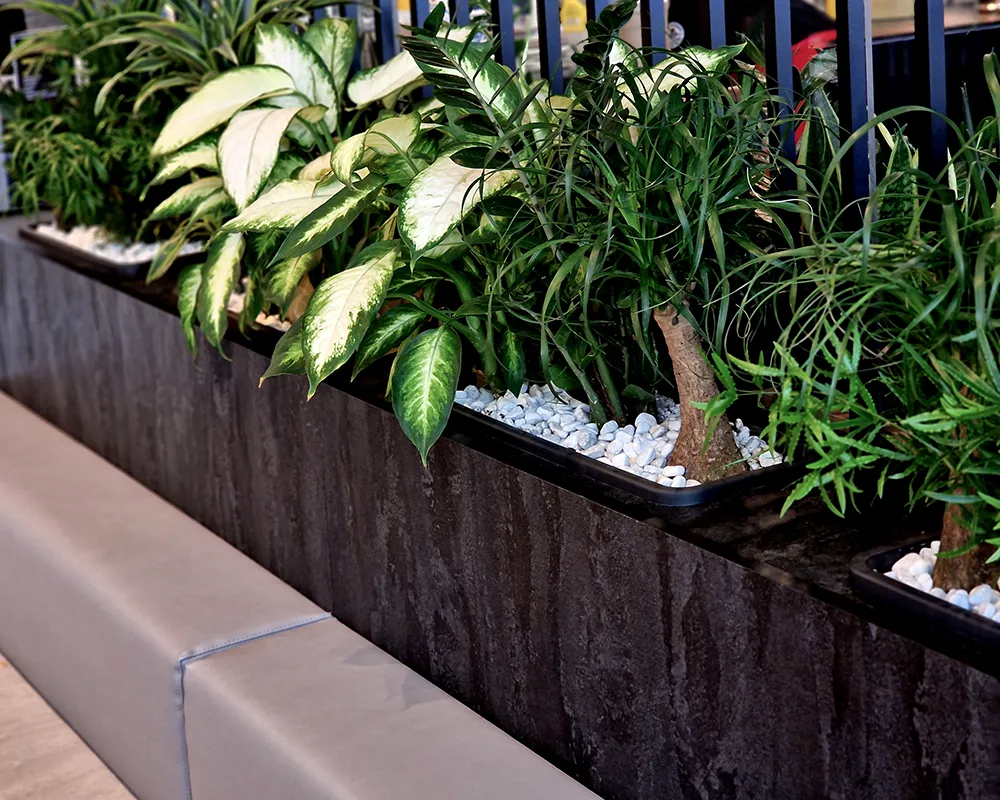
By utilizing custom interior planters, interior designers can sculpt the flow of a room using organic shapes and living textures. Contact us today to consult with our design experts on integrating built-in custom interior planters into your next architectural project.
Why Chicago Businesses and Building Managers Must Adapt
For business owners and building managers in the Chicagoland area, investing in biophilic architecture provides a distinct competitive advantage.
1. Attracting and Retaining Top Talent
The modern workforce is incredibly discerning. After prolonged periods of remote work, convincing employees to return to the office requires creating an environment that is genuinely pleasant to inhabit. A sterile, gray cubicle farm will no longer suffice. Workspaces rich in biophilic architecture, featuring expansive plant walls and abundant natural light, are perceived as premium, caring environments. This directly translates to higher employee satisfaction and lower turnover rates.
2. Boosting Productivity and Reducing Absenteeism
The psychological restorative effects of nature are well-documented. A prominent study published in the Journal of Experimental Psychology found that employees in environments enriched with natural elements were 15% more productive than those in lean, austere offices. Furthermore, the improved air quality provided by a massive green wall can reduce respiratory irritation and headaches, leading to fewer sick days.
3. Increasing Property Value and Tenant Appeal
For building managers and commercial real estate developers, outfitting a property with permanent biophilic architecture significantly increases its marketability. A breathtaking lobby featuring custom interior planters and a living green wall creates a powerful first impression for potential tenants. It signals that the building is modern, sustainable, and focused on occupant wellness—allowing property managers to command premium lease rates.
Implementation Strategy: Designing with Intent
Transitioning to a biophilic-centric design requires meticulous planning. You cannot simply drop a massive soil bed into a finished office. If you are an interior designer or a building manager looking to implement these concepts, consider the following phases:
- Phase 1: Environmental Assessment
Before designing a green wall or installing custom interior planters, assess the microclimates within your building. Observe the natural light paths, track the HVAC airflow, and measure ambient humidity. Different zones will require entirely different plant species. - Phase 2: Structural and Mechanical Integration
Work with structural engineers to ensure the floor can support the weight of wet soil in large permanent installations. Coordinate with plumbers to run dedicated water supply and drainage lines directly to the sites of your future plant walls. This eliminates the labor-intensive need for manual watering and ensures the longevity of the installation. - Phase 3: Species Selection
Choosing the right flora is critical. For a thriving green wall, select robust, shade-tolerant species that share similar watering requirements. Epipremnum, Philodendron, and various ferns are excellent choices for the lower light conditions typical of a commercial interior design layout. - Phase 4: Ongoing Maintenance Planning
Permanent biophilic architecture requires permanent care. While automated irrigation systems handle the daily hydration, living installations still require pruning, fertilizing, and occasional plant replacement to maintain their pristine appearance.
Don’t navigate this complex process alone. Learn more about our comprehensive design, installation, and maintenance services.
Rooting Your Business in the Future
The days of treating plants as disposable office accessories are over. As our understanding of human psychology and environmental wellness deepens, biophilic architecture stands out as the standard for the future of the modern workplace.
By moving beyond the potted plant and embracing permanent, integrated solutions—like a majestic, air-purifying green wall or elegantly routed custom interior planters—Chicago businesses and building managers can fundamentally transform their spaces. You have the power to turn a sterile, concrete box into a thriving, breathing ecosystem that inspires creativity, reduces stress, and promotes unparalleled well-being.
Do not let your commercial space fall behind. Elevate your environment, support your occupants, and make a stunning architectural statement.