
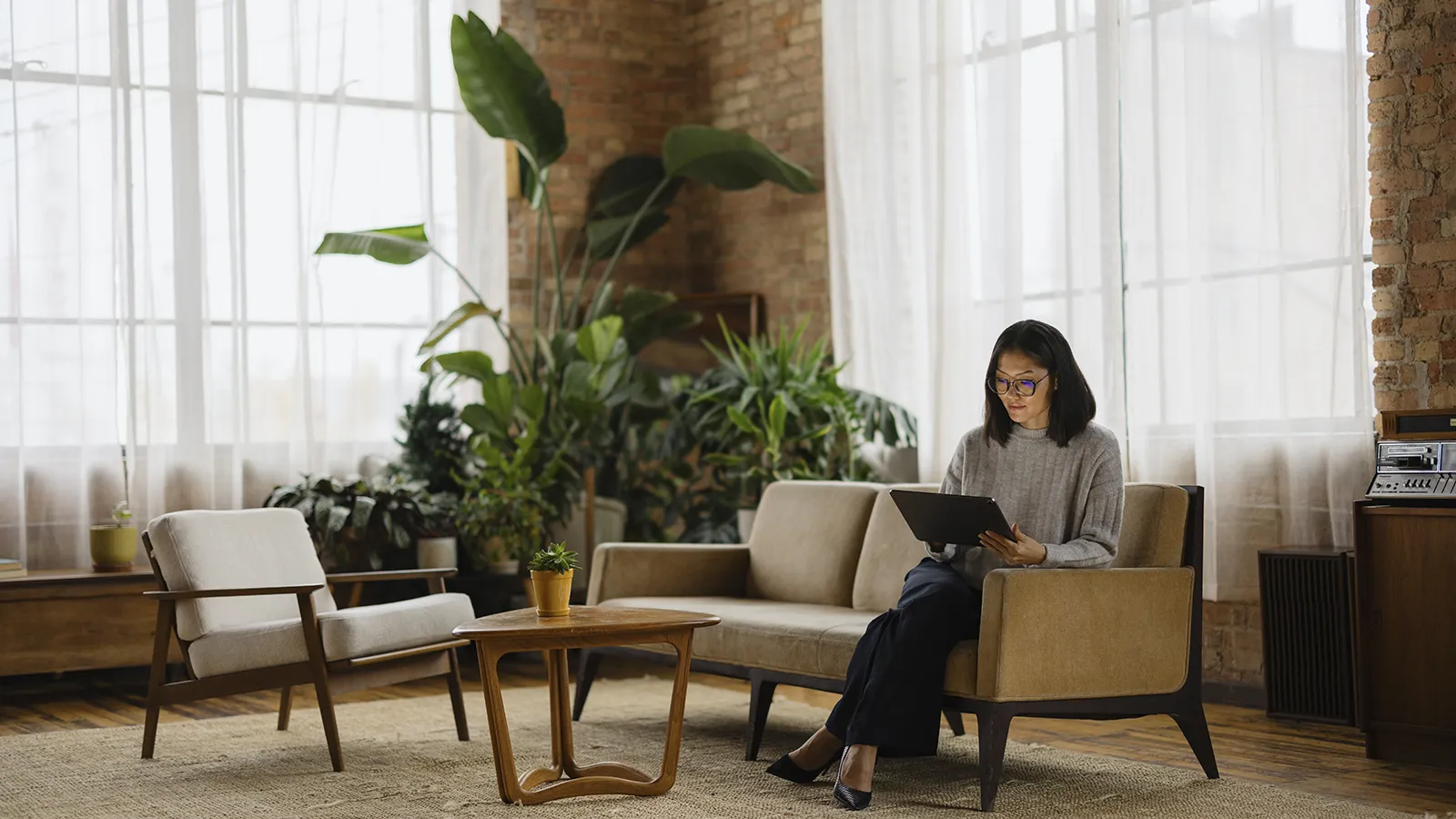
The modern workplace has undergone a massive evolution over the last two decades. As companies moved away from isolating cubicles, the open-concept office became the gold standard. However, this shift brought its own set of challenges, particularly concerning noise levels, visual distractions, and a lack of privacy. For building and property managers, interior designers, and business owners, the solution lies not in rebuilding drywall, but in adopting strategic interior landscape design. By using greenery as natural architecture, spaces can be divided beautifully and functionally.
Whether you are managing a sprawling corporate headquarters in the Loop or designing a boutique agency space in River North, utilizing plants as architectural elements is a transformative strategy. This comprehensive guide will explore how custom planter boxes, suspended botanical installations, and dense groupings of greenery can create distinct zones and natural dividers in open-concept spaces.
The Evolution of the Workspace and the Need for Boundaries
Open-concept spaces were designed to foster collaboration and transparency. However, without physical boundaries, these environments can easily become chaotic. Employees often struggle with acoustic overload and the visual fatigue that comes from an uninterrupted line of sight across a massive floor plan.
This is where interior landscape design steps in. By treating plants not merely as decorative afterthoughts but as integral building materials, designers can establish spatial hierarchy. Plants can guide foot traffic, absorb sound, and create intimate zones for focused work without sacrificing the airy feel of an open floor plan.
In a bustling urban environment, integrating nature indoors is critical. Implementing thoughtful biophilic design in Chicago provides a psychological refuge for employees, especially during the long, gray winters when access to natural outdoor greenery is limited.
Custom Planter Boxes: Building Natural Walls
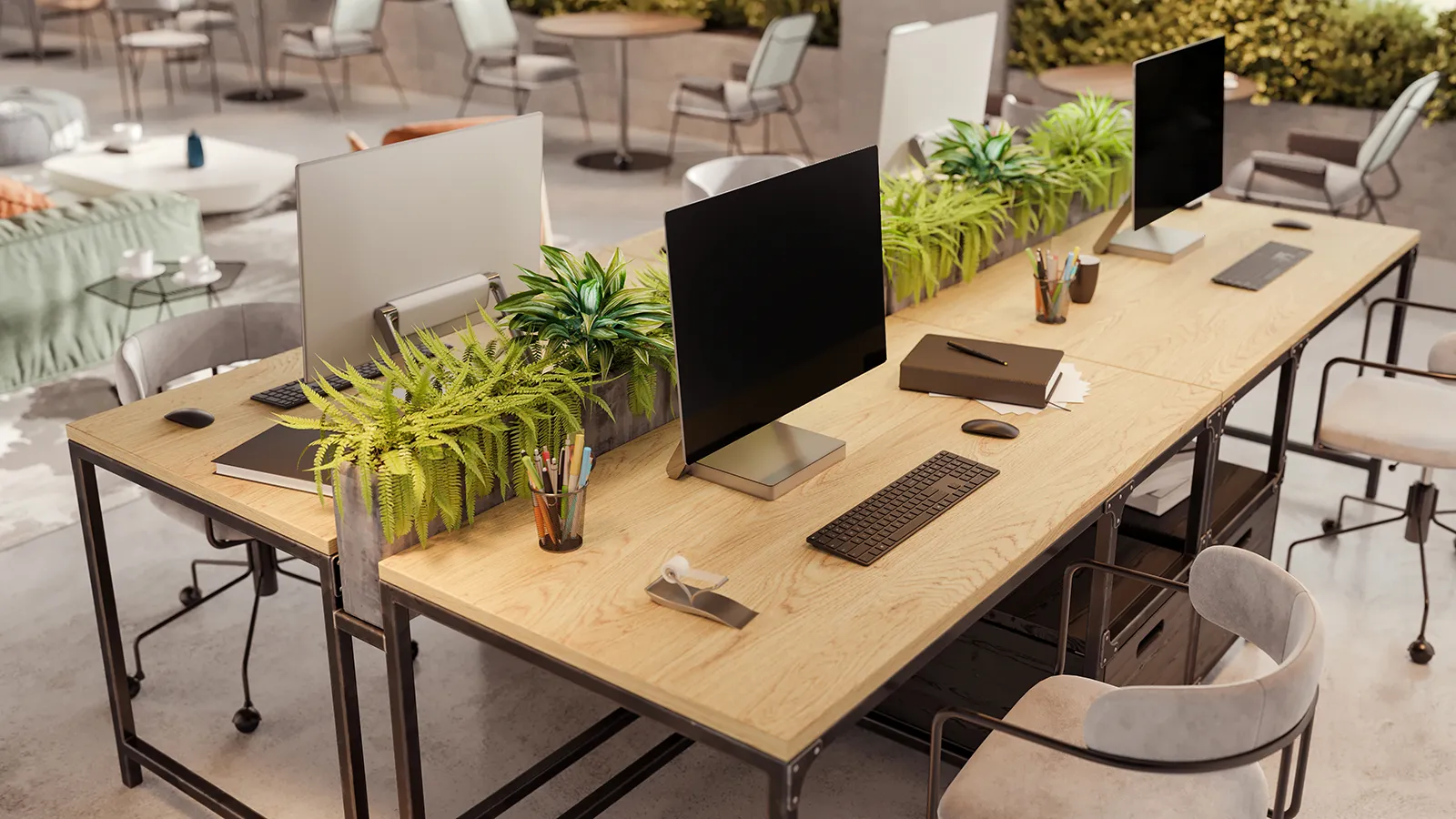
When architectural walls are too overpowering and glass partitions feel too open, custom planter boxes offer the perfect middle ground. In the realm of interior landscape design, planters act as the foundational “bricks” for creating natural boundaries.
Guiding Wayfinding and Foot Traffic
Low-to-medium height planter boxes (typically 24 to 36 inches tall) are excellent tools for wayfinding. When placed strategically along corridors or at the edges of collaborative zones, they subtly direct the flow of human traffic. Instead of using harsh physical barriers, a sleek, modern planter filled with vibrant Aglaonema or Zamioculcas zamiifolia (ZZ plants) signals to employees and visitors where a pathway begins and ends.
Creating Workstation Privacy
For desk areas that require deeper concentration, taller custom planter boxes can be utilized. By combining a 3-foot planter box with upright, architectural plants like Sansevieria (Snake Plant) or Dracaena marginata, you can create a natural screen that reaches eye level for seated employees. This visual barrier mitigates distractions from neighboring desks while still allowing ambient light to pass through the foliage.
If you are a building manager looking to upgrade your tenant experience without undertaking major renovations, incorporating these green dividers is a highly effective strategy.
Ready to redefine your workspace? Contact Amlings today to integrate custom planter boxes and premium greenery into your corporate environment.
Suspended Botanical Installations: Maximizing Vertical Space
In many commercial spaces, floor square footage is at a premium. If your office layout cannot accommodate large floor planters, interior landscape design offers a striking vertical solution: suspended botanical installations.
Lowering Perceived Ceilings for Intimacy
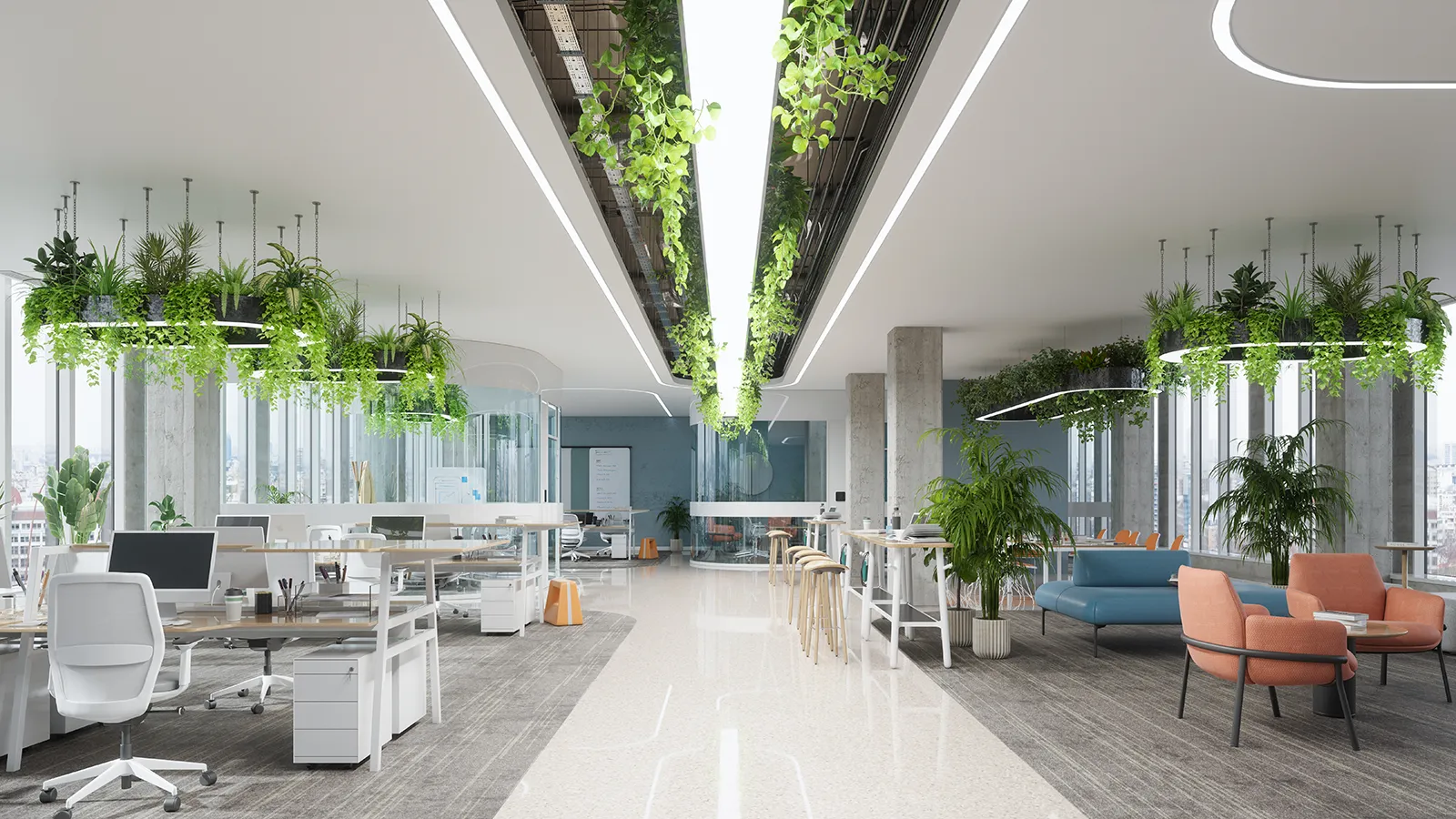
Large, commercial offices with high ceilings can sometimes feel cavernous and uninviting. Suspended greenery—such as trailing Epipremnum aureum (Pothos), Philodendron hederaceum, or cascading ferns hanging from ceiling grids or custom trellises—can artificially lower the perceived ceiling height in specific areas. This technique is frequently used over lounge areas, cafeterias, or open collaborative tables to create a cozy, “canopy” effect. It signals to employees that this specific zone is meant for gathering and conversation, separating it from the wider, open floor.
The “Floating” Divider
Suspended installations can also act as hanging screens. By utilizing tension cables or floating shelves suspended from the ceiling, interior designers can create a semi-permeable curtain of trailing vines. This divides a room without utilizing a single square inch of floor space, making it a highly requested feature in modern interior landscaping Chicago projects.
These installations require specialized care, proper structural support, and precise watering systems. This is why partnering with an experienced office plant service Chicago is vital to ensure your aerial greenery remains lush and safely maintained.
Want to elevate your office design? Contact us for more information on designing and installing suspended botanical masterpieces in your building.
Dense Groupings of Greenery: The Forest Effect
Sometimes, the best approach to interior landscape design is to mimic the natural clustering found in nature. Dense groupings of large, floor-standing plants can act as highly effective natural dividers, offering both aesthetic beauty and functional acoustic dampening.
Acoustic Attenuation Through Leaves
One of the primary complaints in open offices is noise. Conversations, ringing phones, and keyboard clatter bounce off hard surfaces like concrete floors and glass windows. Plants are natural acoustic absorbers. The surface area of leaves, combined with the dense organic matter of potting soil and the fibrous bark of stems, helps to scatter and absorb sound waves.
By grouping broad-leafed plants—such as Ficus lyrata (Fiddle Leaf Fig), Strelitzia nicolai (White Bird of Paradise), or large Monstera deliciosa—you can create a “green acoustic wall” between noisy collaborative zones and quiet focused-work areas.
Flexible and Modular Architecture
Unlike built-in walls, dense groupings of potted plants in mobile containers are highly modular. As your business scales or team structures change, your interior landscape design can adapt. You can easily roll a cluster of tall Palms to enclose a pop-up meeting space or disperse the plants to open up a room for a company-wide town hall. This flexibility is highly valued by Chicago business owners who require agile workspaces.
Transform your corporate acoustics naturally. Contact Amlings services to bring dense, high-quality plant groupings into your office and improve your team’s focus.
The Science and ROI of Biophilic Design in Chicago
The decision to invest in comprehensive interior landscape design goes far beyond mere aesthetics; it is rooted in science and business economics. Biophilic design in Chicago spaces directly impacts employee health, retention, and overall productivity.
Cognitive Function and Air Quality
Human beings have an innate, biological connection to nature—a concept known as biophilia. When we are deprived of nature in sterile corporate environments, stress levels rise. A landmark study by the Harvard T.H. Chan School of Public Health on green buildings demonstrated that environments optimized for indoor environmental quality (which includes the integration of nature and improved air quality) significantly boost cognitive function scores among employees.
Furthermore, research originating from the famous NASA Clean Air Study has shown that certain indoor plants can help mitigate indoor air pollution, filtering out volatile organic compounds (VOCs) emitted by office furniture, carpets, and cleaning supplies.
Employee Retention and Wellness
In a competitive job market, the physical workspace is a major factor in attracting and retaining top talent. Professionals want to work in spaces that prioritize their well-being. Offices that feature robust interior landscaping Chicago stand out. They signal to employees that management cares about providing a healthy, vibrant, and psychologically supportive environment. The return on investment (ROI) is realized through decreased absenteeism, higher daily productivity, and lower turnover rates.
Overcoming Lighting Challenges in Commercial Spaces
One of the main concerns building managers have when considering interior landscape design is a lack of natural light. Not every office has floor-to-ceiling windows, and interior corridors can be notoriously dark.
A skilled office plant service understands how to navigate these microclimates.
- High-Light Zones: South-facing windows and sunny atrium spaces are perfect for high-impact tropicals, citrus trees, and colorful plants.
- Medium-Light Zones: General desk areas with ambient fluorescent or LED lighting are ideal for Philodendrons, Aglaonemas, and Dracaenas.
- Low-Light Zones: Interior hallways and shaded corners can still thrive with the introduction of low-light tolerant species like Zamioculcas zamiifolia or high-quality replica plants where live greenery is structurally impossible to maintain.
Furthermore, advanced interior landscape design often incorporates specialized, automated grow-lighting seamlessly integrated into architectural fixtures, ensuring plants receive the exact spectrum of light they need without disrupting the office ambiance.
Why Partner with a Professional Office Plant Service in Chicago?
Using plants as natural architecture is a significant investment. Just as you wouldn’t install a complex HVAC system without a maintenance contract, you shouldn’t install a massive botanical divider without professional horticultural support.
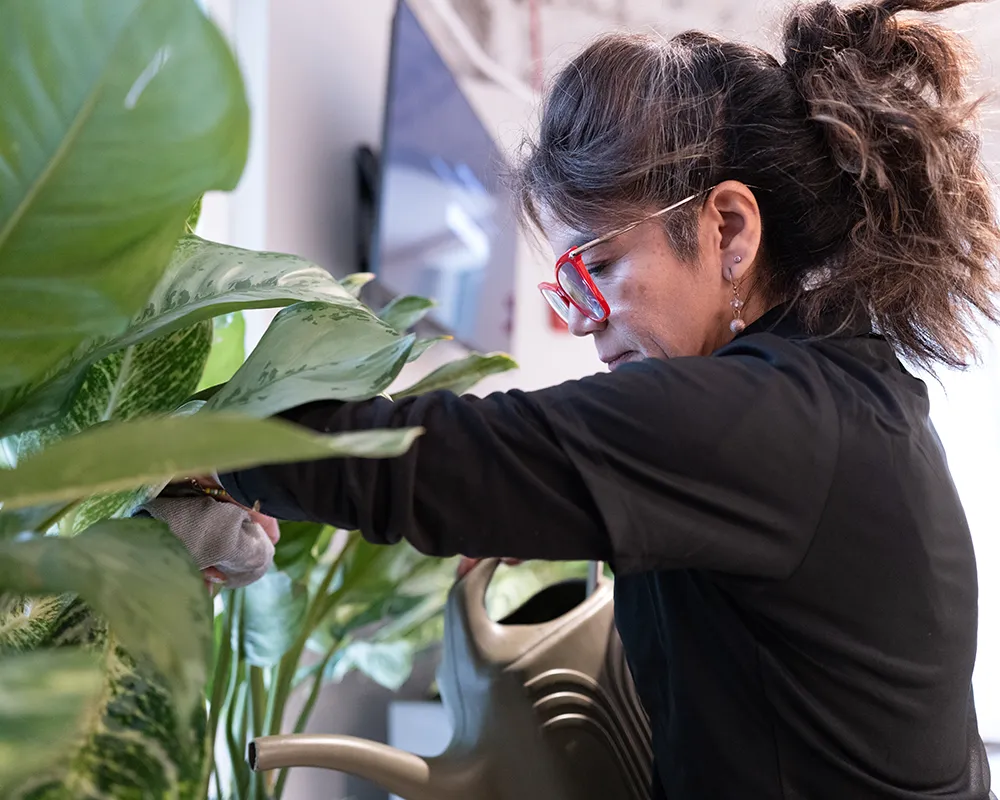
Live plants are dynamic, growing organisms. Without proper care, a beautiful green divider can quickly become an overgrown hazard or a wilting eyesore. An expert office plant service in Chicago, like Amlings, provides comprehensive maintenance, including:
- Precision Watering: Overwatering is the number one cause of indoor plant failure. Professionals use sophisticated moisture-reading tools and sub-irrigation systems to ensure exact hydration.
- Pruning and Shaping: To maintain the architectural integrity of a space divider, plants must be pruned accurately. This prevents them from encroaching on walkways while encouraging dense, lush growth.
- Pest Management: In a closed office environment, proactive, non-toxic pest control is vital to protect the entire botanical ecosystem.
- Seasonal Rotations: A premium service will swap out blooming varieties or refresh soils to ensure the interior landscape design always looks impeccable.
By outsourcing the horticultural care, building managers and business owners can enjoy all the aesthetic and health benefits of biophilic design in Chicago without any of the operational headaches.
Ensure your green investments thrive. Contact us to learn more about our comprehensive maintenance packages and ongoing horticultural support.
Bringing it All Together: Your Green Architecture Strategy
To successfully implement interior landscape design as a space division tool, you need a cohesive strategy. Haphazardly placing a few potted ferns around a room will not achieve the architectural impact or the acoustic benefits desired.
Step 1: The Space Audit. Walk your floor plan and identify the pain points. Where is noise congregating? Where do employees lack privacy? Where are the visual sightlines too overwhelming?
Step 2: Select the Right Dividers. Determine if the space requires the solid structure of custom planter boxes, the vertical elegance of suspended botanical installations, or the flexible density of grouped floor plants. Often, the best interior landscaping Chicago projects utilize a hybrid of all three.
Step 3: Partner with the Experts. Executing this vision requires botanical knowledge, design acumen, and logistical expertise.
The transition from a noisy, stressful open office to a harmonious, biophilic sanctuary is entirely achievable. By leveraging the power of nature, you can build boundaries that heal rather than confine, dividing your space with living, breathing architecture.