
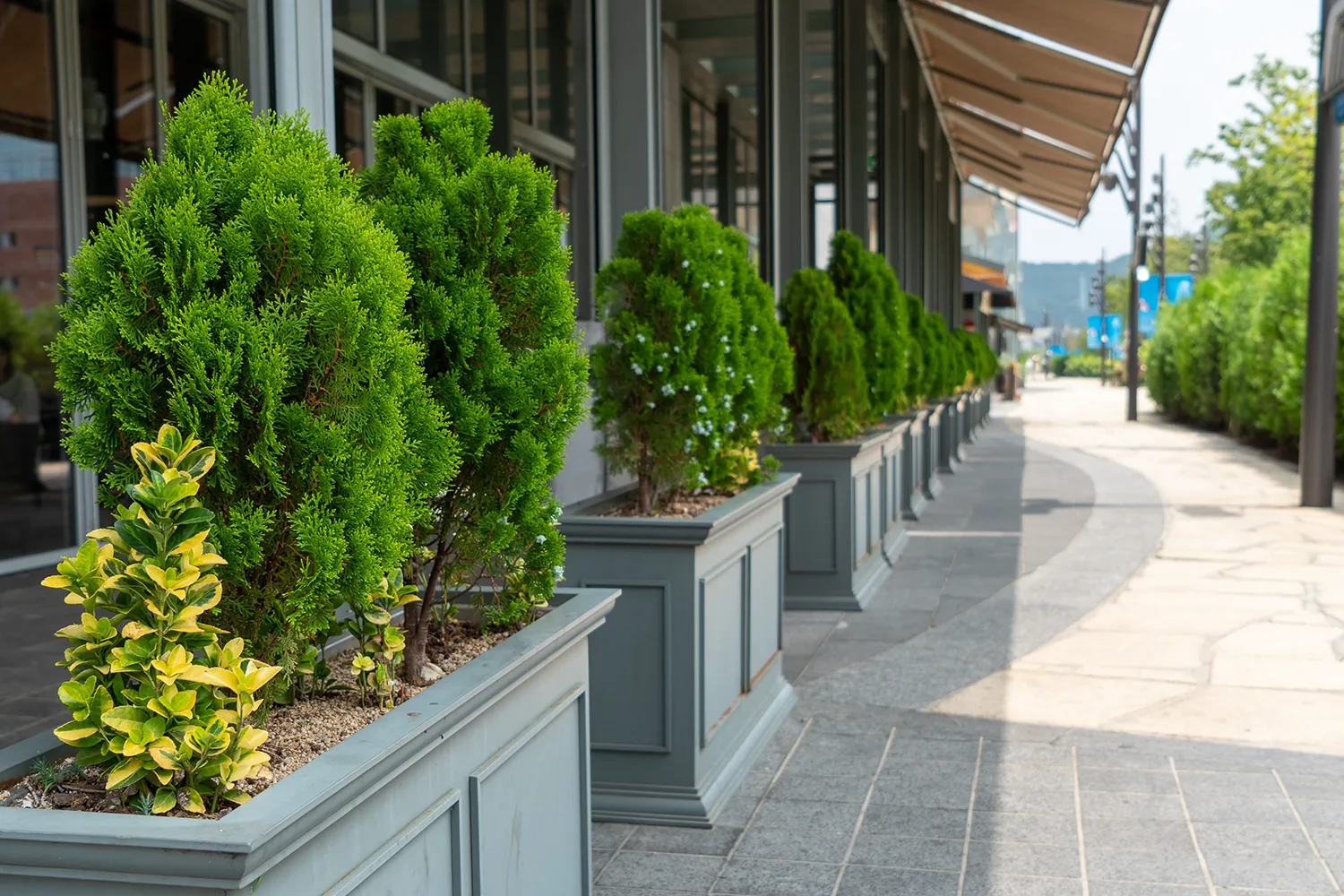
For a Chicago property, an outdoor planter is not simply a decorative pot. It can frame an entrance, direct pedestrian movement, define a patio, soften a rooftop, reinforce a brand, and signal that a property is actively cared for. It can also become a daily operational problem when the container is undersized, the plants are wrong for the exposure, irrigation is missing, or snow-removal crews have nowhere to work.
When property teams search for commercial outdoor planters in Chicago, they often begin with color and plant selection. Successful displays begin earlier—with location, scale, container material, drainage, maintenance access, seasonal timing, and a clear purpose for every planter.
That planning is especially important for property managers, building owners, hotel managers, restaurant operators, and multifamily managers who need attractive displays without creating avoidable work for onsite teams. Planters must look polished to guests and residents while still accommodating deliveries, snow removal, accessibility, building operations, and maintenance.
This guide explains how to plan commercial outdoor planters for entrances, rooftops, patios, and sidewalk cafés while accounting for Chicago weather, pedestrian flow, irrigation, installation timing, routine maintenance, seasonal rotations, and winter presentation.
Ready to create a polished exterior without managing every detail internally? Request an Amlings commercial planter proposal for your property.
Why Commercial Outdoor Planters Chicago Projects Need a Plan
A high-performing planter rotation approach begins with business and property objectives. Before choosing flowers, decide what the display must accomplish.
At a hotel, planters may need to make the arrival feel more luxurious while leaving room for luggage carts, rideshare passengers, and valet operations. At a multifamily property, they may need to distinguish the resident entrance from retail doors. At a restaurant, they may define the dining area while helping guests understand where to enter. At an office property, they may soften a hard plaza and create a more welcoming transition into the lobby.
Other examples include:
- Frame and emphasize the main entrance.
- Separate dining space from pedestrian circulation.
- Screen an unattractive view or mechanical feature.
- Add color that is visible from passing vehicles.
- Discourage unwanted shortcuts without creating a barrier.
- Create a photographable arrival experience.
- Reinforce the property’s architecture or brand palette.
Clear purposes prevent random container placement and make budget decisions easier. They also provide a standard for evaluating a design: Does the proposed display solve the property’s actual need, or is it simply attractive in a rendering?
A coordinated plan avoids another common mistake—purchasing containers one at a time. Mixed sizes, unrelated finishes, and inconsistent plant palettes can make an otherwise well-maintained property look improvised. A master plan establishes visual rhythm across the frontage and gives management a repeatable standard for future replacements and seasonal rotations.
For commercial outdoor planters Chicago properties can operate efficiently, each container should also have a defined service path. Crews need room to water, prune, clean, and replace plants without blocking a doorway or moving half of a patio.
Learn how Amlings can translate your architecture, traffic patterns, operating schedule, and brand standards into a practical exterior display plan.
Design for Chicago Weather in Every Season
Chicago demands more from exterior containers than a mild-climate city. The National Weather Service’s 1991–2020 Chicago climate normals show winter days commonly near or below freezing, normal summer highs in the 80s, recurring precipitation, and substantial seasonal temperature changes. Commercial planters therefore need to handle freeze-thaw cycles, reflected summer heat, drying winds, heavy rain, snow, and abrupt weather shifts.
Do not treat “Chicago exposure” as one uniform condition. A shaded courtyard in the Loop, a lakefront hotel entrance, a west-facing restaurant patio, and an elevated rooftop can behave very differently.
Building canyons may accelerate wind. Dark masonry and glass can raise temperatures around containers. Deep canopies may prevent rainfall from reaching plants even during a storm. A planter beside a driveway may receive salt spray and dirty snow, while the same plant palette might perform well in a protected courtyard.
A site assessment should record:
- Hours and direction of direct sunlight.
- Reflected heat from glass, stone, asphalt, and metal.
- Exposure to prevailing winds and wind tunnels.
- Natural rainfall reaching the soil surface.
- Proximity to salted walks, drives, and snow-storage areas.
- Roof overhangs, canopies, and building exhaust.
- Access to water during weekends and holidays.
Plant hardiness is only one selection tool. The USDA Plant Hardiness Zone Map is based on average annual extreme minimum winter temperature. A perennial that survives in the ground, however, may not survive in an exposed container because its roots have less insulating soil around them. Use the property ZIP code as a starting point, then adjust for wind, sun, container size, elevation, and winter maintenance practices.
Salt deserves specific attention. The Morton Arboretum’s winter plant guidance explains that salt and other deicers can dry plant tissues and accumulate around roots. Position planters away from the heaviest spray when practical, avoid using them as snow-storage boundaries, and coordinate with snow contractors so salt-laden snow is not piled into the display.
For commercial outdoor planters Chicago property teams can depend on, weather must be a design input—not an explanation offered after plants fail.
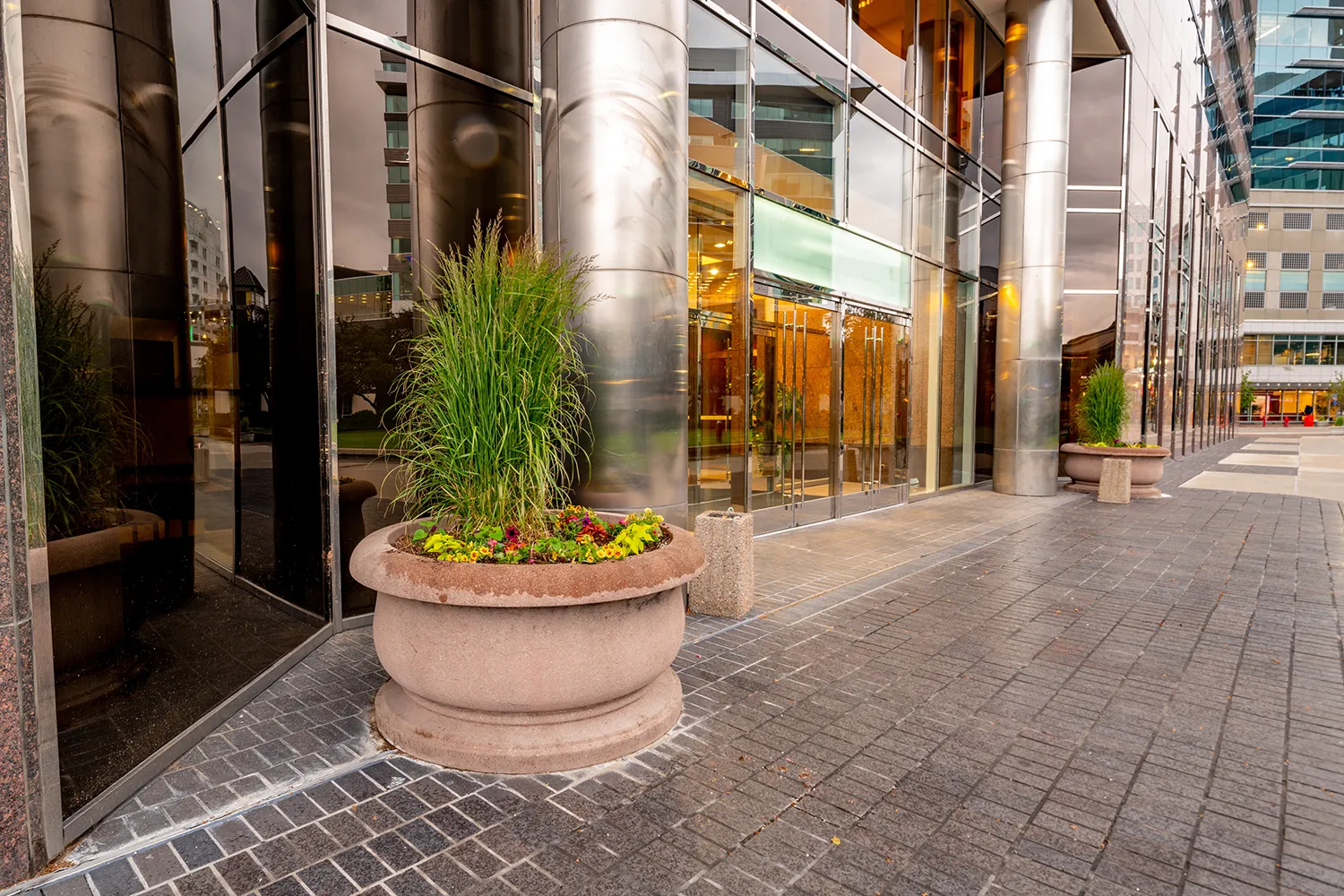
Exterior Plant Displays Chicago Properties Can Depend On
The strongest exterior plant displays Chicago properties use are designed as a year-round sequence rather than a single summer installation.
A typical approach may include early spring, summer, fall, and winter rotations, but the exact schedule should remain flexible. Overnight temperatures, sun exposure, wind, major events, plant availability, and the condition of the current display can change the best installation window.
Early spring
Early spring designs often rely on cool-tolerant flowers, emerging foliage, bulbs, branches, and structural accents. The goal is to bridge the visual gap between winter greens and the arrival of reliable warm weather.
Because one entrance may remain colder or windier than another, identical installation dates do not always produce identical results. An experienced provider should evaluate exposure instead of applying one date across every property.
Summer
Summer supports the broadest palette, including flowering annuals, tropical foliage, ornamental grasses, trailing plants, vines, and bold textural combinations.
Plant selection should match the service level. A heavily flowering design may deliver exceptional visual impact but require more watering, deadheading, feeding, and replacement than a foliage-driven composition. For busy properties, resilient foliage can provide a dependable base while selected flowers add controlled color.
Fall
Fall rotations may combine durable foliage, grasses, flowering plants, seed heads, branches, gourds, pumpkins, or other property-appropriate accents. Hotel and residential designs may lean toward refined foliage and branch work, while restaurants or retail properties may want stronger seasonal color.
Loose decorative materials should be secured so they do not roll or blow into pedestrian routes.
Winter
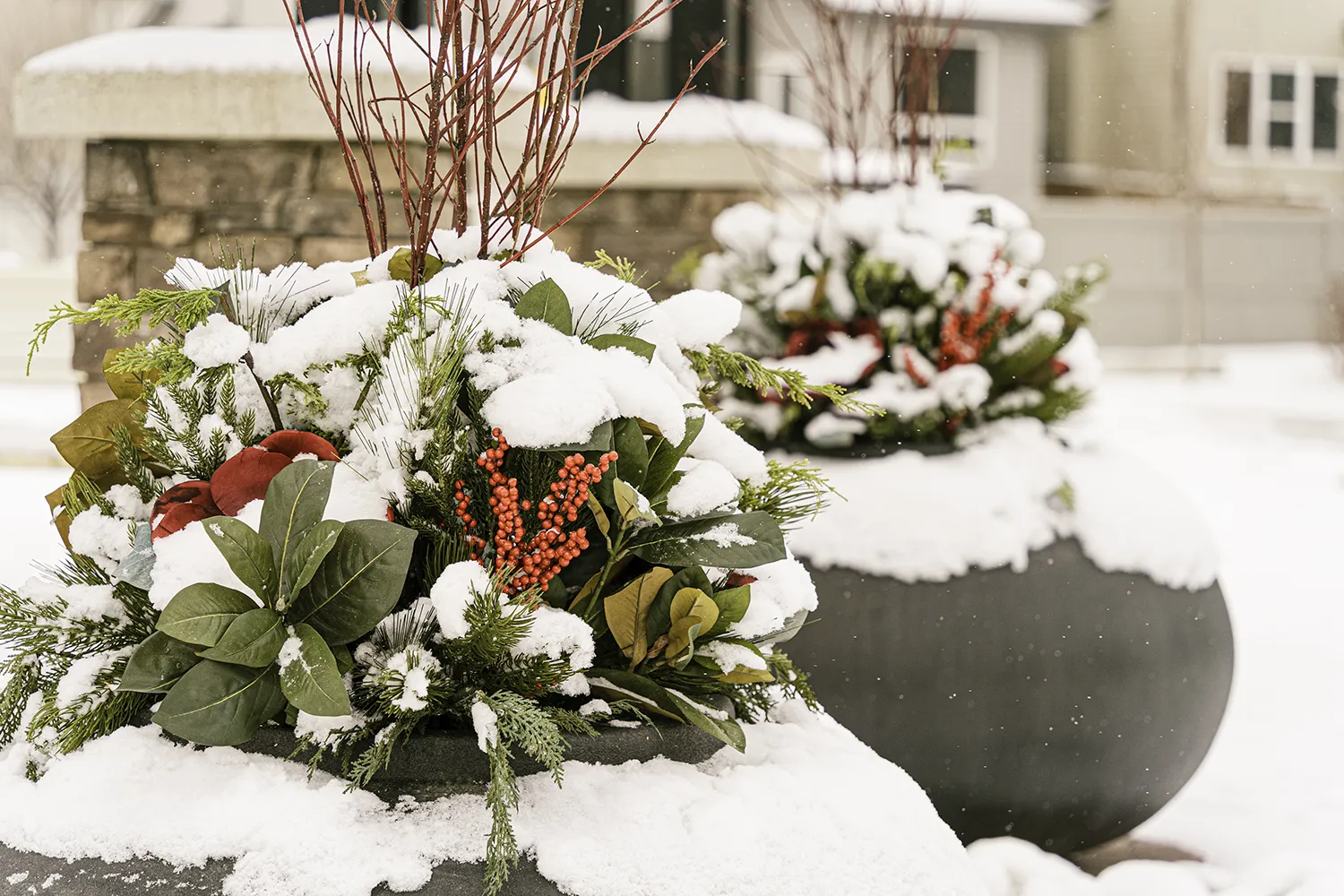
Winter displays shift from growing-season performance to durable structure, color, texture, lighting, and scale. Cut evergreens, branches, berries, cones, bark, and other long-lasting materials can maintain a complete exterior appearance when live flowering plants are no longer practical.
Two service models are commonly useful. A full rotation replaces most of the display each season for maximum visual change. A backbone system retains selected structural plants or permanent elements and changes the supporting material around them.
A professional seasonal planter service should define what happens between rotations—not only on installation day. The scope should address watering, fertilizing, pruning, deadheading, plant replacement, cleanup, storm response, and end-of-season removal.
Partner with Amlings for seasonal planter rotations to keep your property coordinated from early spring color through winter greens.
Choosing Commercial Exterior Planters for Scale and Durability
Successful commercial exterior planters must look proportionate to the building and remain practical for the site.
A container that looks large in a showroom may disappear beside a tall glass façade. A planter that suits a small residential lobby may be visually weak at a hotel porte-cochère. Conversely, an oversized container can crowd a narrow sidewalk, obstruct a window, or block sightlines near a restaurant entrance.
Evaluate scale from both the pedestrian viewpoint and across the street. Photograph the proposed location and create a simple visual mockup, or mark container footprints with tape or cones. Check the relationship to:
- Door and transom height.
- Column and window-bay width.
- Canopies and architectural projections.
- Signage and address numbers.
- Outdoor furniture and café barriers.
- The distance from which people first see the property.
In expansive spaces, a group of coordinated containers may read better than one isolated pot. At narrow entrances, a matched pair may provide enough emphasis without adding clutter. A long façade may benefit from repetition that establishes rhythm and makes the property feel intentional.
For commercial outdoor planters Chicago hotels and office towers place at prominent entrances, planting height matters as much as container height. A low container can still achieve strong scale with tall foliage or branches, but the composition must remain balanced and stable.
Material options
Commercial-grade fiberglass and composite planters can provide a substantial appearance with less empty weight. Their lower weight can simplify seasonal relocation, but they may need added ballast or stabilization in exposed locations.
Metal creates a crisp architectural effect but may transmit heat and cold to the root zone. The finish should be selected for exterior moisture, salts, scratches, and long-term exposure.
Concrete provides stability and a substantial visual presence. Its weight makes it useful in exposed public areas but difficult to reposition, especially after it is filled with growing media and water.
Wood can add warmth and character, although it requires construction and finishing appropriate for constant contact with moisture.
Ceramic, stone, and similar products should be explicitly rated for outdoor freeze-thaw conditions. A container designed for a mild climate or covered porch may not tolerate repeated Chicago freezing when filled with wet media.
Drainage and liners
Drainage is nonnegotiable. Planters need a reliable way to release excess water, and the property needs a plan for where that water will go.
Improvised drainage can stain paving, create slippery conditions, damage decking, or leave roots sitting in saturated media. Liners, feet, drain fittings, saucers, reservoirs, and sub-irrigation systems should be planned as one assembly rather than added after installation.
Check whether water will drain toward a walking path, door threshold, neighboring property, roof membrane, or occupied space below. In some locations, controlled drainage or a closed reservoir may be more appropriate than an unrestricted drain hole.
Rooftop weight and wind
Rooftop planters require additional review. The container, soil, retained water, mature plants, irrigation components, and decorative materials all contribute weight. Tall plants and large containers also interact with rooftop wind.
ASCE guidance on structural loads emphasizes the need to account for wind, snow, rain, and other design loads. Confirm allowable roof loads, waterproofing protections, drainage routes, wind exposure, and approved stabilization methods with the property’s architect or structural engineer before installation.
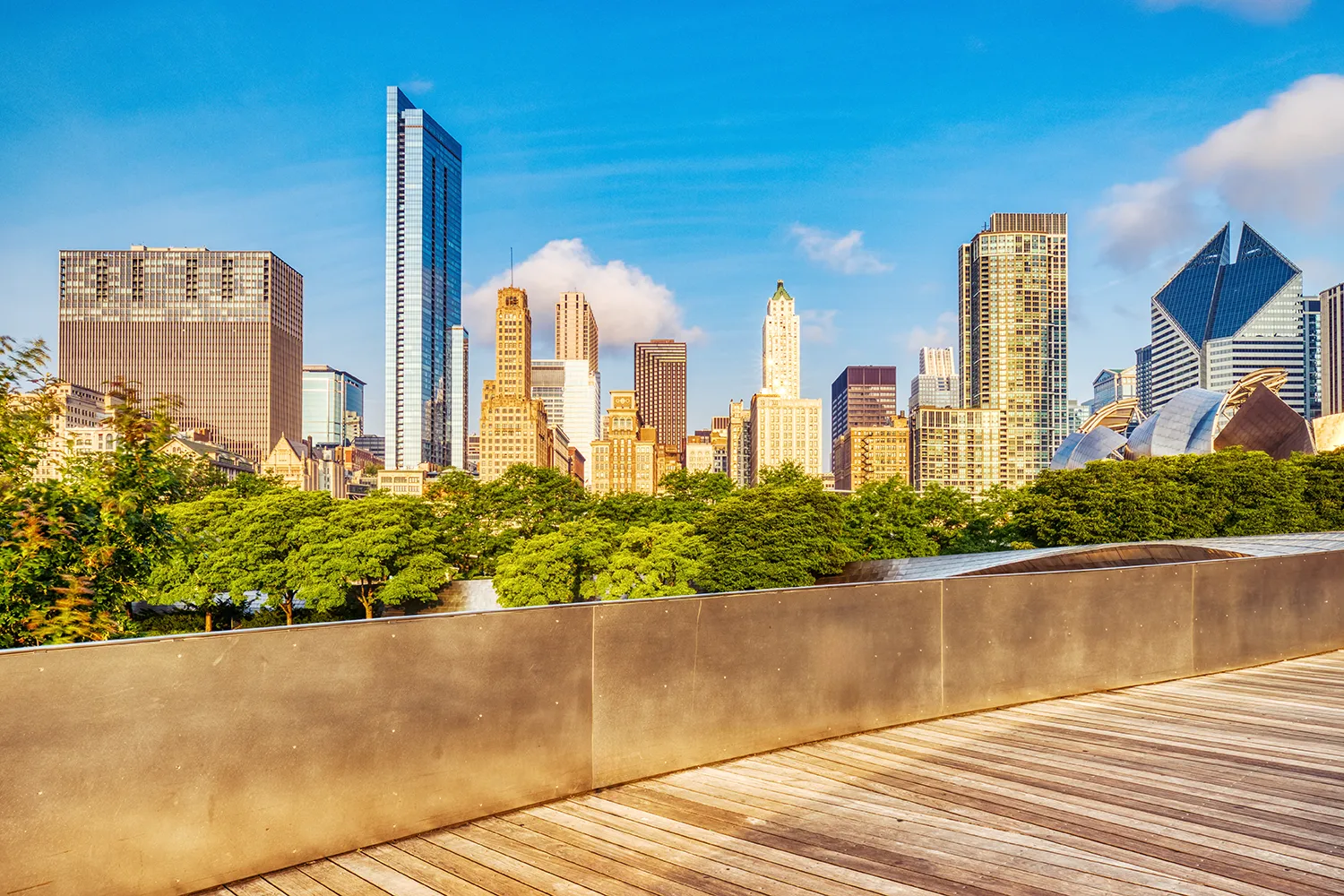
Ask Amlings to source and install commercial-grade planters sized for your entrance, patio, rooftop, or multifamily property.
Applications for Entrances, Rooftops, Patios, and Sidewalk Cafés
Entrances and Business Entryway Planters
Entrances benefit from symmetry, repetition, or a deliberate asymmetrical composition. Use business entryway planters to make the correct door obvious, reinforce a canopy or sign, and create a smooth visual transition between the sidewalk and lobby.
Keep door swings, card readers, intercoms, package deliveries, luggage handling, valet activity, and snow clearing in mind. At multifamily properties, containers can distinguish resident, leasing, amenity, and retail entrances without adding permanent construction.
For hotels, the display must look effective at multiple speeds: to a pedestrian, from an arriving vehicle, and in guest photographs. Tall elements can provide visibility from a distance, while lower layers add detail at close range.
Avoid delicate trailing plants where rolling luggage, carts, or valet activity will repeatedly damage them. Keep thorny, irritating, or messy material away from guest contact zones. Plantings nearest the door should remain tidy even when wind or rain affects the larger display.
Rooftops
Rooftftop planters can divide dining, lounging, and circulation zones; screen mechanical equipment; soften hard surfaces; and create a stronger sense of enclosure.
The design should prioritize wind-resistant plant forms, stable containers, dependable irrigation, and clear maintenance access. Plants that perform well at street level may struggle in rooftop sun and wind, so site-specific selection is essential.
Plan how crews will bring in planters, soil, replacement plants, hoses, tools, and seasonal materials. Freight-elevator reservations, protection for finished corridors, loading restrictions, and approved working hours can materially affect installation and service costs.
Confirm roof warranties and required protective layers before anything is positioned. Planters should never obstruct drains, roof access, inspection points, or required maintenance areas.
Patios and courtyards
On patios, planters can establish room-like edges without making the area feel enclosed. Use lower containers near seated sightlines and taller compositions where screening is needed.
Consider shade movement throughout the day, heat radiating from paving, furniture reconfiguration, umbrellas, heaters, service stations, and access to kitchen or building doors. Restaurant layouts should preserve efficient paths for servers and adequate turning room around occupied tables.
Courtyards often receive less natural rainfall than expected because walls, balconies, and overhangs block it. Even shade-tolerant plants may dry rapidly when no rain reaches the growing media. Irrigation should reflect actual exposure rather than assumptions based on the planter being outdoors.
Sidewalk cafés
Planters can create an attractive boundary for sidewalk dining, but they must fit within the approved café layout. The City of Chicago’s sidewalk café guidance states that cafés must maintain a six-foot pedestrian clearance and that the site plan must demonstrate that path. Planter bodies, feet, foliage spread, and anticipated seasonal growth should all remain within the approved footprint.
Treat café planters as part of the operating plan. Guests need an obvious entrance. Servers need efficient routes. Pedestrians should not be diverted into signs, tree grates, bicycle racks, curb ramps, utility equipment, or street furniture.
Verify current permit requirements and the approved site plan before purchasing or repositioning containers. Rules and site conditions may change, and a planter that appears compact before planting may extend well beyond its original footprint once foliage matures.
For commercial outdoor planters Chicago restaurants use as café boundaries, durability is especially important. Containers may be exposed to chair movement, cleaning equipment, delivery carts, food spills, street debris, and frequent public contact.
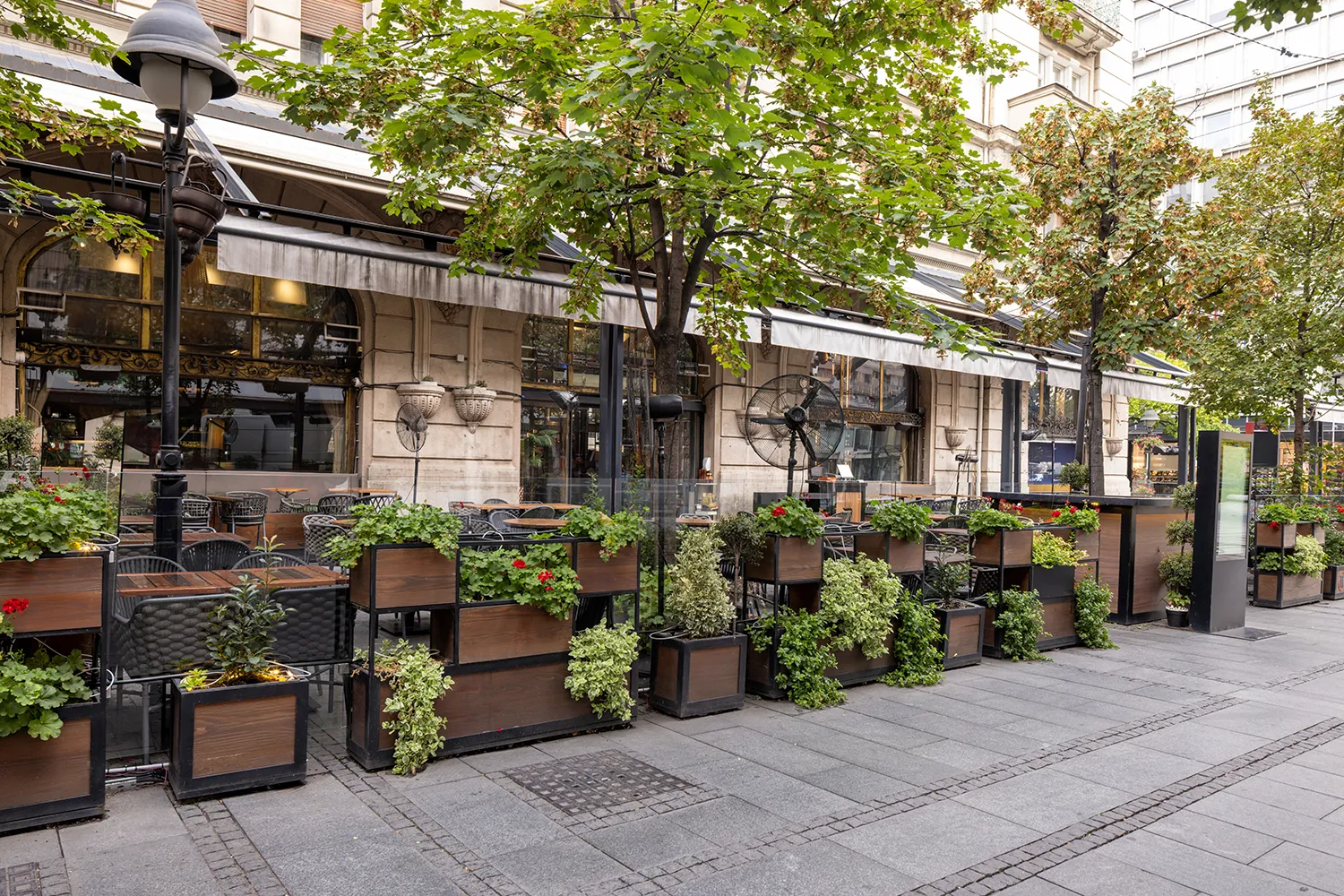
Business Entryway Planters and Pedestrian Flow
Every planter changes how people move. Before installation, observe the property during its busiest periods—morning arrival, lunch, hotel check-in, food delivery, school pickup, move-in, event dismissal, or evening dining.
A quiet site visit may not reveal the real congestion point.
Map the full movement zone, including:
- Door swings and revolving-door approaches.
- Accessible routes and curb-ramp connections.
- Vestibule, security, and check-in queues.
- Bell carts, package deliveries, and housekeeping routes.
- Restaurant service paths.
- Bicycles, strollers, mobility devices, and dog-walking traffic.
- Valet, rideshare, and loading activity.
- Snow-clearing equipment and temporary snow storage.
Protect sightlines where entrances meet drive lanes, alleys, garages, and curb cuts. Planting should not obscure people entering a crossing area or vehicles approaching a sidewalk.
Planters should guide movement without behaving like barricades. Repetition can lead people toward an entrance. A low linear arrangement can define a patio. A carefully spaced pair can discourage shortcutting without creating a bottleneck.
Remember that plants grow beyond the container edge. Design to the mature seasonal spread, and service foliage before it becomes an obstacle.
At high-traffic properties, specify finishes that tolerate minor impacts and place delicate material above the likely cart-contact zone. Do not let hoses or irrigation tubing cross walking paths. Keep drains and cleanout points accessible so servicing business entryway planters does not require blocking the door.
Contact Amlings for a site walk focused on planter placement, arrival experience, and pedestrian circulation.
Irrigation for Commercial Outdoor Planters Chicago Properties
Many failures that appear to be plant-selection problems are actually water-management problems.
Illinois Extension’s container-watering guidance explains that containers dry faster than in-ground plantings, may require daily watering, and should receive enough water to moisten the full root zone while allowing excess to drain. It also notes that drip irrigation can make a group of containers more convenient and less time-consuming to maintain.
Hand watering
Hand watering can work for a small number of containers when a trained person is reliably available.
Its limitation is consistency. Weekends, staff vacations, heat waves, restricted access, and competing property tasks can lead to missed cycles. Hand watering also requires a nearby water source and a route that does not drag hoses through guest, resident, or dining areas.
Define who is responsible. “The building will water” is not a complete plan unless a specific role, schedule, backup person, and method have been established.
Drip irrigation
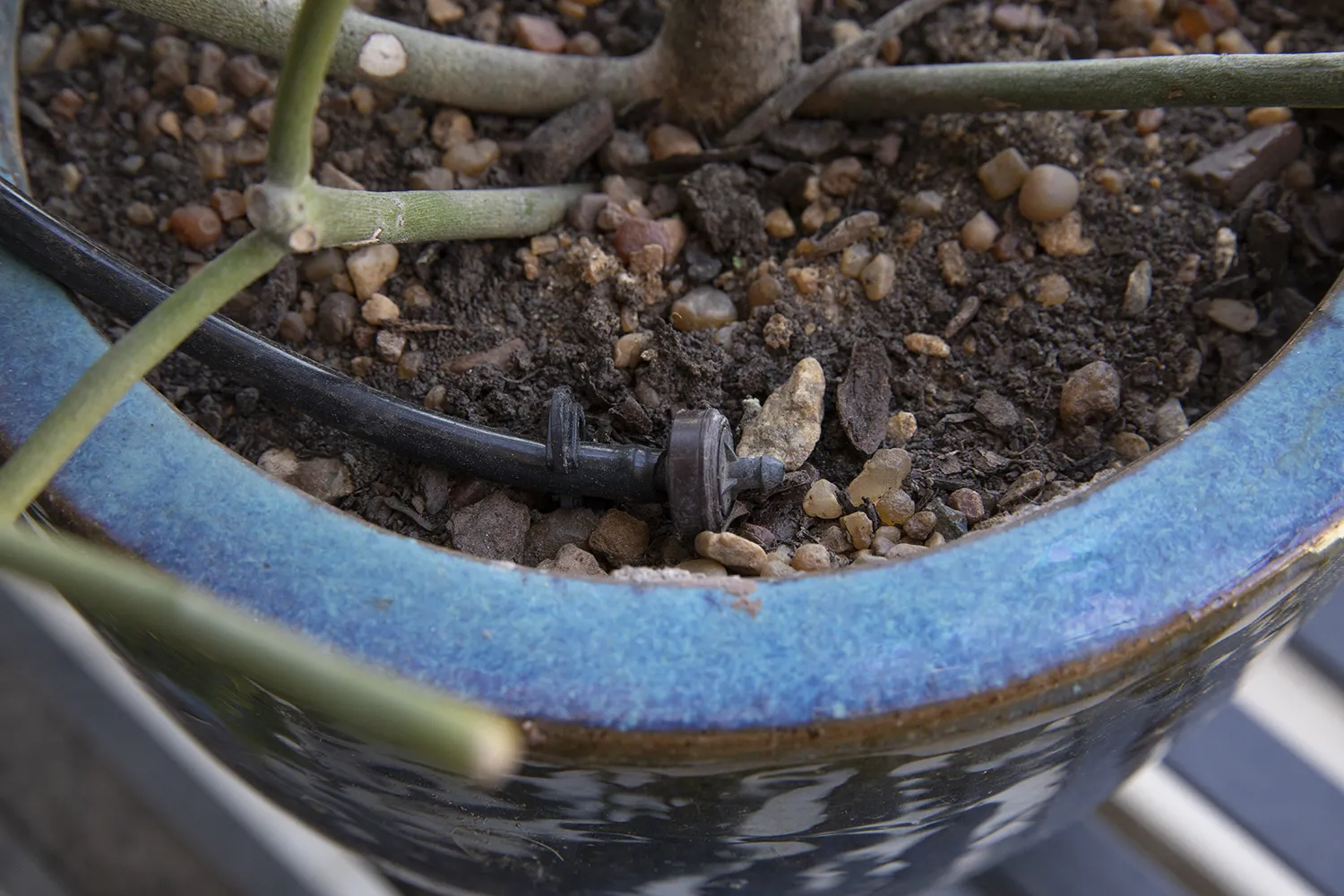
Drip irrigation is often appropriate for grouped containers, patios, and rooftops. A well-designed system delivers water near the root zone and reduces manual labor, but it still needs regular inspection.
Emitters can clog. Tubing can disconnect. Controllers can lose power or be misprogrammed. A single container may receive more or less water than the rest. Lines should be concealed where practical, protected from pedestrian and snow-removal activity, and fitted with accessible shutoffs.
Reservoir and sub-irrigated planters
Reservoir or sub-irrigated planters can extend the interval between watering, but they do not eliminate monitoring.
The reservoir must match the planter and plant mass. Overflow must be controlled. Fill points need to remain accessible, and the system should be cleaned seasonally. Some locations may also require a way to drain or winterize the reservoir before freezing weather.
Service frequency
During hot, dry weather, some containers may need water more than once per day depending on container size, material, plant mass, wind, and sun exposure. University of Minnesota Extension similarly notes that container plants can require very frequent watering in hot conditions and that mulch can reduce evaporation while moderating soil-surface temperature.
For a commercial property, those realities support larger soil volumes, properly designed irrigation, and service frequency based on actual conditions rather than one fixed weekly visit.
Include irrigation in the original design budget. Retrofitting water after containers are installed is usually more visible, disruptive, and inefficient.
Installation Timing and Seasonal Rotations
Installation timing affects plant quality, guest experience, labor efficiency, and risk. Work backward from the date the property needs to look complete.
That target might be a restaurant patio opening, hotel event, leasing launch, board meeting, wedding season, major convention, resident gathering, or holiday program.
Begin with a site survey covering measurements, exposure, water access, drainage, delivery routes, service access, and photographs. Next, approve the container style, finish, quantity, planting concept, irrigation approach, maintenance scope, and seasonal schedule.
Then account for:
- Planter production or procurement.
- Custom colors and finishes.
- Plant sourcing and substitutions.
- Irrigation equipment.
- Building and engineering approvals.
- Freight or loading reservations.
- Insurance and access requirements.
- Weather contingencies.
- Removal and disposal of the prior display.
Custom planters and large quantities generally require more planning than readily available stock products. Plant availability can also change throughout the season, so establish how substitutions will be approved.
Schedule installation around property operations. Busy entrances may be best serviced early in the day or during an approved low-traffic period. Rooftop projects may require freight reservations and interior floor protection. Restaurants may need work completed before food deliveries or dining-room setup. Multifamily properties may require resident communication when loading or lobby access will be affected.
Seasonal rotations should follow conditions as well as the calendar. Installing tender summer material too early can expose it to cold stress. Waiting too long can leave the property visually behind surrounding businesses.
Winter displays are generally easier to construct before growing media freezes solid and before holiday traffic peaks. A responsive seasonal planter service should recommend timing based on the forecast, exposure, plant readiness, and property events.
When comparing commercial outdoor planters Chicago proposals, review installation timing as closely as the plant list. A strong concept delivered too late is still a service failure.
Maintenance Standards for Exterior Plant Displays Chicago
Installation is the beginning of a display’s life—not the end of the project. A maintenance agreement should define both the work and the appearance standard.
“Maintain planters” is vague. “Keep displays fully watered, evenly shaped, free of litter and dead material, and consistent with approved photographs” is measurable.
Routine service may include:
- Checking soil moisture and reservoirs.
- Testing and adjusting irrigation.
- Fertilizing according to the plant palette.
- Deadheading and pruning.
- Cleaning planter surfaces.
- Removing litter and fallen debris.
- Inspecting drainage and overflow.
- Rotating containers or individual plants for balanced growth.
- Monitoring pests and disease.
- Resetting foliage after wind or public contact.
- Replacing failed or declining material.
- Photographing completed service.
The frequency should reflect the season, container size, planting density, water system, and exposure. A shaded spring arrangement may require a different schedule from tropical material on a windy west-facing rooftop.
Decide who is responsible for urgent issues. A damaged irrigation line, vandalized container, wind-broken plant, or failure before an event may not be able to wait for the next routine visit. Property teams should know how to report a problem, what response time applies, and whether replacement material is included or billed separately.
Photo documentation is valuable for portfolios and managed properties. A consistent record can show when displays were serviced, identify recurring hot spots, document irrigation problems, and help managers compare locations. It also improves future design because seasonal decisions can be based on what actually performed well.
For hotels and restaurants, service timing is part of maintenance quality. Crews should avoid peak guest periods, control tools and debris, and leave paving clean. At multifamily properties, technicians should follow access procedures and minimize disruption near resident doors. At office and mixed-use buildings, service should be coordinated with security and loading schedules.
Commercial planters should also be inspected as physical assets. Check for cracks, finish damage, unstable bases, clogged drains, corrosion, loose feet, and rooftop shifting. Early repairs are generally easier than emergency replacement after a planter leaks, tips, or damages surrounding surfaces.
Choose an Amlings maintenance and seasonal planter service to protect your exterior investment after installation.
Winter Displays for Chicago Properties
Winter displays give Chicago properties an opportunity to look intentional during the longest and most visually demanding season.
Once summer flowers and fall accents are removed, empty containers can make an entrance feel unfinished. A structured winter composition keeps the frontage active through holidays, snow, and early spring.
Common design elements include:
- Cut evergreen branches.
- Red or yellow twig dogwood.
- Curly willow and other decorative branches.
- Birch poles.
- Magnolia foliage.
- Seed heads and cones.
- Weather-resistant berries and ornaments.
- Outdoor-rated lighting.
- Branded or seasonally neutral decorative accents.
The best mix depends on the property. A luxury hotel may use restrained greens and architectural branches. A restaurant may favor abundant texture and warm lighting. A multifamily building may want a durable, non-holiday composition that remains appropriate well into February.
Winter design must account for wind. Tall poles and broad evergreen masses create leverage, particularly on rooftops and exposed corners. Use adequate container mass, secure internal mechanics, and a balanced shape. Keep loose material away from traffic, and do not run lighting cords across walking routes.
Container durability also matters during freeze-thaw cycles. Illinois Extension’s guidance on overwintering container plants notes the importance of moisture management and limiting freezing of the root mass when live plants remain in containers. It also explains that large concrete and wooden planters generally withstand northern Illinois winters better than many other container types, some of which should be emptied and stored. Always confirm the planter manufacturer’s exterior-use guidance.
Coordinate winter displays with snow and ice operations. Preserve access for shovels and equipment, keep plant material clear of the heaviest salt spray, and prevent plowed snow from burying the composition.
After a major storm, inspect for:
- Broken or leaning branches.
- Shifted containers.
- Buried or damaged lighting.
- Blocked drains.
- Loose decorative material.
- New conflicts with narrowed pedestrian paths.
- Snow loads that distort the composition.
A winter installation should include a transition plan. Holiday-specific ornaments can be removed while the evergreen structure remains, or the display can be designed as a seasonally neutral composition from the start. This keeps the property appropriate during January, February, and the unpredictable transition into spring.
Why a Seasonal Planter Service Simplifies Operations
A qualified seasonal planter service combines many separate responsibilities into one managed program: design, sourcing, container coordination, planting, installation, irrigation planning, maintenance, replacement, rotations, and removal.
That consistency is valuable for managers who oversee multiple entrances or properties and do not want onsite employees to become horticulture troubleshooters.
Professional planning can also support better purchasing decisions. The least expensive container is not economical if it cracks, tips, stains paving, or must be replaced because it cannot withstand the exposure. The lowest-cost planting is not a value if it looks thin after several weeks or requires constant attention from building personnel.
A service provider should help balance:
- Visual impact.
- Container life and material quality.
- Plant performance.
- Water use.
- Maintenance labor.
- Seasonal change.
- Installation access.
- Property operations.
- Total annual cost.
Ask for a clearly defined scope. It should identify the number and location of containers, planter ownership or rental terms, seasonal rotations, irrigation responsibilities, service frequency, replacement policy, winter treatment, access requirements, and communication process.
For portfolio clients, request consistent reporting and a method for maintaining brand standards across multiple locations.
When evaluating commercial outdoor planters Chicago service options, compare the complete annual program rather than one installation price. A proposal that includes proactive maintenance, appropriate replacements, and planned rotations may provide more predictable value than a low initial bid with frequent added charges.
Purchase Amlings exterior planter services for a coordinated program covering planning, installation, seasonal changeouts, and ongoing care.
Commercial Outdoor Planters Chicago Planning Checklist
Use this checklist before approving a container purchase or seasonal proposal:
| Planning decision | Questions to answer |
|---|---|
| Purpose | Does each planter frame, guide, screen, separate, soften, or add visible color? |
| Location | What are the sun, wind, reflected heat, rainfall, salt, and snow conditions? |
| Scale | Does the size relate to doors, columns, façades, patios, and viewing distance? |
| Circulation | Are door swings, accessible paths, queues, deliveries, carts, and snow operations clear? |
| Container | Is the material commercial grade, freeze-thaw appropriate, stable, and maintainable? |
| Drainage | Where will excess water go, and could it stain surfaces or create a slipping hazard? |
| Structure | Have rooftop weight, waterproofing, wind, drainage, and stabilization been reviewed? |
| Plant palette | Will the plants perform in the site’s actual exposure and planned service level? |
| Irrigation | Who supplies water, how often, and how will the system be inspected? |
| Seasonal plan | What are the spring, summer, fall, winter, and transition objectives? |
| Maintenance | What appearance standard, service frequency, response time, and replacement policy apply? |
| Operations | How will installation and service avoid peak guest, resident, delivery, and dining periods? |
| Budget | Does pricing include planters, plants, installation, irrigation, maintenance, rotations, and removal? |
A strong answer to each question turns commercial outdoor planters Chicago from a decorative purchase into a reliable property-management program.
Create a Better Exterior Planter Program with Amlings
The best commercial planter displays feel effortless to the guest, resident, tenant, or diner. Behind that effortless appearance is deliberate planning: containers scaled to the architecture, plants selected for the exposure, clear pedestrian routes, dependable irrigation, well-timed rotations, responsive maintenance, and winter compositions that remain complete after the holidays.
For property managers and operators comparing commercial outdoor planters Chicago, the right next step is a site-specific plan. Entrances, rooftops, patios, courtyards, and sidewalk cafés each present different environmental and operational requirements.
Amlings can help organize those requirements into a cohesive exterior display program built around your property, calendar, brand standards, and desired level of service.