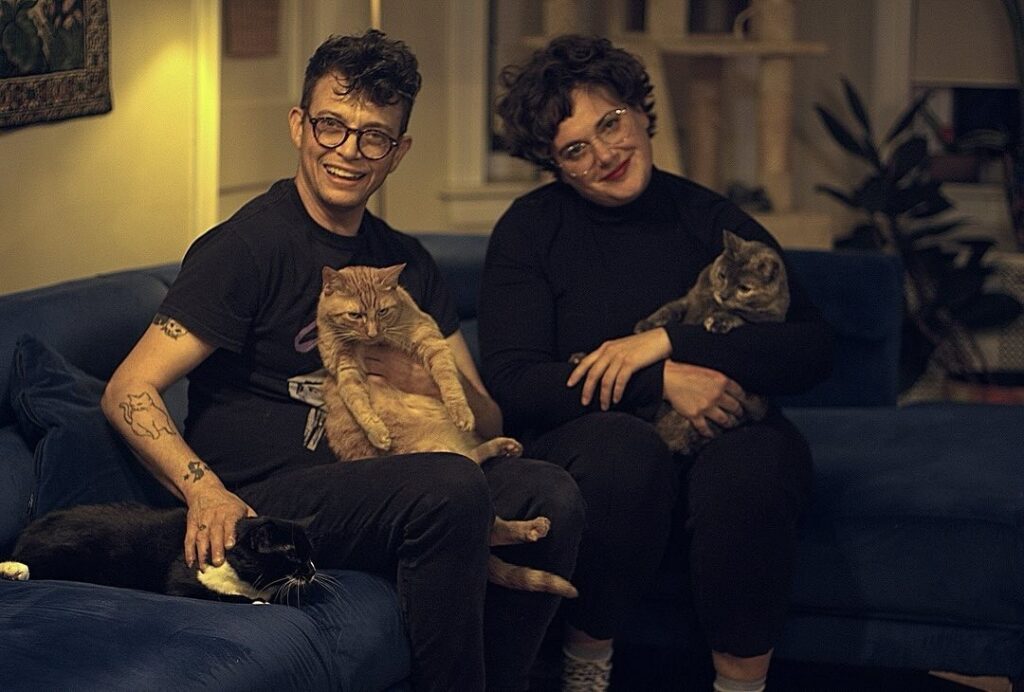
A self-taught artist for more than 40 years, Lou works with everything from leather to mosaic tile, metal, wood and plants. At Amlings, he's part of the creative team that turns ambitious design ideas into reality. And when something breaks, needs rebuilding or seems downright impossible to make? That's usually when someone calls Lou.
We caught up with Lou to talk about the art of figuring things out and why he has such a hard time parting with his artwork.
You've been making art for more than 40 years. How did it all start?
I was always building things as a kid. I would build apartments with furniture for my Star Wars figures, or make my own Ghostbusters equipment. I wasn't really thinking of it as art back then, I just liked figuring out how to make stuff. My dad is a mechanic and a welder, and I grew up watching him make his own tools, and make rusted antique tractors run again.
As an adult, I got into realism painting and drawing. I learned screen printing by working in T-shirt and garment shops. At another job I learned how to tile showers and kitchens, and from there, I got obsessed with tile and mosaics. I learned leatherworking for fun, made purses and wallets and belts. And more recently, my dad taught me to solder and weld so now I'm sculpting with metal.
Visual art is my life and gives me purpose. It's a large part of what I do at work, and it's basically all I do when I'm not at work.
So how does someone with that kind of artistic background end up working with plants?
I've always been interested in plants and nature. I grew up on a farm, and my Grandma once told me that as a toddler, I was so fascinated with the tiny buds on her flowers that I would pick them off before they had a chance to bloom! In college I took courses in general horticulture and plant taxonomy, where we got to dissect flowers under a microscope, make technical drawings of their structures and learn all their Latin names. I can’t always remember the name of someone I met at a party two hours ago, but I can tell you the scientific and common name of nearly every tree on your street! That’s also when I started doing outdoor landscaping, working for the Parks and Recreation Department in Columbia, Missouri.
When I moved to Chicago in 2016, I figured outdoor landscaping year-round would be out of the question, so I searched the internet for “interior landscaping” and found a company that was hiring right away. This company was eventually acquired by Amlings, and I've been working here ever since. My job is an interesting combination of the things I love: plants, architecture, design and art.
What exactly do you do at Amlings?
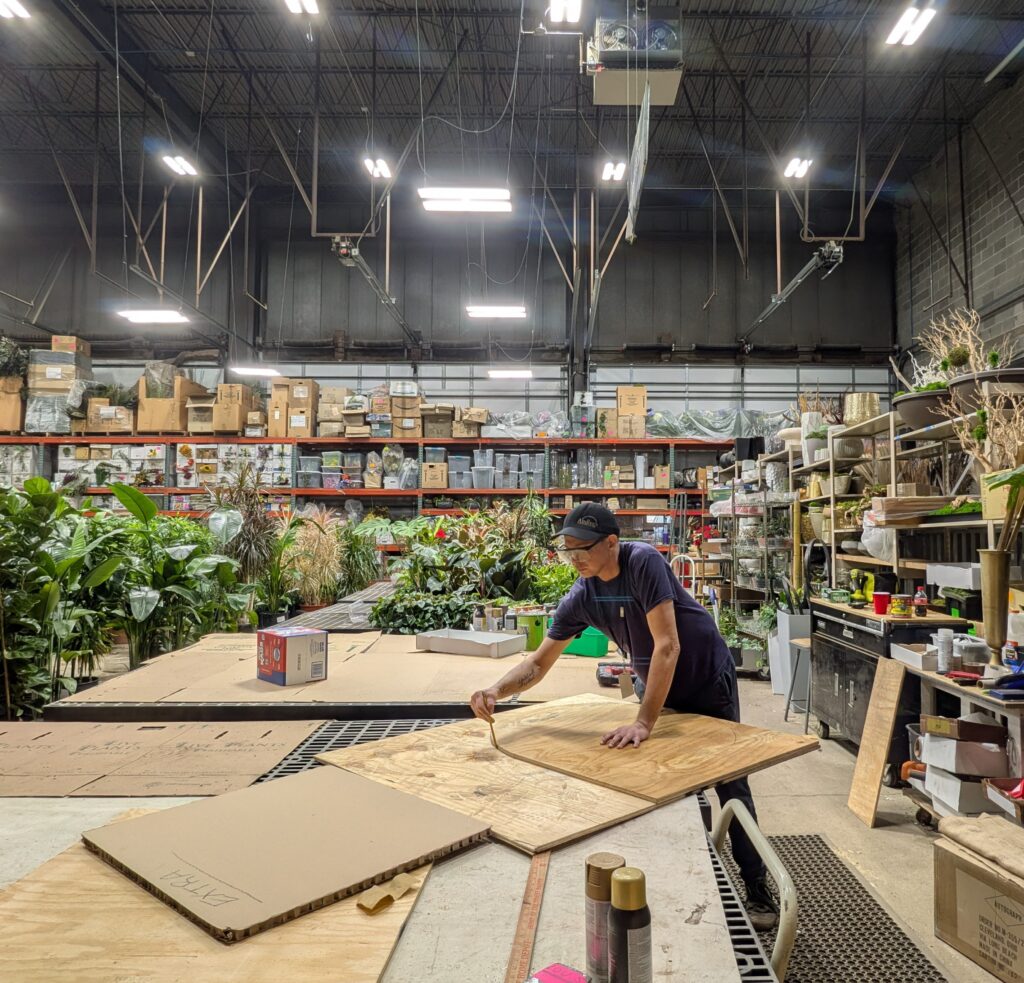
I wear a few different hats…I order all of our blooming plants and orchids, make artificial and botanical arrangements, take care of live plants in the warehouse, and sometimes assist in the floral department. As part of the Creative Team, the designers come up with ideas, and I figure out how to make them happen. That can mean building props for seasonal displays, figuring out how to install something that doesn't have an obvious way of being installed, or reinforcing a prop to make it safer.
And then there's all the stuff that breaks.
They call me "Dr. Lou", and we have a “Hospital” for broken items…. I've repaired wooden rocking chairs, created a new eye out of leather and resin for an artificial elk, and made a new foot for a penguin. If something needs to be rebuilt, repaired or made more secure, I'm usually involved.
What's the strangest thing you've had to make?
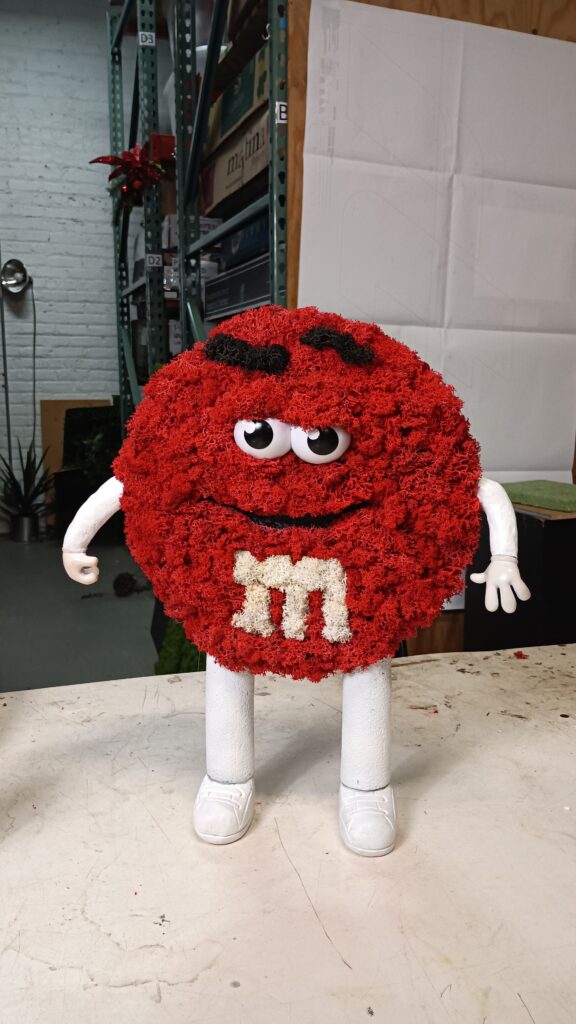
I once made a red M&M’s Guy figurine for someone at Mars Wrigley. His round body was a peppermint candy Christmas ornament, covered in reindeer moss which I dyed red. His arms and legs were bendable foam tubes, and his hands and eyes were from a Mister Potato Head. I carved his little shoes out of wood. Recently I built a realistic-looking dock for a lake-themed holiday display, and a gravesite for a Halloween installation.
This week I’m building a “light curtain” that will hang on the side of an exterior building wall that’s about 23 feet long and 23 feet tall. The biggest challenge was finding a place to hang it in the shop so I could assemble it and make sure the whole thing is rigged safely. We do these things in advance so our guys installing it don’t have to worry about it from 23 feet above the ground!
It's a lot of problem-solving. That's what I enjoy.
When you’re making art outside of Amlings, what kind of work do you create?
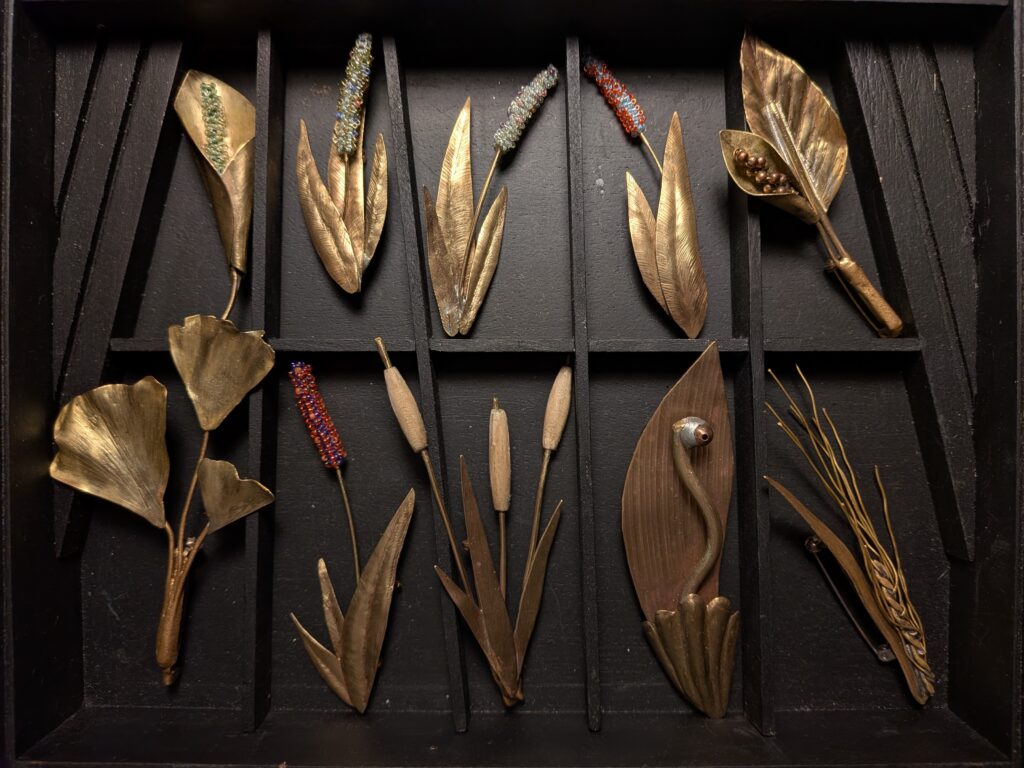
All kinds, but I really enjoy studying plants and recreating them in different materials. I might take a small leaf sample from a plant or an artificial flower and study its shape and structure so I can reproduce it in metal. Recently I started making jewelry, like small pendants and brooches. They’re almost all based on real plants or botanical structures. Sometimes I’m integrating metal, wood and plants in one piece to hang on the wall.
Nature is full of design. So much of what we create as artists comes from patterns and forms that already exist in the natural world.
Do you sell your artwork?
Sometimes, but I tend to hoard it! I spend so much time creating these things that I don't necessarily want to part with them. But I used to sell my paintings to strangers on Etsy and eBay, and have art shows in small galleries and coffee shops.
Lately my wife Emily and I are selling our work at local craft fairs, and I did my first commissioned public art piece this year-an outdoor mosaic mural in our neighborhood of Hermosa. It’s her beadwork pattern translated into ceramic tile and metal, inside three empty window frames on the side of the building.
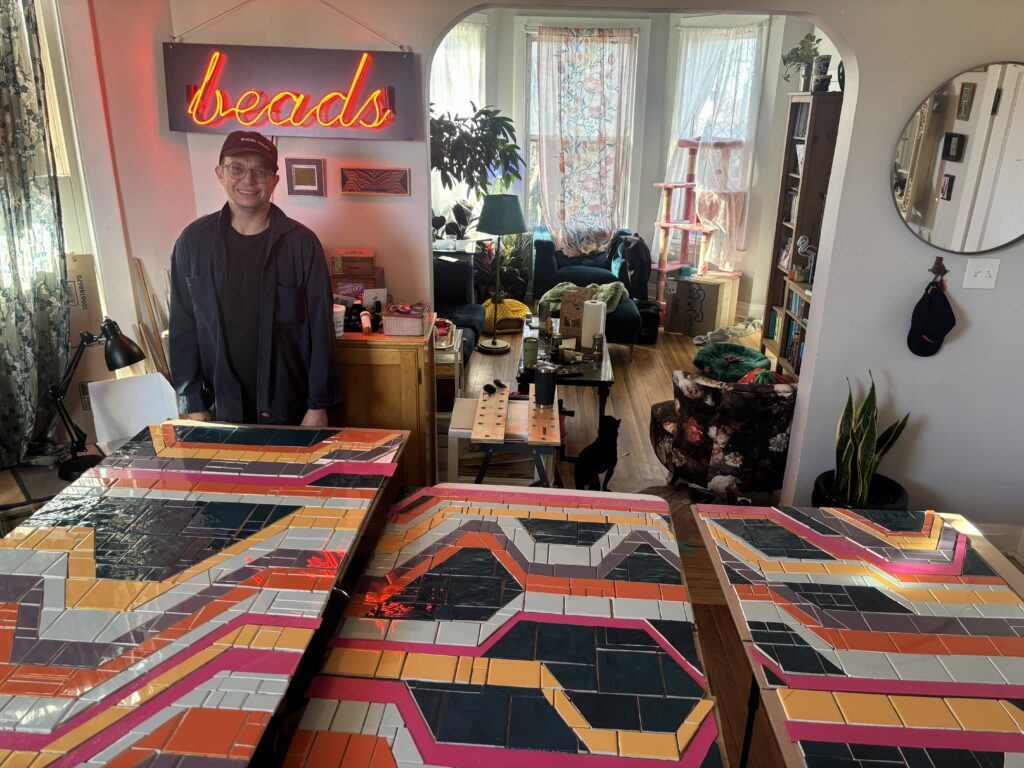
Sounds like creativity runs in the family.
It does now!
My wife is a visual artist, too, but we didn’t know it until a few years ago. Her background is in technical writing and music, but one day she started making these incredibly intricate beaded tapestries with different colors and patterns- with no planning or plotting them out first, they just come from her brain. She also makes jewelry, and we’re starting a small business together where we collaborate on these pieces.
And my mom is an artist now, too. We didn’t know she could paint until one day, she took a Bob Ross painting class, and now she's doing craft shows and has her own studio where she makes all kinds of things.
Apparently, it's contagious.
What role do you see plants filling?
I think we're meant to be connected to nature, and having plants around us can help reduce stress and improve our mood and productivity. I've worked in buildings with absolutely no plants, and they can feel pretty depressing. And from an artistic standpoint, plants are endlessly entertaining. The repeating shapes and patterns, the way leaves are arranged on a stem- there's so much inspiration there.
With all that creativity, do you ever get tired of working with plants?
No, never.
Every month we make detailed arrangements with succulents and orchids, building them in a bowl with moss or a piece of wood. We try to keep things new and exciting, so the next month, we need to create something completely different with the same kinds of materials. I always love it when a client emails us about one of our arrangements, telling us how much everyone enjoys it in their space.
We have to ask: What does your own plant collection look like at home?
Our apartment is full of plants, art, and mood lighting. It's a pretty fun space.
As far as how many living plants I have right now, I’d say a dozen or maybe two…. But I looked around and realized, if you counted all the non-living plants I’ve collected and preserved- pressed, dried, preserved in glycerin or resin, you could say I have HUNDREDS of plants. And then if you count the plants in the furniture and art on the walls, paintings, drawings, prints, a few metal sculptures, plaster or resin casts, jewelry... maybe THOUSANDS of plants!
What's something about you that might surprise your coworkers?
I grew up in a small farming town in Missouri and wanted to get out and experience something different, so when I was in my 20s I moved to Seattle with whatever fit in my car, knowing just one person there. I ended up staying for 11 years. For most of those years, I managed apartment buildings. My favorite one was a 100-year-old, castle-like building on a cliff called the Ben Lomond. I helped restore it, and made a lot of the design decisions inside and out- doing tile work in the bathrooms and kitchens, re-painting walls historic colors, and repairing the landscaping.
I was so connected to it that everyone called me “Lou Lomond.” I loved that combination of history, architecture, and hands-on work. I even researched its history and wrote a little self-published book, or “zine”, about the building, which I gave to all my tenants when I left Seattle, and we sold it in a local book shop.
I also thought I’d be an archaeologist at one point, and spent 6 weeks on an archaeological dig in Israel in 1996.
Do you have the itch to travel still?
Well, my wife loves to travel, but I'm more of a homebody. I’ll go places, but you have to drag me out! But we do travel regularly, and we both pack our luggage with art supplies.
I prefer to be at home in my studio, surrounded by my art, my wife, my plants and my cats, making new stuff. My little world is big enough for me!