
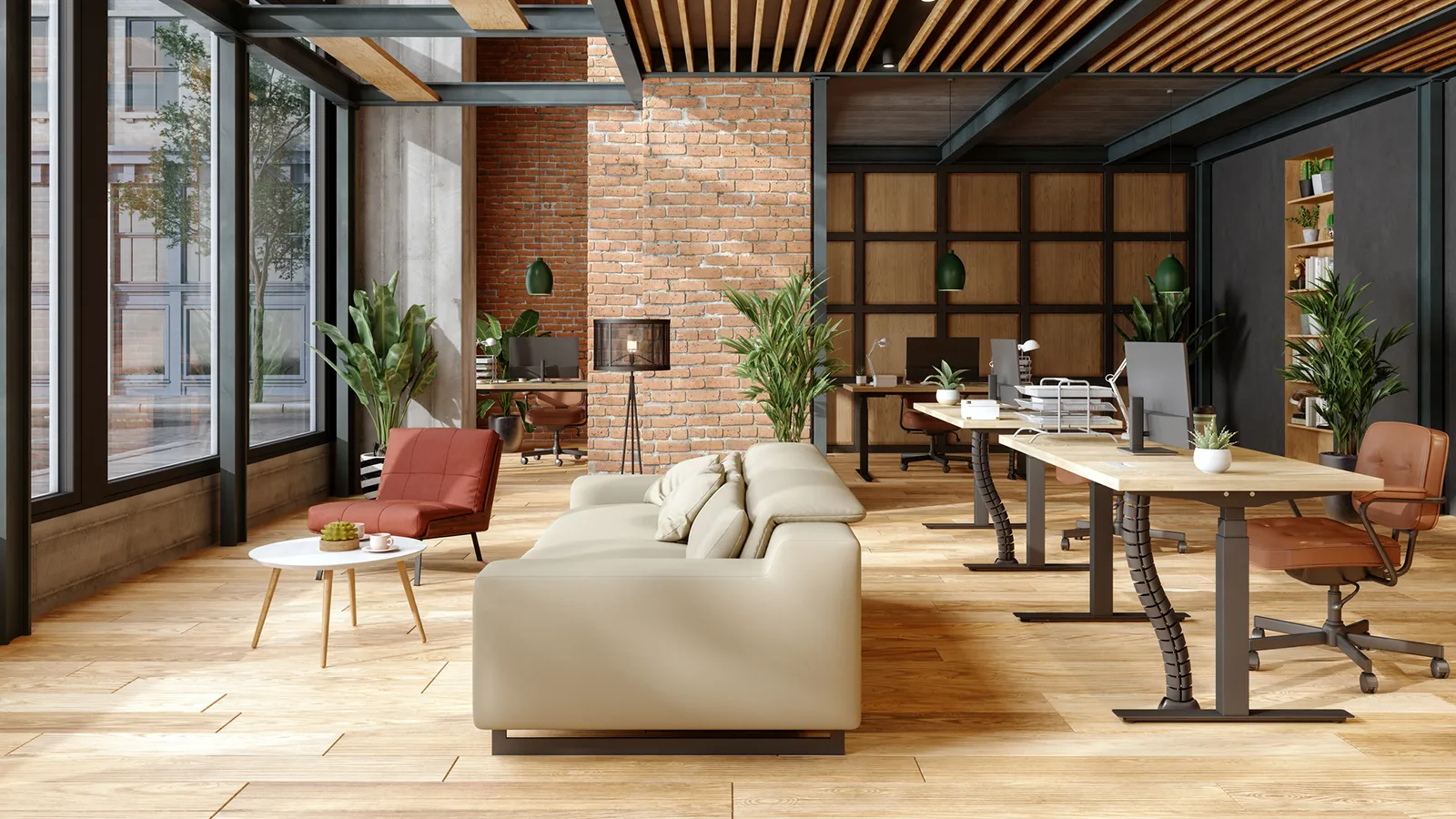
Beautiful office plants can completely change how a workplace feels. But before choosing a statement tree for the lobby or greenery for a conference room, there’s one important question: Does the space have enough light to keep those plants healthy?
Office plant lighting determines which plants can thrive in different areas of a commercial building. The right approach is to assess natural and artificial light, match plants to those conditions, and plan for changes throughout the year.
For Chicago offices, hotels, and commercial properties, understanding lighting before installation can help prevent struggling plants, unnecessary replacements, and disappointing results.
Key Takeaways
- Start with the space, not the plant. Evaluate lighting before selecting greenery.
- Low-light tolerant doesn’t mean no light. Even adaptable plants need sufficient light to survive.
- Office lighting isn’t always plant lighting. Fixtures designed for people may not provide adequate light for plant growth.
- Placement matters. Window direction, obstructions, HVAC conditions, and furniture layouts affect plant performance.
- Plan for the long term. A successful plant installation should look beautiful on opening day and remain attractive through ongoing care.
Why Does Office Plant Lighting Matter?
Plants need light for photosynthesis, the process that allows them to produce the energy required for growth and survival.
When plants receive insufficient light, their growth may slow, stems can become elongated, leaves may yellow, and foliage can thin out. Too much direct sunlight can cause scorching or discoloration.
The University of Minnesota Extension’s indoor lighting guide explains why matching plant requirements to available light is essential for healthy indoor growth.
For commercial properties, the consequences go beyond plant health.
Imagine a beautifully renovated office lobby with an impressive collection of plants. Everything looks wonderful at installation. A few months later, some plants begin losing leaves while others become sparse and uneven.
The original design may have been attractive, but the planting locations weren’t appropriate for the available light.
Now the property manager has another issue to resolve.
This is why lighting deserves attention during the design process rather than after problems appear.
A successful installation considers how the plants will look today, how they’ll grow, and what will be required to maintain the original design.
What Types of Lighting Do Office Plants Need?
Office plant lighting generally falls into three categories: low, medium, and high light.
These describe the amount of usable light available to plants, not simply how bright a room looks to the human eye.
Low-Light Office Plants
Low-light areas may include interior corridors, offices with north-facing windows, or spaces far from direct daylight.
Plants adapted to lower light levels often grow more slowly and require less frequent watering than they would in brighter conditions.
Examples worth considering include:
- ZZ plants (Zamioculcas zamiifolia)
- Snake plants (Dracaena trifasciata)
- Chinese evergreen (Aglaonema)
- Cast iron plants (Aspidistra elatior)
- Certain pothos varieties (Epipremnum aureum)
These plants are commonly recommended for lower-light indoor environments, but their performance still depends on receiving sufficient usable light.
Low light is not the same as darkness.
A windowless conference room with lights that remain off for most of the day may not support live plants without supplemental lighting.
Medium-Light Office Plants
Medium-light environments often include spaces near windows with indirect daylight or offices with suitable artificial illumination.
Depending on the actual light levels, possibilities may include:
- Rubber plants
- Certain philodendrons
- Monstera
- Some dracaena varieties
- Selected ferns
Medium-light conditions can provide flexibility for interior designers because they accommodate a variety of foliage shapes, heights, and textures.
However, two locations in the same office can have very different growing conditions.
A plant beside a window may receive substantially more usable light than another plant across the room.
High-Light Office Plants
High-light locations typically receive strong natural illumination, often near unobstructed south- or west-facing windows.
Certain flowering plants, succulents, and other sun-adapted species may perform well in these conditions.
But bright windows can create their own challenges.
Direct sunlight may overheat foliage, while large expanses of glass can create temperature fluctuations.
A plant that tolerates strong light may still struggle beside an HVAC vent or against cold glass during a Chicago winter.
The goal isn’t simply to find the brightest location.
It’s to find a location that provides the right combination of light, temperature, airflow, and maintenance access.
Office Plant Lighting: How to Evaluate Your Space
Before selecting plants, walk through the property and consider how lighting changes from one area to another.
A reception desk, interior hallway, and executive conference room may all require different planting strategies.
1. Identify Natural Light Sources
Start with the windows.
Consider their direction, size, and distance from proposed plant locations.
North-facing windows generally provide less direct sunlight than south-facing windows in Chicago. East-facing windows often receive morning sunlight, while west-facing windows can produce stronger afternoon exposure.
Nearby buildings, exterior overhangs, tinted glass, and window coverings can change those conditions considerably.
A south-facing window surrounded by taller buildings may provide less useful light than expected.
2. Evaluate Artificial Lighting
Artificial lighting can supplement daylight and may be necessary in interior spaces.
However, lighting intended for employee comfort doesn’t automatically meet a plant’s requirements.
Consider:
- Fixture type and placement
- Hours of operation
- Distance between the fixture and foliage
- Light output appropriate for plant growth
- Whether lights remain on during weekends and holidays
A conference room illuminated only during meetings may receive very little consistent light.
In contrast, a workspace with suitable lighting operating on a predictable schedule may provide better growing conditions.
3. Consider Seasonal Changes
Chicago’s seasons can significantly change indoor daylight availability.
Shorter winter days, lower sun angles, and changing window exposure can affect plants that performed well during summer.
Plants near windows also need protection from uncomfortable temperature extremes and drafts.
4. Check the Surrounding Environment
Light is only part of the picture.
Plants also respond to temperature, moisture, airflow, and the conditions around their containers.
A plant placed directly beneath an HVAC supply vent may experience additional stress.
A large container positioned in a busy corridor may create maintenance and circulation challenges.
Consider how the entire location functions before finalizing the design.
5. Measure Light When the Answer Isn’t Obvious
Visual inspection provides a starting point, but measurements can help when plant performance is uncertain.
A horticultural professional can assess the amount and duration of available light and compare those conditions with the needs of proposed plants.
For technically demanding projects, photosynthetic photon flux density (PPFD) and daily light integral (DLI) can provide more useful plant-growth information than a general impression of brightness.
A Practical Office Plant Lighting Decision Guide
Use this framework when planning a new installation or evaluating an existing commercial plantscape.
| Office location | Likely lighting challenge | Recommended approach |
|---|---|---|
| Windowless conference room | Inconsistent or insufficient light | Evaluate supplemental lighting or artificial greenery |
| Interior corridor | Limited natural daylight | Consider low-light-tolerant plants only if sufficient artificial light is available |
| Open office near windows | Uneven light across the floor | Match plant selections to individual locations |
| South-facing lobby | Strong sunlight and potential heat | Evaluate high-light plants, shading, and temperature |
| Glass-walled meeting room | Changing sun exposure | Check light intensity and duration before selecting plants |
| Reception area | Appearance must remain consistent | Prioritize suitable plants, appropriate containers, and ongoing care |
These are starting recommendations, not guarantees. Actual plant selection should follow an evaluation of site conditions.
Which Office Plants Work Best in Low Light?
When a building has limited natural daylight, plant selection becomes especially important.
A few popular options deserve consideration.
ZZ Plants
ZZ plants have glossy foliage and a strong architectural appearance.
Their upright growth can complement contemporary interiors, making them useful candidates for reception areas and professional workspaces.
They tolerate relatively low light, although they still need enough illumination for sustained growth.
Snake Plants
Snake plants have distinctive vertical foliage that works well in narrow spaces or modern planters.
Their shape can make them attractive in corridors and other areas where a compact footprint matters.
They tolerate lower light conditions but generally grow more slowly there.
Chinese Evergreen
Chinese evergreen varieties offer attractive foliage patterns and different shades of green.
They can be useful when a designer wants more visual interest without relying on flowering plants.
Individual cultivars may have different lighting requirements, particularly those with colorful variegation.
Cast Iron Plants
Cast iron plants are known for their tolerance of relatively challenging indoor environments.
Their broad, dark-green leaves can work well in understated commercial designs.
Like other shade-tolerant species, they still require appropriate care and adequate light.
When Low-Light Plants Aren’t Enough
Sometimes the right answer is not another low-light plant.
If a space receives almost no usable light, the practical choices are to improve the lighting, relocate the plants, or consider high-quality artificial greenery.
Trying to force a live plant into an unsuitable location often creates ongoing frustration.
The most successful design is one that respects the space rather than fighting it.
Can Office Plants Grow Without Natural Sunlight?
Yes. Some office plants can grow without natural sunlight when appropriate artificial lighting supplies enough usable light for photosynthesis.
The important distinction is between no natural light and no usable light.
For an interior office, supplemental grow lighting may make live greenery possible.
However, successful artificial lighting requires more than installing an ordinary lamp beside a plant.
The lighting must provide suitable intensity, spectrum, duration, and coverage.
Fixture placement also matters.
A light mounted too far from the foliage may deliver insufficient energy, even when the room appears brightly illuminated.
Before installing supplemental lighting, consider its appearance, energy use, maintenance needs, and compatibility with the interior design.
For a highly visible commercial property, the solution should support both plant health and the desired aesthetic.
Why Do Office Plants Struggle Even When the Room Looks Bright?
A room that looks bright to employees may still provide inadequate growing conditions.
Human vision and plant growth have different requirements.
Our eyes adapt to changing brightness, making it difficult to judge whether a location provides sufficient light for photosynthesis.
Other common issues include:
Plants positioned too far from windows. Light availability can change considerably across a room.
Insufficient lighting duration. A plant may receive adequate illumination for only a small portion of the day.
Unexpected shading. Furniture, interior partitions, neighboring buildings, and window treatments may block light.
Seasonal changes. Winter conditions can reduce available daylight.
Incorrect watering. Plants growing in lower light often use water more slowly, increasing the importance of checking moisture before watering.
These issues can overlap.
For example, a plant experiencing low light may also be overwatered because its soil remains moist longer than expected.
That makes diagnosing plant problems more complicated than simply looking at the leaves.
When Should You Ask a Professional to Evaluate Office Plant Lighting?
A professional assessment can be useful when a property is planning a major installation, redesigning an existing space, or experiencing repeated plant problems.
It’s especially valuable when:
- Plants repeatedly decline in the same location.
- The building has large areas with limited daylight.
- The property needs a consistent appearance across multiple floors.
- A renovation changes window access or interior lighting.
- The design includes large specimen plants or prominent displays.
- Facility staff want fewer unexpected maintenance problems.
For a commercial property, the goal isn’t just keeping plants alive.
It’s creating an environment that continues to look intentional, welcoming, and professionally maintained.
Make Your Plant Design Work With Your Building
Not sure whether your lobby, conference rooms, or shared spaces have the right conditions for live plants?
Amlings works with Chicago-area commercial properties on interior plant design, installation, and ongoing horticultural care.
A conversation with the Amlings team can help you explore plant selections, appropriate placement, container styles, and maintenance considerations for your particular space.
Talk to an Amlings Plant Designer
How Can Better Plant Placement Support a Commercial Property?
Good plant placement balances appearance with long-term practicality.
A statement plant can create a focal point in a lobby. Smaller groupings can soften a conference area. Thoughtfully positioned greenery can complement architectural finishes and furnishings.
But these visual improvements depend on choosing plants that suit their environment.
When plant selection and lighting conditions work together, a property has a better foundation for maintaining a consistent appearance.
That matters for the people responsible for the building.
Property managers want their lobbies to make a positive first impression. Office managers want attractive workspaces without constant plant-related problems. Designers want their original vision to hold up after installation.
Frequently Asked Questions About Office Plant Lighting
1. How many hours of light do office plants need?
It depends on the species, light intensity, and growing environment. Some indoor foliage plants benefit from approximately 12–14 hours of suitable artificial lighting, but that isn’t a universal requirement. Evaluate the total light received rather than relying on hours alone.
2. Can fluorescent or LED office lights keep plants alive?
They can, provided the plants receive adequate light intensity, spectrum, and duration. Ordinary office fixtures may work for some species in certain locations, but their suitability should be evaluated rather than assumed.
3. Are low-light office plants maintenance-free?
No. Low-light-tolerant plants still require appropriate watering, cleaning, inspection, and occasional corrective care. Their slower growth in reduced light may also change watering needs.
4. Can a plant survive in a windowless office?
Yes, if appropriate artificial lighting supplies enough usable light. Without sufficient artificial or natural illumination, live plants will eventually decline.
5. Why do plants lose leaves after being moved?
Relocation can change light, temperature, humidity, and watering conditions. Some plants respond by dropping leaves or slowing growth. Persistent decline warrants a review of the new environment.
6. Should office plants be placed directly beside windows?
Not always. Direct sunlight, temperature extremes, and drafts can create problems. The ideal distance depends on the plant species, window orientation, glass characteristics, and surrounding conditions.
7. How often should office lighting conditions be reassessed?
Reassessment is useful after major furniture changes, renovations, lighting upgrades, repeated plant decline, or significant seasonal changes. Properties with stable conditions may not require frequent formal reassessment.
Create an Office Plantscape That Looks Beautiful Beyond Installation Day
The right office plants can make a commercial property feel more welcoming, polished, and thoughtfully designed.
But lasting results begin with understanding the space.
Lighting, plant selection, placement, containers, and maintenance should work together rather than being treated as separate decisions.
That’s where an experienced commercial plant design partner can make a difference.
Amlings works with Chicago-area property managers, designers, and businesses to create interior landscapes that complement their buildings and support long-term presentation.
Whether you’re planning a new installation, refreshing an existing plantscape, or trying to solve recurring plant problems, the Amlings team can help you explore a practical approach.