
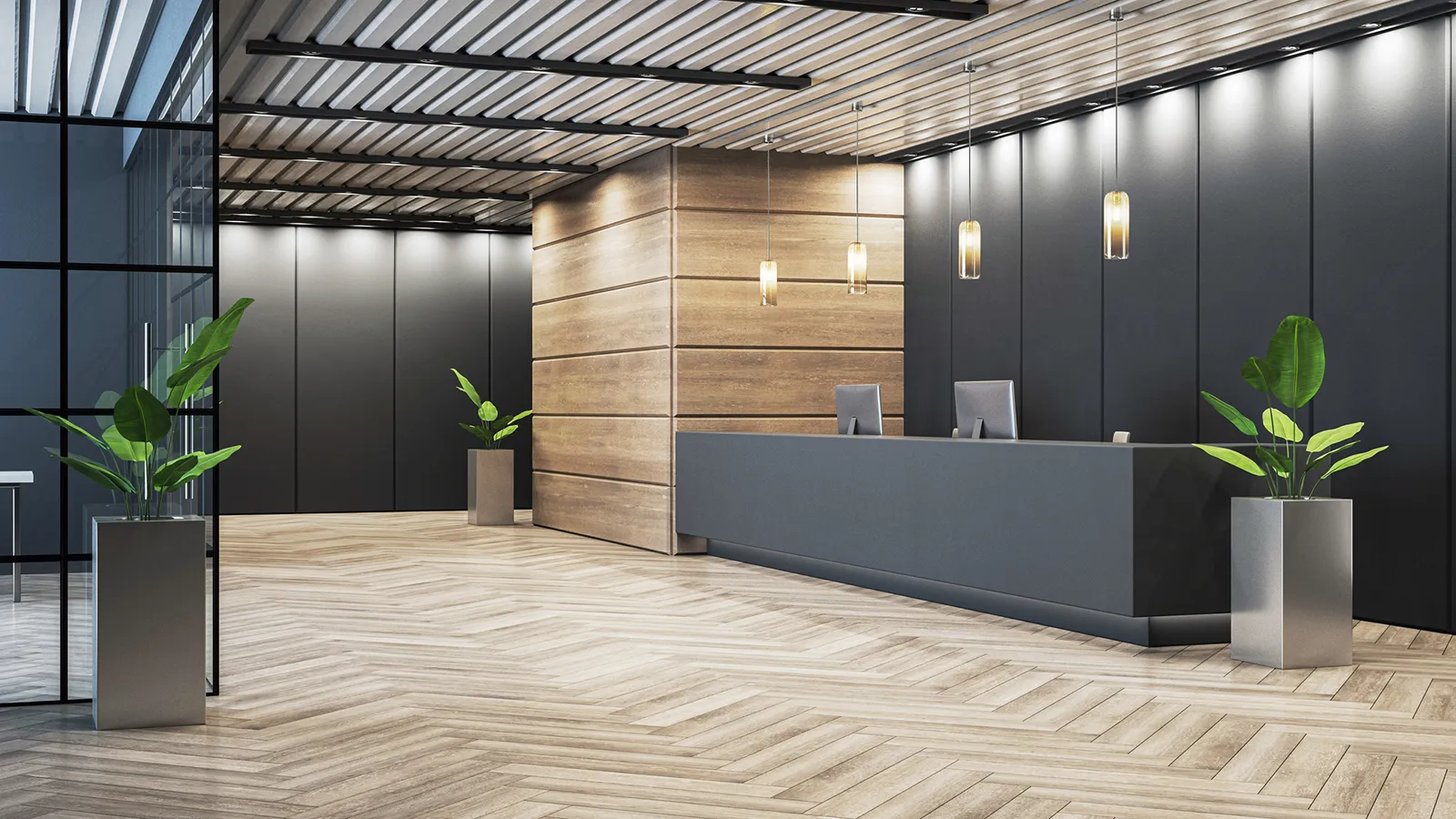
Yes, real plants can grow in windowless offices—but they need enough artificial light to stay healthy. The best plants for windowless offices typically include shade-tolerant varieties such as ZZ plants, snake plants, cast iron plants, and certain Chinese evergreens. However, the right choice depends on lighting intensity, operating hours, plant placement, and ongoing maintenance.
For Chicago office managers and property managers, the goal isn’t simply finding plants that can survive in a dim corner. It’s creating attractive, well-maintained spaces that make a wonderful impression without becoming another headache for the building team.
Here’s how to make that happen.
Key Takeaways
- Low light doesn’t mean no light. Even shade-tolerant plants need sufficient natural or artificial light to remain healthy.
- Choose plants for the actual space. A windowless conference room, interior corridor, and reception area may require different solutions.
- Think beyond plant selection. Lighting schedules, HVAC conditions, containers, and maintenance all affect long-term success.
- Some spaces are better suited to artificial greenery. Real plants aren’t always the most practical option.
- Professional planning can prevent expensive mistakes. Evaluating conditions before installation helps property managers choose a design they can realistically maintain.
Can Plants Really Grow in an Office Without Windows?
Absolutely—provided the room receives appropriate artificial light.
Plants don’t specifically need sunlight coming through a window. They need usable light energy for photosynthesis, the process that allows them to produce the carbohydrates necessary for growth.
Natural sunlight provides that energy, but appropriately designed artificial lighting can also support plant growth.
According to University of Minnesota Extension, artificial lighting can compensate for insufficient natural sunlight when matched to the plant’s needs.
That distinction is important because commercial offices can appear brightly lit to people while providing inadequate light for plants.
A conference room may have beautiful overhead fixtures, comfortable lighting for presentations, and plenty of brightness for reading documents.
But that doesn’t automatically mean a plant sitting in the corner receives enough light to grow.
Three factors make the difference.
Light Intensity: How Much Light Actually Reaches the Plant?
Light intensity describes the amount of light reaching a particular surface.
In an office, that means the light available at the plant’s leaves—not simply how bright the room appears.
An overhead fixture may adequately illuminate a conference table while providing relatively little light to a large plant several feet away.
The distance and direction of the light source matter.
Light Duration: How Long Are the Lights On?
A plant in a windowless office depends on artificial lighting for its light exposure.
That means the building’s operating schedule matters.
A conference room with lights that switch off whenever it’s unoccupied offers very different growing conditions from an office lobby with a consistent lighting schedule.
A suitable supplemental lighting system may need its own timer, independent of room occupancy sensors.
Light Quality: Is the Lighting Suitable for Plant Growth?
Plants respond to the spectrum of light they receive.
Some modern LED systems can support plant growth, but the performance of individual fixtures varies.
When selecting lighting, it’s important to consider the amount and quality of light delivered to the plants rather than assuming that any LED bulb will be sufficient.
The University of Maryland Extension identifies light intensity, duration, and quality as essential aspects of indoor plant lighting.
The takeaway: A windowless office isn’t automatically unsuitable for living plants. It simply requires more intentional planning.
What Are the Best Plants for Windowless Offices?
When choosing low-light office plants, the objective is to find varieties that tolerate reduced light while maintaining an attractive appearance.
Here are several plants worth considering for commercial interiors.
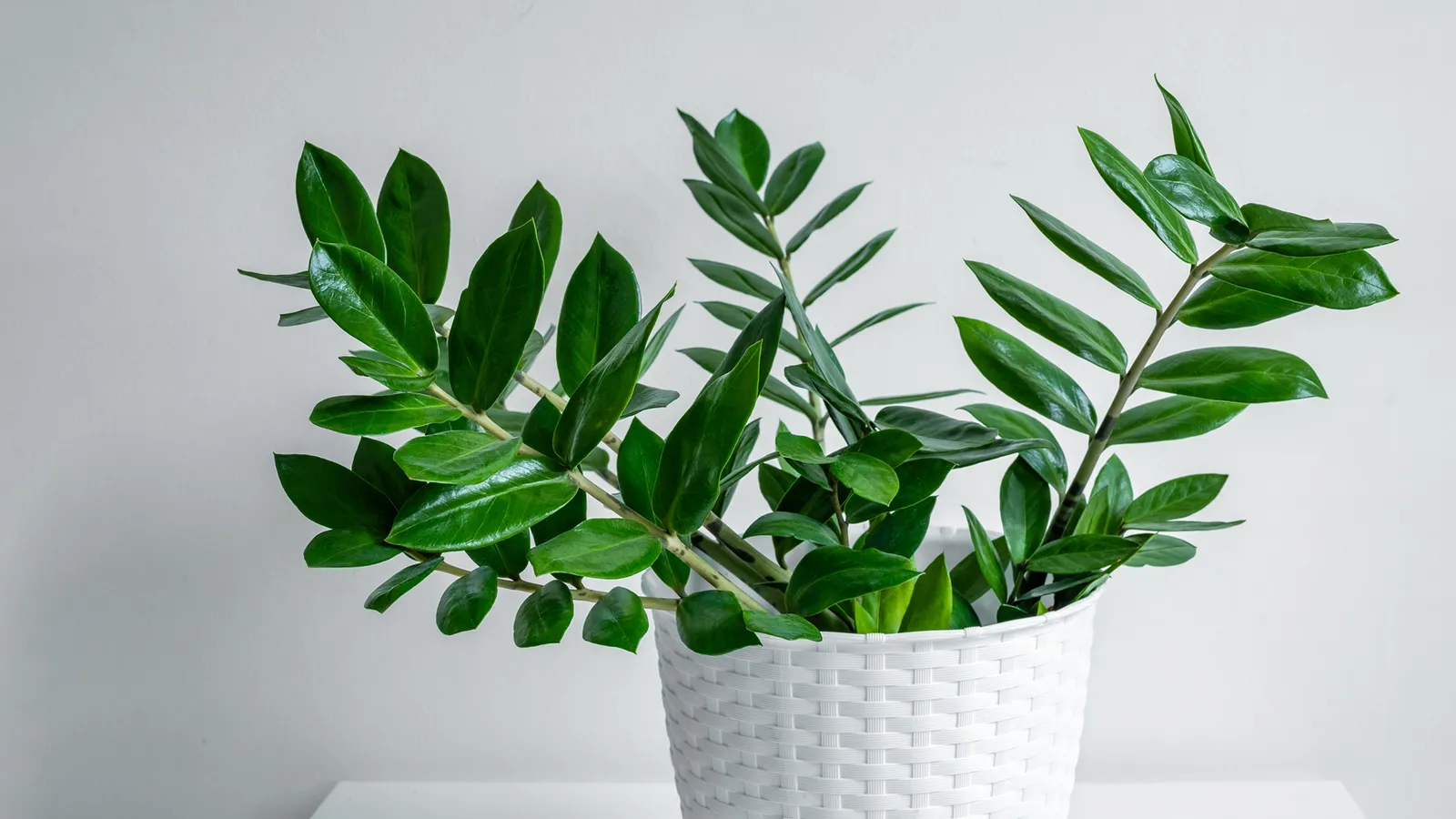
1. ZZ Plant: A Polished Choice for Lower-Light Areas
ZZ plant (Zamioculcas zamiifolia)
Best for: Reception areas, interior offices, shared workspaces, and contemporary planters.
ZZ plants have glossy, structured foliage that works well in modern office environments.
Their upright growth and clean appearance make them useful where a space needs greenery without a large, spreading canopy.
ZZ plants tolerate comparatively low light and generally grow slowly under those conditions.
However, they still require adequate illumination to maintain their health.
They can also be sensitive to excessive watering, particularly when light levels are low.
Design consideration: ZZ plants are particularly attractive in simple architectural containers that complement office furniture and finishes.
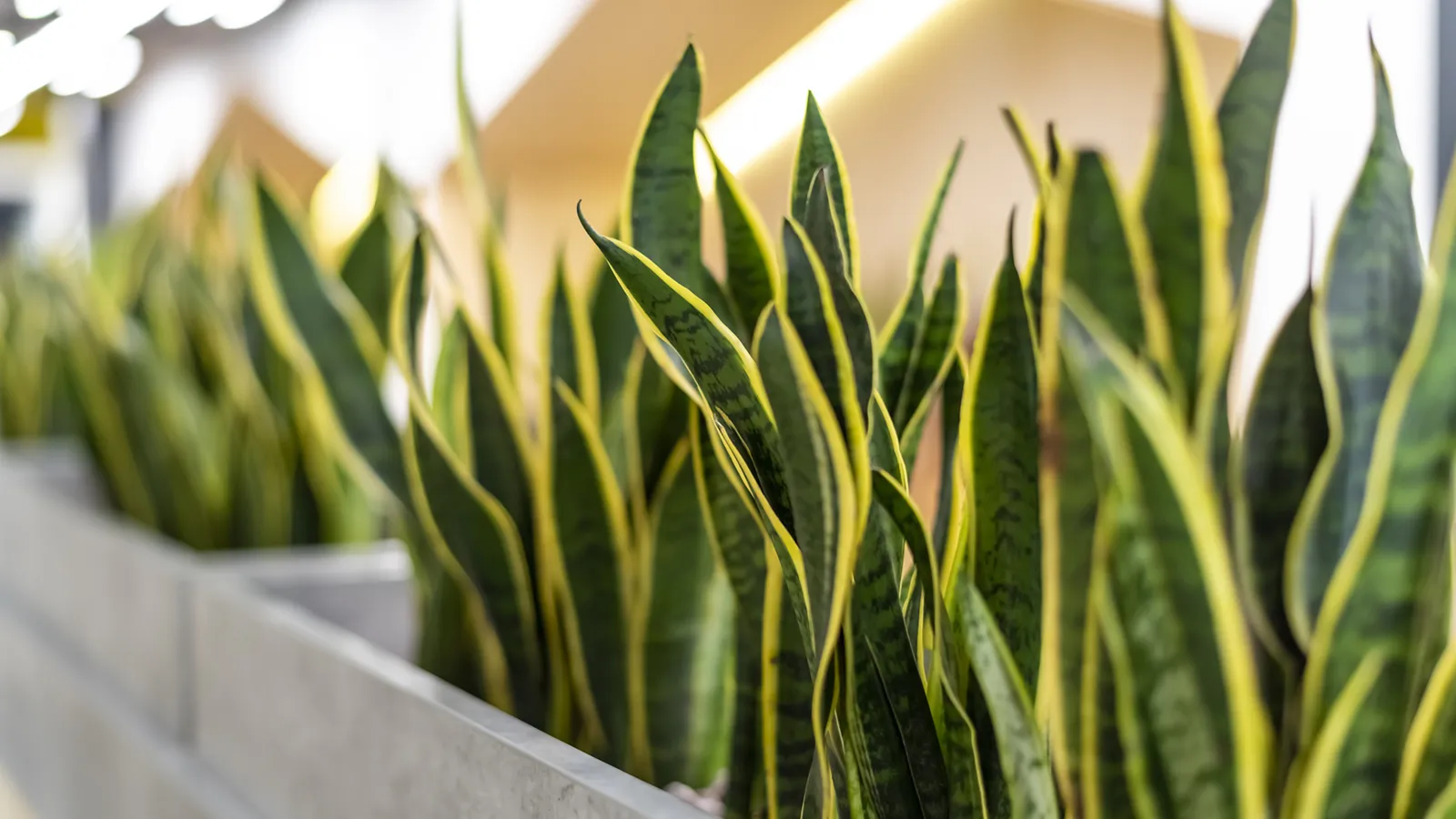
2. Snake Plant: Architectural Greenery With a Small Footprint
Snake plant (Dracaena trifasciata)
Best for: Narrow spaces, reception desks, interior corridors, and modern workplace designs.
Snake plants grow with an upright, sculptural form.
That makes them appealing in commercial interiors where horizontal space is limited.
Their foliage adds visual height without requiring the broad footprint of some larger tropical plants.
Snake plants are also recognized for their tolerance of lower-light conditions, although brighter conditions typically support stronger growth.
Design consideration: Use snake plants where vertical shape is desirable, but avoid placing containers where foliage or planters obstruct required circulation space.
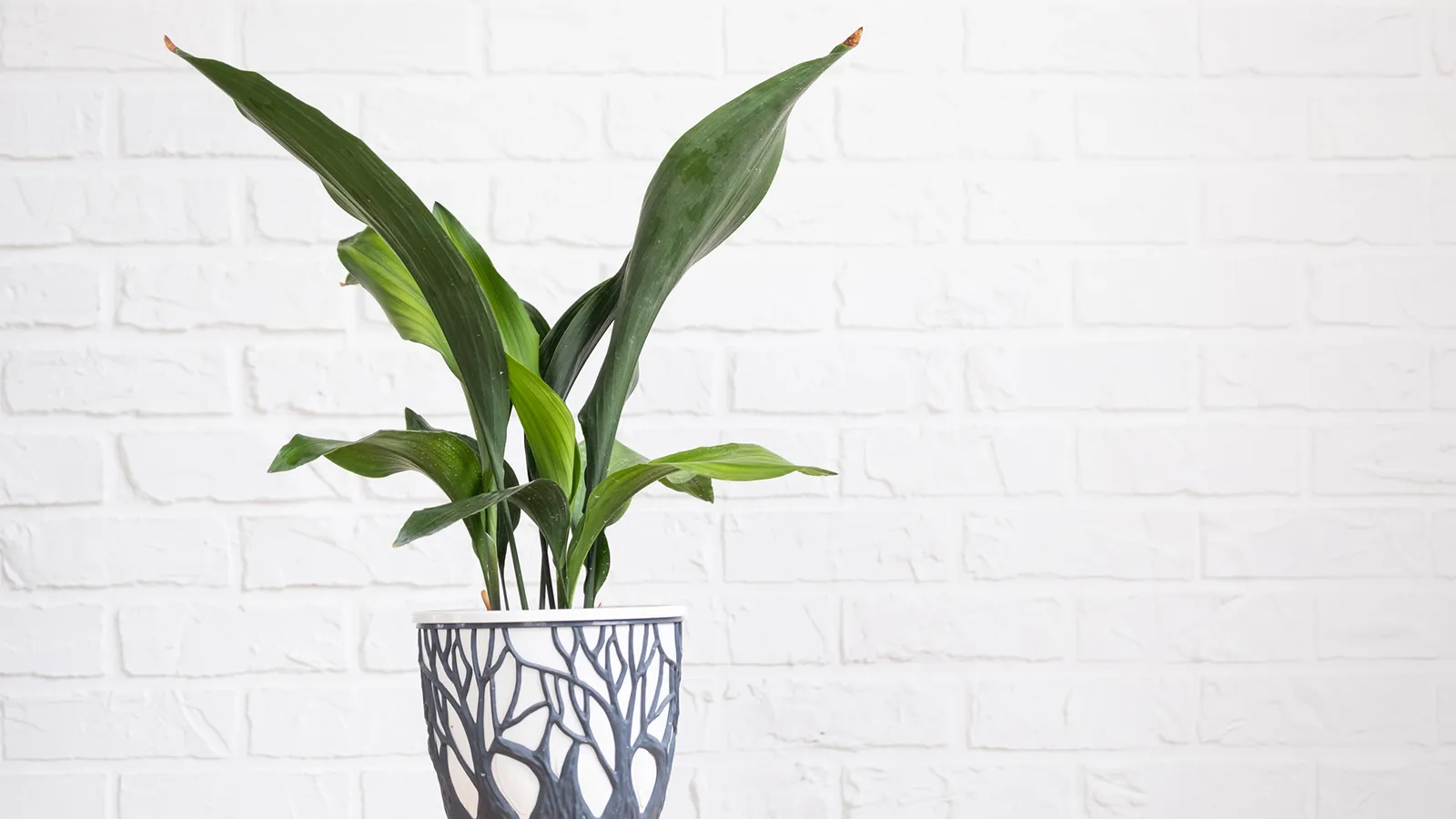
3. Cast Iron Plant: A Practical Option for Challenging Corners
Cast iron plant (Aspidistra elatior)
Best for: Interior corners, understated office designs, and shaded commercial spaces.
The cast iron plant is valued for its ability to tolerate relatively low light.
Its dark green foliage creates a softer, more traditional appearance than the architectural form of snake plants.
It can be useful when a designer wants substantial foliage without relying on bright natural light.
Design consideration: The cast iron plant is a good candidate for interiors where the design calls for quiet, elegant greenery rather than a dramatic statement plant.
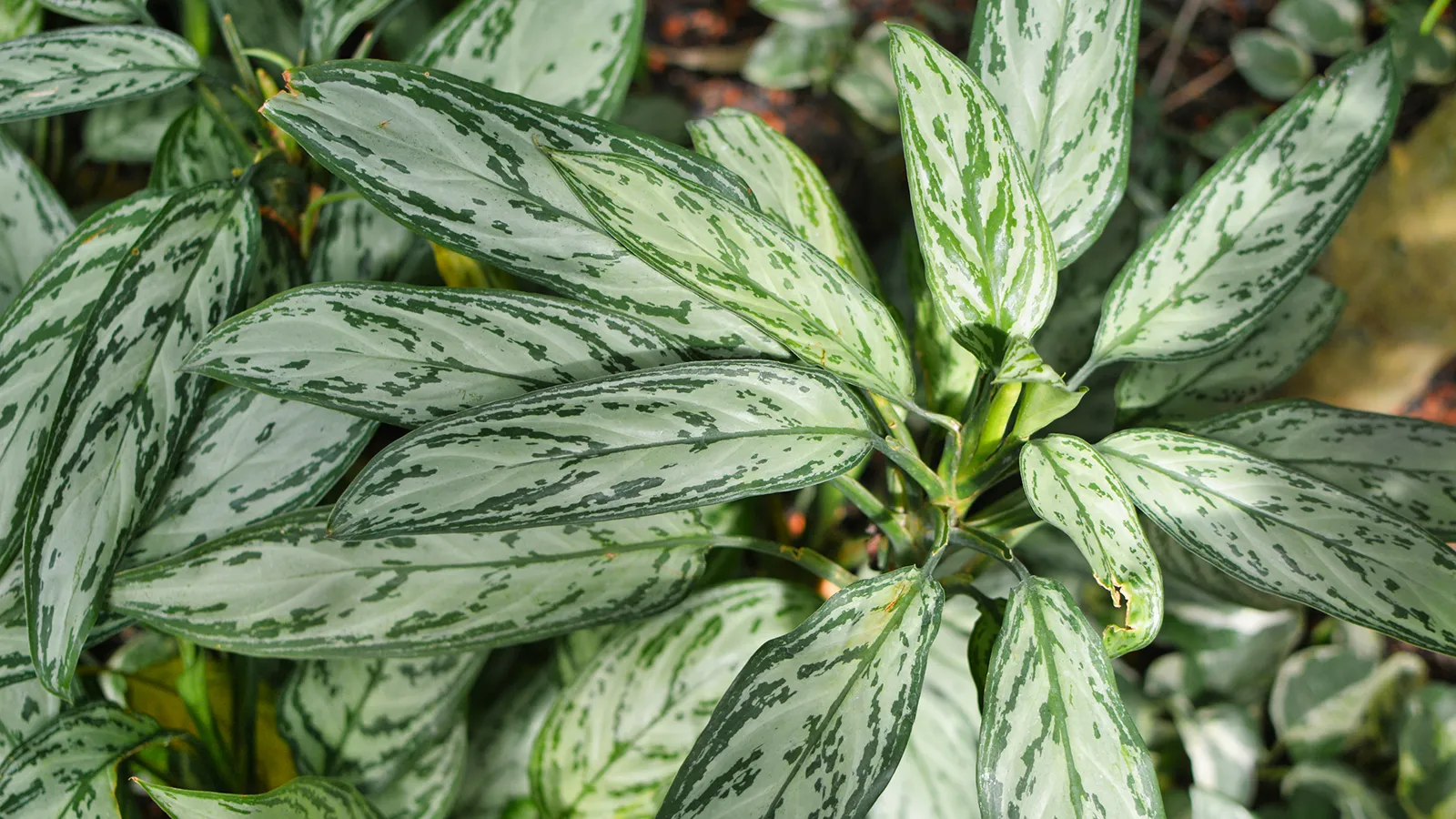
4. Chinese Evergreen: Attractive Foliage for Interior Workspaces
Chinese evergreen (Aglaonema species)
Best for: Interior offices, shared work areas, and decorative groupings.
Chinese evergreens offer a range of leaf shapes, colors, and patterns.
However, the lighting requirements of individual varieties differ.
Some green-leaved selections are more tolerant of low-light conditions than varieties grown for particularly colorful foliage.
Design consideration: If you want a variegated or colorful Chinese evergreen, verify that the chosen cultivar will retain its appearance under the available lighting.
A plant may remain alive while gradually losing the decorative qualities that made it appealing in the first place.
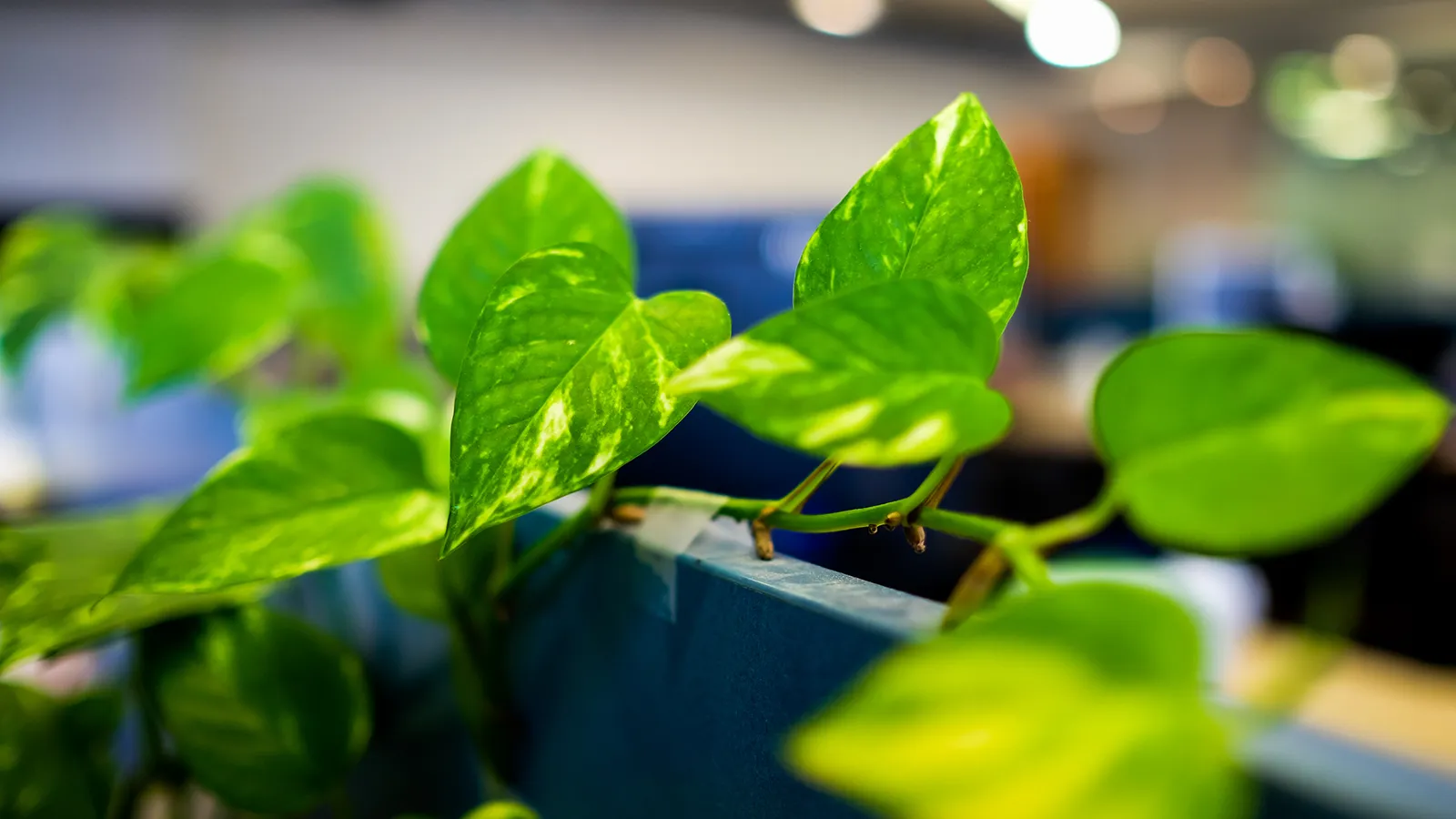
5. Pothos: A Versatile Option for Shelves and Elevated Displays
Pothos (Epipremnum aureum)
Best for: Shelving, elevated planters, and carefully planned trailing displays.
Pothos can tolerate relatively low light and offers a softer, cascading appearance.
That makes it useful when the design calls for something other than a traditional floor plant.
However, low light can slow growth and reduce variegation.
Pothos also needs occasional grooming to prevent the planting from looking irregular or overgrown.
Design consideration: Plan for mature growth and accessibility. A trailing plant above a conference table may look wonderful initially, but its location should still allow for routine maintenance.
Quick Comparison: Which Plant Fits Your Space?
| Plant | Visual character | Potential commercial application | Important consideration |
| ZZ plant | Glossy, structured foliage | Reception areas and offices | Avoid excessive watering |
| Snake plant | Tall, architectural leaves | Narrow areas and contemporary spaces | Maintain clearance around planters |
| Cast iron plant | Broad, understated foliage | Shaded corners and traditional interiors | Growth may be slow |
| Chinese evergreen | Decorative, patterned foliage | Offices and shared spaces | Cultivars differ in light needs |
| Pothos | Trailing greenery | Shelves and elevated containers | Grooming and access matter |
These plants are candidates for lower-light environments, not guarantees of success under inadequate illumination.
Plant selection should follow an evaluation of the actual room.
How Do You Choose Plants for Different Windowless Office Spaces?
A common mistake is treating every interior room as though it has the same growing conditions.
In reality, different areas of a commercial property often require different solutions.
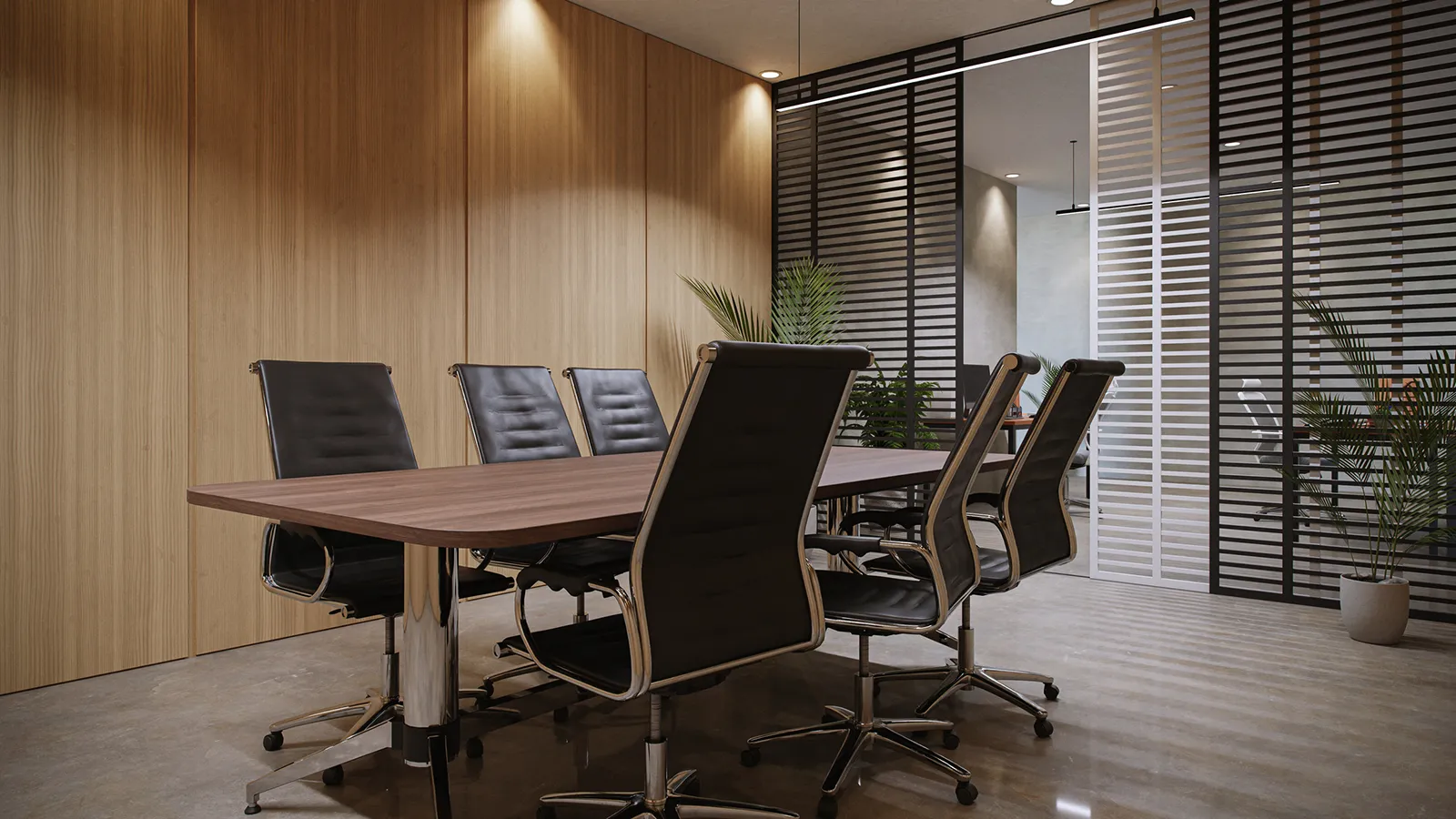
Windowless Conference Rooms
Conference rooms present an interesting challenge.
They may be brightly lit during meetings but remain dark for long periods when unoccupied.
If the lighting operates on occupancy sensors, the room’s total daily light exposure may be inconsistent.
For a room like this, consider whether supplemental plant lighting can operate independently from the meeting-room fixtures.
Smaller architectural plants may also be easier to integrate without interfering with screens, sightlines, or table space.
The objective is to make the room feel welcoming without creating distractions or maintenance complications.
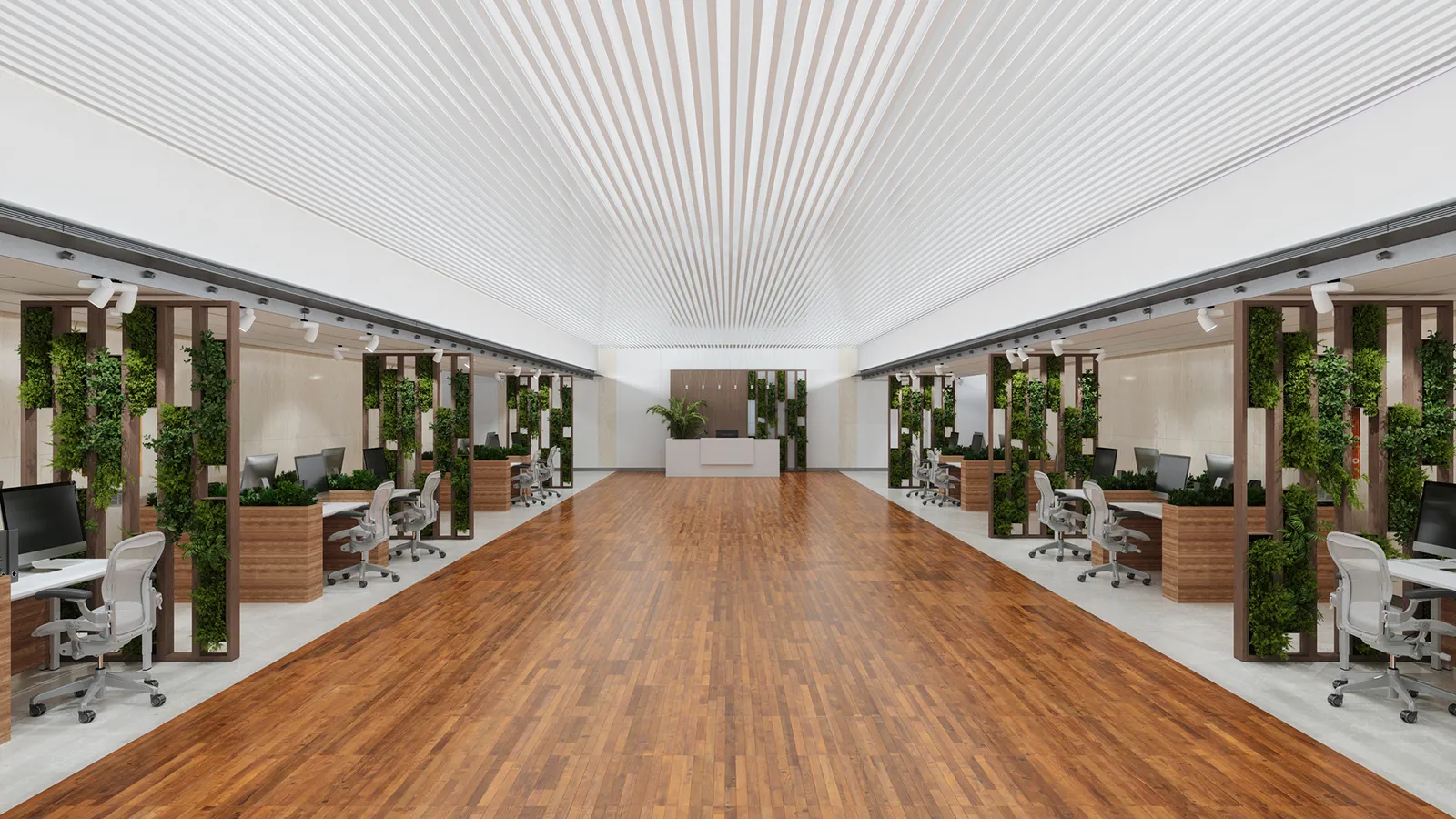
Interior Corridors
Commercial corridors may have relatively consistent overhead lighting, but the fixtures are usually positioned to illuminate the walkway rather than support plants.
Plant placement must also account for traffic and building requirements.
A large decorative container can become a problem if it narrows a walkway or interferes with access.
For these locations, plant selection and container size should be coordinated with the property’s circulation requirements.
Reception Areas Without Exterior Windows
A reception area is often one of the most important places for interior landscaping.
It’s where visitors form an early impression of the property.
When natural light is unavailable, carefully selected artificial lighting may make a living display possible.
This is a location where a professionally planned installation can be especially valuable.
Rather than placing a struggling plant beside the reception desk and hoping for the best, start with the desired visual effect and determine what conditions are needed to support it.
Interior Offices and Shared Work Areas
Individual offices and collaboration spaces often benefit from greenery that complements the furnishings without demanding attention.
Consider desk space, cable management, lighting controls, and the ability to access the plant for care.
A small number of well-chosen specimens may be more effective than filling every empty corner.
A workplace doesn’t need dozens of plants to feel thoughtfully designed.
It needs the right plants in the right places.
Do Windowless Office Plants Need Grow Lights?
Sometimes, yes.
If existing room lighting does not provide enough usable light, supplemental lighting may be necessary.
The important thing is to approach grow lights as part of the interior design rather than an afterthought.
A visible, poorly positioned fixture may solve one horticultural problem while creating a completely different design problem.
In a polished commercial interior, both considerations matter.
Can Regular Office LED Lights Keep Plants Alive?
Some artificial lighting systems can support indoor plants, but it’s important to evaluate the actual fixtures.
Not all lighting systems provide the same intensity, spectrum, or duration.
And lighting adequate for occupants may be insufficient for plant growth.
If an existing office has already experienced repeated plant decline, the lighting conditions deserve investigation before introducing more plants.
What Should You Consider When Adding Plant Lighting?
Consider four things:
Fixture placement. Will sufficient light reach the plant foliage, including the lower leaves?
Appearance. Does the fixture complement the interior design?
Operating schedule. Can the lighting function consistently without disrupting occupants?
Building coordination. Are electrical access, controls, maintenance, and applicable building requirements addressed?
For foliage houseplants under supplemental lighting, University of Minnesota Extension provides guidance on fixture placement and lighting duration. Its recommendations are a useful starting point, but a commercial installation still needs a plan based on the chosen species and fixtures.
What About Energy Use?
Supplemental lighting adds an operational consideration.
The actual energy demand depends on fixture wattage, daily operating hours, and the number of fixtures installed.
For a larger property, this should be considered alongside maintenance access and long-term service needs.
The right solution is not necessarily the brightest fixture available.
It’s a lighting arrangement suited to the plants, the design, and the building.
Not Sure Which Plants Will Work in Your Office?
You shouldn’t have to guess whether a plant will thrive in your conference room or whether the lighting will support the look you’re planning.
Amlings provides commercial interior plant design and installation services in the Chicago area, with attention to plant selection, environmental conditions, and ongoing care.
If you’re planning a new installation or reconsidering a difficult interior space, a conversation about your floor plan and lighting conditions is a sensible place to begin.
Talk to Amlings About Your Space
A Five-Step Framework for Planning Plants in Windowless Offices
Before choosing plants or ordering containers, work through these five steps.
Step 1: Identify the Spaces That Need Greenery
Begin with the experience you want to create.
Are you trying to make a reception area feel more welcoming?
Soften a long interior corridor?
Add visual interest to a conference room?
Bring warmth to an employee collaboration space?
The purpose of the installation should influence the plant design.
Not every space needs the same approach.
Step 2: Evaluate Actual Lighting Conditions
Determine what type of lighting is installed, where fixtures are located, and how long the lights operate.
Pay particular attention to occupancy sensors.
If lighting is inconsistent, consider whether a dedicated supplemental system is appropriate.
Do not assume the room is plant-friendly simply because it appears bright.
Step 3: Evaluate the Wider Environment
Look beyond lighting.
Consider HVAC airflow, temperature fluctuations, access to water, container drainage, and maintenance access.
A plant may receive enough light but still struggle if it sits directly beneath a strong heating vent.
Likewise, a beautiful container can create problems if it does not provide a practical arrangement for drainage and care.
Step 4: Match Plant Selection to the Design
Now begin choosing species.
Consider growth habit, mature size, foliage appearance, available light, and maintenance needs.
A successful commercial interior landscape should complement the architecture rather than compete with it.
Containers should also coordinate with existing furniture, artwork, finishes, and the property’s overall character.
Step 5: Establish a Long-Term Care Plan
Finally, determine how the installation will be maintained.
Who will monitor plant health?
Who will adjust watering?
What happens when a plant begins declining?
How will the provider respond if the lighting or office layout changes?
The most attractive plant design won’t remain attractive without an appropriate care plan.
A useful rule: If a proposed installation cannot be maintained reliably in its intended location, reconsider the design before proceeding.
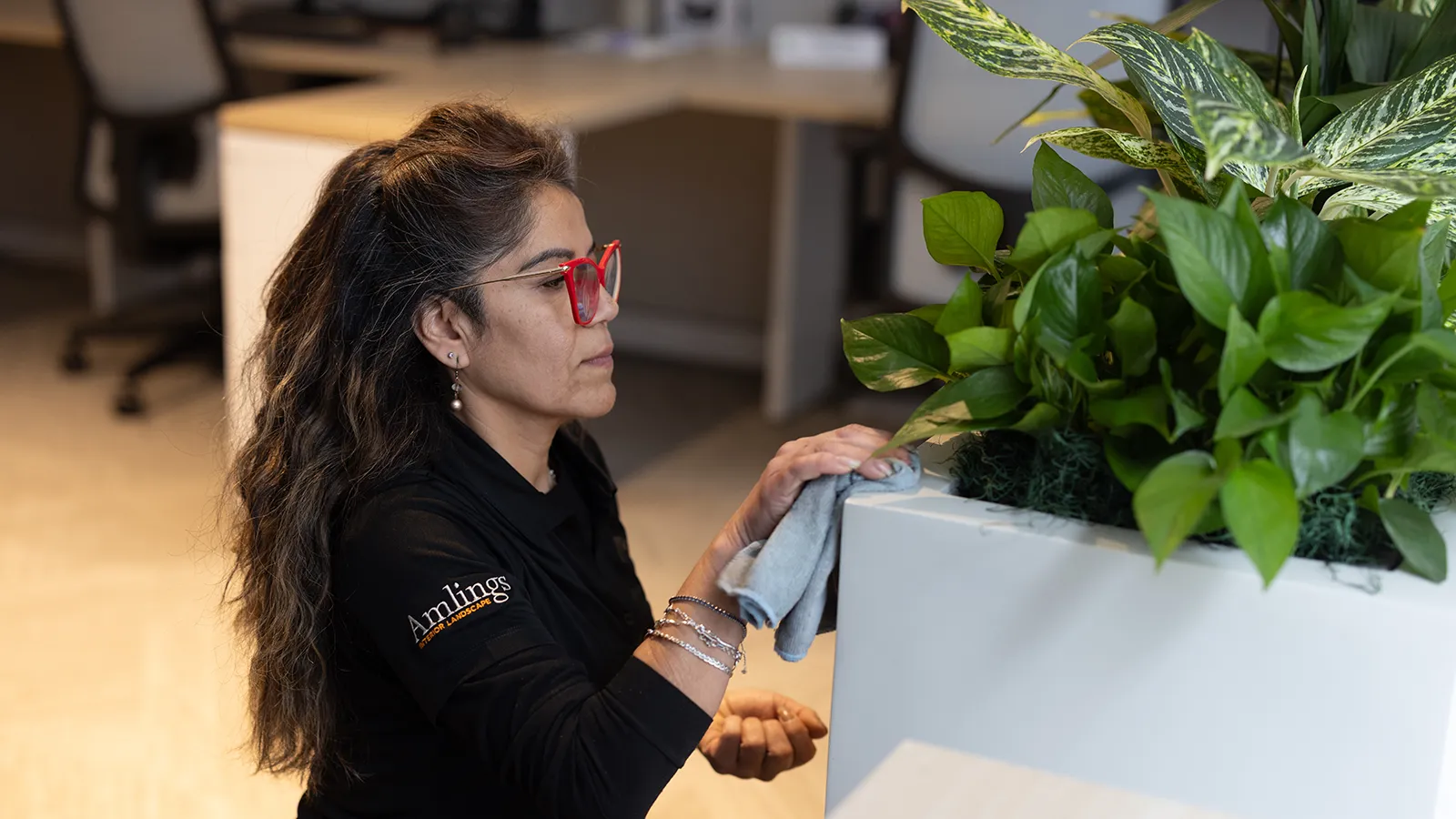
How Should Plants in Windowless Offices Be Maintained?
Low-light plant maintenance can differ significantly from caring for plants near bright windows.
One of the biggest differences involves water.
When light levels are reduced, plant growth generally slows. As a result, plants often use less water.
This means watering by a rigid calendar can create problems.
A plant that needed frequent watering near a bright window may require less water when moved to a dim interior office.
Professional care should account for the plant, its growing medium, container, and current environmental conditions.
Watch for Signs of Inadequate Light
According to University of Maryland Extension, insufficient light can cause elongated growth, poor flowering, and other symptoms of decline.
For an office manager, signs worth reporting include:
- Plants leaning noticeably toward light sources.
- Unusually long, weak stems.
- Foliage becoming sparse.
- Variegated leaves losing their distinctive coloring.
- Ongoing leaf drop or stalled growth.
These symptoms are not exclusive to lighting problems. Watering issues, pests, and other environmental stressors can cause overlapping symptoms.
A qualified horticultural professional should investigate before recommending corrective action.
Account for Chicago’s Seasonal Conditions
Chicago buildings experience substantial seasonal differences in outdoor temperatures and daylight.
Even interior areas without windows can be affected by changing HVAC settings, building access patterns, and humidity conditions.
An interior landscape maintenance program should account for those variations.
A windowless office can still have a changing growing environment.
Keep Appearance Standards in Mind
Commercial plants need to do more than remain biologically alive.
They should continue looking appropriate for their intended space.
A plant that has become sparse or misshapen may no longer create the effect the property manager originally wanted.
That doesn’t automatically mean it must be replaced.
It may need different lighting, a better location, or corrective care.
But appearance should be part of the ongoing evaluation.
When Are Artificial Plants a Better Choice?
Sometimes a room simply isn’t suitable for living plants without substantial modifications.
And that’s worth recognizing early.
For a windowless space with insufficient artificial lighting, no opportunity to install supplemental lighting, and limited maintenance access, artificial greenery may be a more practical decorative solution.
Other situations may call for a mixed approach.
Live plants could be used in locations with suitable growing conditions, while artificial displays provide visual continuity in darker or less accessible areas.
The objective isn’t to force real plants into every possible space.
It’s to create an attractive, appropriate environment that can be maintained successfully.
For a commercial property, the best solution should balance appearance, practicality, and ongoing responsibilities.
Why Professional Interior Plant Design Matters
There’s a meaningful difference between purchasing several attractive plants and designing an interior landscape.
Professional commercial plant design considers how greenery will work within the larger environment.
That includes architecture, finishes, furniture, visual balance, and the day-to-day operation of the building.
It’s particularly important in difficult growing environments.
A designer may need to reconsider the size or shape of a display, select a more appropriate plant, or coordinate with the property’s facilities team before installation.
Amlings describes its approach as design-first, pairing interior design considerations with horticultural knowledge of lighting and environmental conditions.
Its published commercial services also include installation and ongoing plant maintenance.
That combination is relevant when designing plant displays for spaces where natural light is limited.
Amlings’ commercial work also involves coordinating with property and facilities teams, an important part of installing greenery in active buildings.
Frequently Asked Questions About Plants for Windowless Offices
1. Can plants survive in a windowless office if the lights are turned off every night?
Potentially, yes, if they receive sufficient light during operating hours.
Plants naturally experience periods of darkness, but they still require adequate light over time.
If a room receives only brief or irregular illumination, supplemental lighting may be needed.
2. Are fluorescent office lights suitable for growing plants?
Some fluorescent lighting systems can support indoor foliage plants.
However, fixture output, spectrum, distance, and operating hours influence their effectiveness.
The presence of fluorescent lighting alone does not guarantee suitable growing conditions.
3. Can you grow a large floor plant in a windowless lobby?
Possibly, but the plant’s lighting requirements must be considered carefully.
Large specimens may need thoughtfully positioned lighting to illuminate enough of their foliage.
The design should also account for mature size, maintenance access, and whether the plant will retain an attractive appearance.
4. Do low-light office plants require less water?
Often, yes.
Plants generally grow more slowly and use less water under lower-light conditions.
However, watering should be based on actual moisture conditions, plant species, and container characteristics rather than a universal schedule.
5. Can living plants work in windowless conference rooms with occupancy sensors?
Yes, but the lighting schedule needs attention.
If the lights operate only during meetings, plants may receive inadequate total light.
An independent supplemental lighting system may be needed to support the installation.
6. Are there plants that can live indefinitely in complete darkness?
No.
Living green plants require light energy for photosynthesis. While some species tolerate reduced light for extended periods, complete darkness is not a sustainable growing condition.
Artificial plants are an alternative when sufficient lighting cannot be provided.
7. Should a commercial office use real or artificial plants in darker areas?
The decision depends on lighting conditions, desired appearance, maintenance expectations, and the available budget.
Living plants may be appropriate where adequate lighting and ongoing care can be provided.
Artificial greenery may be more practical in areas where those conditions cannot reasonably be met.
Bring Thoughtful Greenery Into Every Part of Your Office
A room without windows doesn’t have to feel unfinished.
With appropriate planning, artificial lighting, and carefully selected plants, many interior commercial spaces can incorporate beautiful living greenery.
But a successful installation begins with understanding the building.
Which areas need visual interest?
What lighting is available?
What kind of plant displays complement the architecture?
And how will everything be cared for after installation?
Those are exactly the kinds of questions worth discussing before purchasing plants or approving a design.
Amlings works with Chicago-area commercial properties on interior landscape design, installation, and ongoing maintenance.
If you’re planning a new office, refreshing an existing workplace, or trying to improve an interior area where plants haven’t performed well, Amlings can help you explore an appropriate design direction.
The goal is simple: greenery that complements your property, supports the impression you want to make, and remains practical to maintain.
Ready to explore what’s possible for your space?